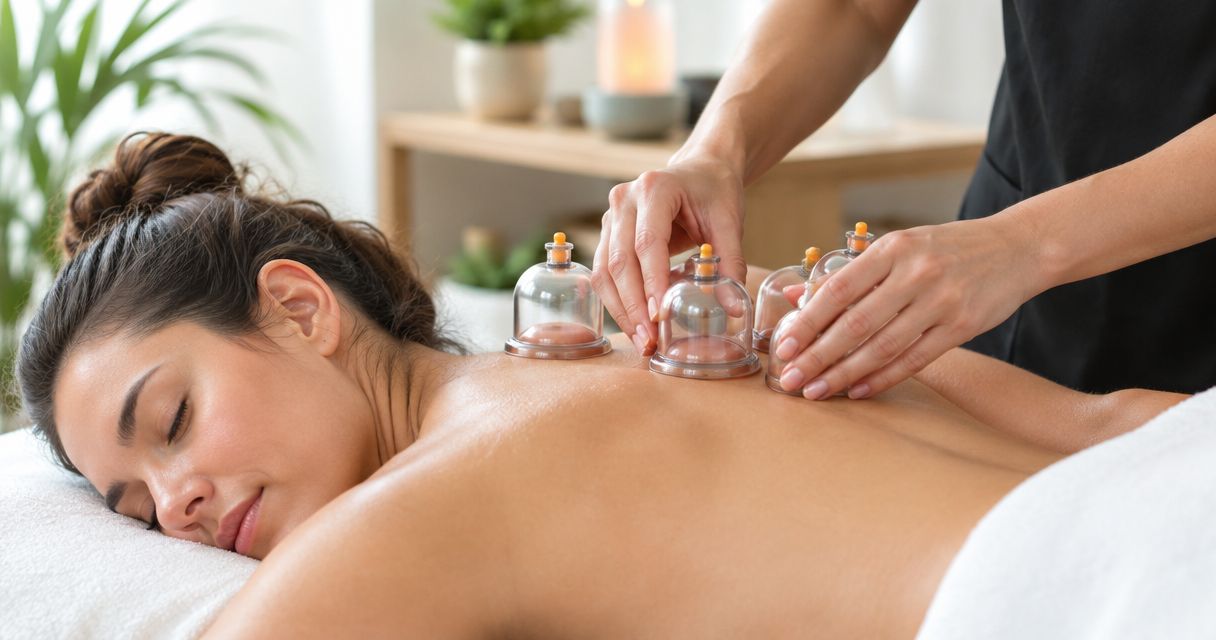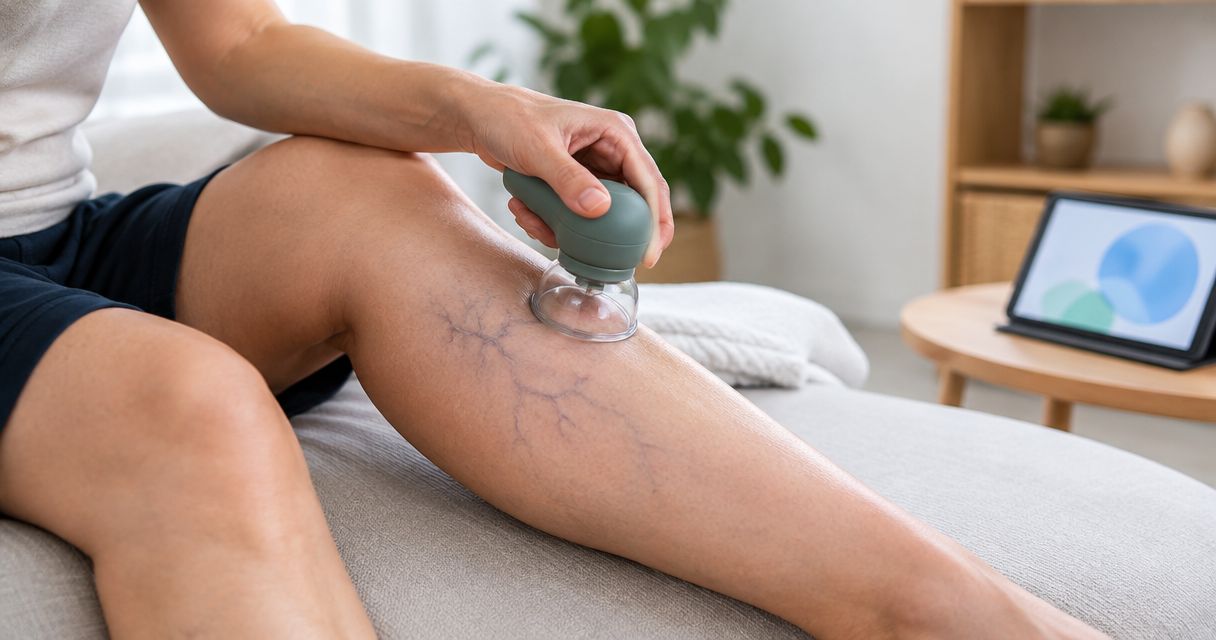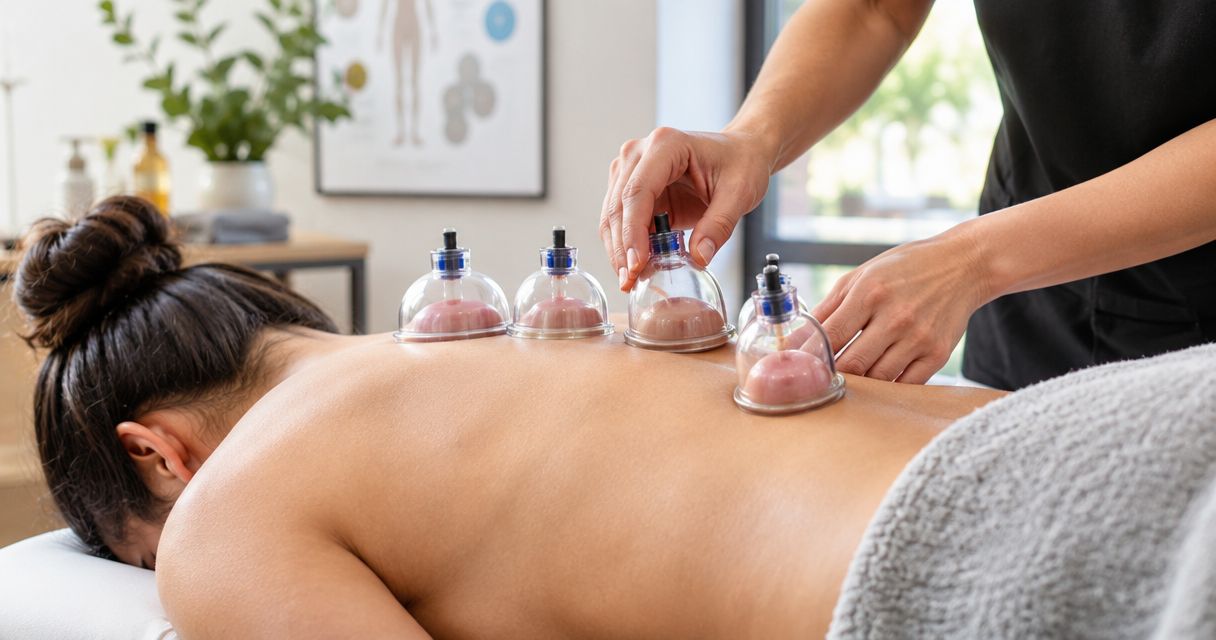
Cupping has not been shown to break up scar tissue, remove scars, or release deep surgical adhesions. A change in how an area feels after suction does not prove that scar tissue has changed. For scar care in 2026, get the scar assessed before applying suction, especially after surgery or when the area is painful, raised, inflamed, or not fully healed.
- Can cupping help with scar tissue? Evidence does not establish that suction breaks up scars or surgical adhesions.
- Vazocupping offers at-home cupping devices, not an established treatment for scar removal.
- Use clinician-directed scar care for scar concerns; do not substitute stronger suction for an assessment.
- Never apply cupping over open wounds, infected skin, or a healing surgical incision.
Why this matters
Treating tightness and treating a scar are different goals. A scar can feel stiff, tender, itchy, or restricted, but those symptoms do not tell you which tissue is responsible. Pulling harder on the skin is not a diagnosis.
If you are exploring Vazocupping for home cupping, keep muscle-recovery routines separate from scar treatment. The National Center for Complementary and Integrative Health describes cupping research as generally low quality and identifies risks including burns, infection, and persistent skin discoloration. That is a reason to set limits, not a reason to increase suction until you see marks.
Can cupping help break up scar tissue?
There is no established evidence that cupping physically breaks up scar tissue. Suction pulls on the skin and underlying superficial tissues. That mechanical action does not demonstrate that scar collagen has been removed, reorganized, or permanently released.
You will encounter descriptions such as loosening adhesions, releasing fascia, or breaking up scar tissue. These phrases often group together different tissues and different outcomes. A surface scar, tight skin around an incision, and an adhesion inside the abdomen are not interchangeable problems.
The useful question is more specific: what are you trying to change? Appearance, itching, pain, skin movement, and joint movement each call for a different assessment. A treatment that changes comfort does not automatically improve appearance or restore movement.
For a 2026 treatment decision, distinguish a personal report from a demonstrated scar outcome. Someone saying an area feels looser is reporting a sensation. Evidence of scar treatment would need to establish a relevant change, such as improved movement or a measurable improvement in scar characteristics, rather than relying on suction marks.
Do not use bruising as proof that scar tissue is breaking down. Cupping marks reflect effects on the skin and small blood vessels; they are not a view of what is happening inside a scar.
Surface scars and deep adhesions need different assessments
A scar forms as the body repairs an injury. Scar tissue contains collagen, and its organization differs from the tissue it replaces. Scars also change during healing, so a change over time does not automatically identify the cause.
A surface scar is something you can see on the skin. An adhesion is a band of scar-like tissue connecting structures that would normally move separately. Internal adhesions can develop after surgery, and you cannot establish their presence or severity by looking at the skin above them.
That distinction matters because a home suction device acts from the outside. External cupping is not an established way to diagnose or release internal adhesions. Do not interpret a pulling sensation beneath an old incision as confirmation that an adhesion is present.
If your concern is limited movement, a clinician can assess the scar alongside the joint, muscle, tendon, and surrounding skin. If your concern is abdominal symptoms after surgery, seek medical assessment rather than trying to treat the incision from the outside. The location of a scar does not establish the source of pain.
Which scar-care approach fits your goal?
Choose an approach by the problem it addresses, not by how intense it feels. The American Academy of Dermatology describes scar treatments such as silicone products, injections, and laser treatment; selection depends on the scar and the person. None is a universal answer for every scar.
| Approach | Best for | Useful role | Limitation or downside |
|---|---|---|---|
| Dermatology assessment | Raised, growing, itchy, or cosmetically concerning scars | Identifies the scar type and suitable treatment options | Requires an appointment; treatment results differ by scar |
| Silicone gel or sheets | Certain raised scars on fully healed skin | An established conservative scar-care option | Does not treat internal adhesions; skin irritation can occur |
| Clinician-directed rehabilitation | Scars associated with restricted movement | Assesses movement and builds an appropriate rehabilitation plan | Requires individualized guidance; forceful work can irritate tissue |
| At-home cupping | General cupping routines rather than scar removal | Provides suction as a wellness practice | Scar-removal benefits are unproven; bruising and skin injury are risks |
This comparison is not a prescription. For your 2026 scar-care plan, ask a clinician which outcome each proposed treatment targets and what would count as improvement. A clear goal makes it easier to stop a treatment that irritates your skin without helping the original problem.
Surgical scars: healing clearance comes first
Do not cup over a fresh incision, an open wound, or an area with drainage. Skin that looks closed is not automatically ready for suction. Healing beneath the surface and restrictions from the procedure still matter.
Ask the surgical team whether the area is ready for any manual treatment. Explain the proposed action clearly: suction, sliding, pressure, or heat. Permission to resume ordinary activity is not the same as permission to apply a cupping device over an incision.
Follow the instructions for your procedure instead of a generic online timetable. There is no universal waiting period that makes every surgical scar safe to cup. The operation, wound condition, complications, and your health all affect that decision.
If a healed surgical scar feels tethered or limits movement, request an assessment. A rehabilitation clinician can evaluate whether the restriction involves the skin, surrounding tissues, or another structure. Do not attempt to force a release by increasing suction.
Raised scars and keloids: avoid aggressive treatment
A raised scar is not simply tissue that needs to be flattened with pressure. Hypertrophic scars stay within the original injury boundary, while keloids extend beyond it. Those differences affect treatment decisions.
Do not use cupping to try to flatten a raised scar or keloid. Irritation and injury are not treatment goals, and suction is not an established replacement for dermatology care. Get a growing, persistently itchy, painful, or unusually raised scar assessed.
A dermatologist can discuss treatments appropriate to the scar type. The decision includes possible benefits, skin effects, recurrence, and the burden of treatment. An at-home device cannot make that assessment from the scar's appearance alone.
Why scar-care recommendations vary
In 2026, individualized advice remains more useful than a fixed cupping routine. The following differences explain why advice for one person's scar does not transfer directly to yours:
- Healing status: An open or recently healed wound needs protection, not an experiment with suction.
- Scar type: Flat scars, hypertrophic scars, and keloids do not share the same treatment priorities.
- Location: A scar near a joint raises different movement questions from a scar whose main concern is appearance.
- Symptoms: Itching, tenderness, restricted movement, and abdominal pain require different assessments.
- Health and medicines: Fragile skin, reduced sensation, and medicines that increase bleeding risk change the safety discussion.
- Treatment goal: Improving comfort is different from changing a scar's height, color, or effect on movement.
Give your clinician these details before asking whether cupping is appropriate. The answer should address your actual scar and symptoms, not cupping in the abstract.
What should you do before trying cupping near a scar?
Use this sequence to decide whether the next step is home care, rehabilitation, or medical assessment. It is a screening process, not a cupping technique.
- Identify the goal. Describe the problem in ordinary language: itching, pulling, tenderness, appearance, or difficulty moving. Avoid starting with the assumption that something needs to be broken up.
- Check the skin. Do not apply suction to open, blistered, infected, inflamed, or otherwise damaged skin. Changes such as drainage or spreading redness need medical attention.
- Get relevant clearance. After surgery, ask the surgical team. For raised or growing scars, ask a dermatologist. For movement restriction, ask a qualified rehabilitation clinician.
- Agree on stopping rules. Pain, blistering, bleeding, new numbness, or worsening symptoms are reasons to stop. Do not push through them to complete a session.
If a clinician approves a specific technique, follow that technique rather than adding more suction, heat, or sliding. Combining methods changes the exposure. A routine that was comfortable on intact skin is not automatically suitable over a scar.
More sensation is not more healing. You do not need a dramatic mark to establish that a treatment is doing something useful.
Where an at-home cupping device fits
Vazocupping is for consumers seeking at-home cupping and muscle recovery, not an established scar-removal treatment. That distinction keeps the product's purpose separate from a medical claim.
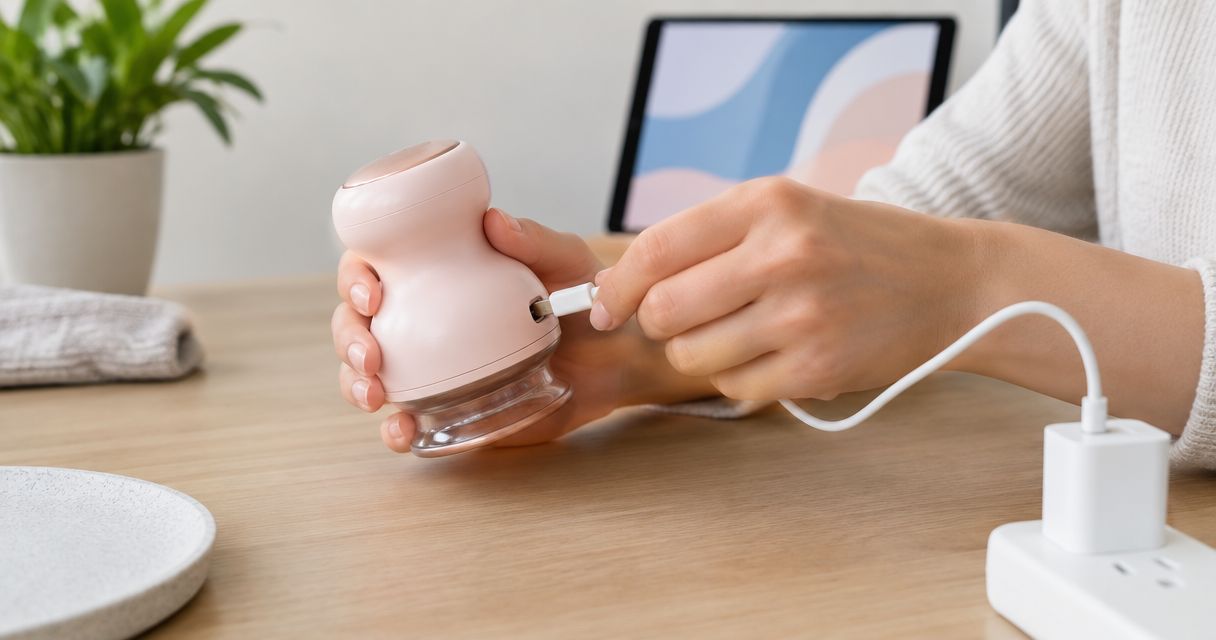
The Vazo Slide combines cupping, heating, massage, and gua sha in a handheld device. Those functions describe what the device offers; they do not establish that it breaks down scars, treats keloids, or releases internal adhesions.
The practical appeal is having those functions in one device. The limitation is equally clear: multiple functions do not remove the need to screen the skin, follow product instructions, and obtain clearance when a scar or recent procedure is involved. Heat also needs particular caution where sensation is reduced, because you cannot rely on discomfort alone to warn you of excessive exposure.
Does cupping remove an old scar?
Cupping has not been shown to remove an old scar. A scar becoming less noticeable after a routine does not, by itself, establish that suction caused the change.
If appearance is your priority, ask a dermatologist about options for that specific scar. Choose treatment by the scar's characteristics rather than its age alone.
Can I use cupping if my scar feels tight?
Tightness is a reason to assess movement, not proof that cupping is appropriate. The feeling can involve the scar, nearby tissues, or the way you move around the area.
Ask a rehabilitation clinician to evaluate the restriction. A targeted movement plan addresses a defined problem; a stronger suction setting does not define one.
Is cupping better than scar massage?
Cupping has not been established as better than clinician-directed scar massage. Neither method belongs on an open wound, and neither should be treated as a guaranteed way to release deep adhesions.
For a healed scar, ask whether manual treatment is appropriate and have the technique demonstrated. Do not substitute a device for instructions that were given for gentle hand contact.
FAQ
Can cupping help with scar tissue after surgery?
Cupping has not been shown to break up surgical scar tissue or release internal adhesions. Get clearance from the surgical team before applying suction near an incision, even when the surface appears closed.
Does cupping break down scar collagen?
There is no established evidence that cupping breaks down scar collagen in a way that removes or treats a scar. Suction marks and temporary changes in sensation do not demonstrate collagen remodeling.
Can I cup directly over a keloid?
Do not use cupping to try to flatten or remove a keloid. A dermatologist can assess the scar and discuss treatments appropriate to its growth and symptoms.
How long after surgery should I wait before cupping?
There is no universal waiting period that makes cupping safe after every operation. Ask your surgical team about your wound, procedure, and restrictions rather than following a generic timetable.
Are dark cupping marks a sign that scar tissue is breaking up?
Dark cupping marks are not evidence that scar tissue is breaking up. They reflect effects on the skin and small blood vessels, not a measurement of scar treatment.
Can I use a Vazocupping device to remove a scar?
A Vazocupping device is not an established scar-removal treatment. Keep general at-home cupping separate from clinician-directed care for a painful, raised, healing, or restrictive scar.
When should I get a scar checked instead of trying home treatment?
Get a scar checked when it grows, restricts movement, remains painful, or develops concerning skin changes. Spreading redness, drainage, fever, or severe symptoms need prompt medical attention rather than suction.
One last thing
Before choosing any scar treatment in 2026, write down the outcome you want in plain language. Being able to reach overhead, having less itching, and changing a scar's appearance are different targets. A photograph cannot measure all of them.
Track the problem you want to improve, not the mark a device leaves behind. If the routine creates bruising while your original symptom stays the same or worsens, that is not progress. Stop and reassess the plan with a clinician.