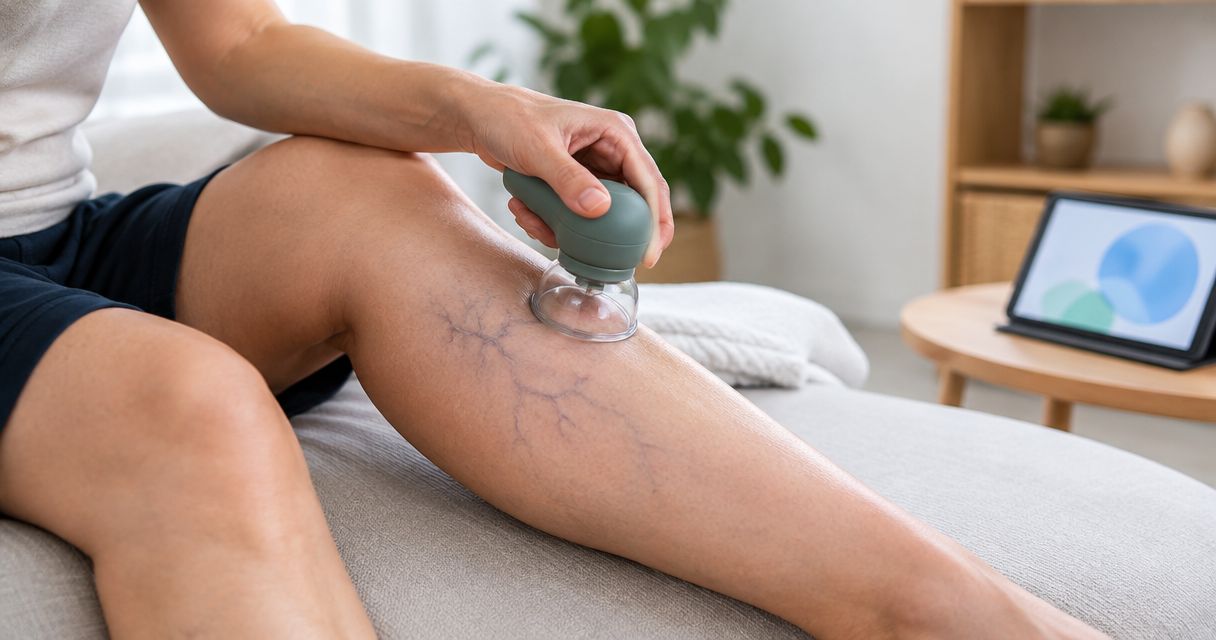
Do not use a cupping device directly on varicose veins. Suction can injure vulnerable skin and blood vessels; switching to lighter suction, adding heat, or sliding the cup does not make the affected vein a safe treatment site.
- Do not apply a cupping device on varicose veins, even at the lowest suction setting.
- Vazo Cupping sells at-home muscle recovery devices, not a treatment for varicose veins.
- New leg swelling, warmth, or pain needs medical assessment before cupping therapy.
- Ask a clinician about vein care rather than trying to flatten visible veins with suction.
Is it safe to use a cupping device on varicose veins?
No. Avoid placing or moving a suction cup over a varicose vein. Clinical guidance in StatPearls’ Cupping Therapy identifies varicose veins among the areas where cupping should be avoided. That restriction applies to the treatment site, not just to one style of cup.
For your at-home routine in 2026, separate muscle recovery from vein treatment. A device sold for muscle comfort is not automatically appropriate for a swollen, twisted vein. The same distinction applies when browsing Vazo Cupping: the intended wellness use does not replace an assessment of your leg symptoms.
| Approach | Best for | What it offers | Limitation or safety concern |
|---|---|---|---|
| Cupping directly over varicose veins | Not recommended | No established role in treating varicose veins | Suction can injure the treatment area |
| Medical assessment | People with painful veins, skin changes, or new symptoms | Evaluation of the veins and an appropriate care plan | Requires a clinical appointment; urgent symptoms need faster attention |
| Walking and regular movement | People able to exercise without concerning symptoms | Supports the calf muscles that help move blood upward | Does not repair damaged vein valves |
| Clinician-recommended compression | People whose assessment supports its use | Helps manage symptoms in suitable patients | Fit and suitability matter; it is not appropriate for everyone |
Why this matters
A varicose vein is not simply a tight muscle that needs release. Varicose veins involve enlarged superficial veins and problems with the valves that help blood return toward the heart. Applying suction does not correct those valves.
Cupping deliberately pulls on skin and superficial tissue. Bruising and temporary marks are recognized effects, but a familiar cupping mark is not proof that treatment is safe over an abnormal vein. Do not use the appearance of a mark as a test of whether you chose a safe location.
The National Center for Complementary and Integrative Health describes limited, generally low-quality research on cupping and recognizes adverse effects including burns, scars, and infections. A benefit claimed for muscle discomfort does not establish a benefit for vein disease.
Why suction is the wrong approach for a varicose vein
The reason to avoid cupping over a varicose vein is anatomical: suction acts on the same superficial tissues where the enlarged vein sits. Stronger suction is not the only concern. Repeated application, sliding, and treatment over compromised skin introduce additional opportunities for injury.
The following factors change how you should approach the area:
- Visible enlarged veins: A raised, twisted vein is a reason to avoid direct suction, not a target to press down or flatten.
- Skin changes: Discoloration, eczema, fragile skin, or an open sore needs assessment rather than a recovery treatment.
- New symptoms: New swelling, tenderness, warmth, or redness changes the priority from relaxation to medical evaluation.
- Bleeding risk: Blood-thinning medication and bleeding disorders require discussion with a clinician before cupping.
- Reduced sensation: Difficulty sensing heat or pain makes it harder to recognize an injury while using a device.
These factors do not create a home scoring system. You do not need several warning signs before avoiding suction over a varicose vein. The visible vein alone is enough to rule out that treatment site.
Does low suction make cupping over varicose veins safe?
No. Low suction does not remove the reason to avoid cupping over varicose veins. A lower setting changes the force applied, but it does not change the underlying vein or establish that treatment is safe.
Do not experiment with progressively stronger settings to find a level your vein tolerates. Pain is not a reliable safety test, and an absence of immediate discomfort does not prove that the skin or blood vessel has escaped injury.
The practical rule for 2026 is straightforward: choose treatment areas based on suitability, not on how gently a device can operate. If a clinician has not assessed a concerning vein, skip that area rather than trying a brief test application.
Is moving cupping safer than leaving the cup in place?
Moving cupping is not a safe workaround for treating directly over varicose veins. Sliding adds movement across the skin while suction remains active. Lubrication helps a cup move; it does not protect an enlarged vein from the forces of treatment.
Avoid routes that cross a visible vein, even if the cup starts on ordinary-looking skin. The treatment path matters as much as the starting point. Do not drag the device across the vein to reach another muscle area.
Can I use heat or gua sha over the same vein instead?
Do not substitute direct scraping, firm massage, or device heat over a symptomatic varicose vein without clinical advice. Changing modes is not the same as changing to a suitable treatment area.
This matters with devices that combine several functions. A mode selector does not diagnose vein disease, determine whether your skin is healthy, or establish whether local heat and pressure are appropriate. Ask about the specific function and body area you intend to use.
Can I use a cupping device somewhere else if I have varicose veins?
Having varicose veins does not automatically mean every body area is unsuitable for cupping, but it does rule out direct treatment over the affected veins. Suitability elsewhere depends on your skin, symptoms, medications, and other health conditions.
There is no universal safe-distance rule that lets you measure outward from a visible vein and begin treatment. Veins extend beyond the portion you can see, and the cause of leg discomfort is not always obvious. Avoid treating a painful or swollen leg as an ordinary recovery problem.
If your goal is to use a device on an unrelated muscle area, explain that clearly to your clinician. Ask whether your health history creates a broader reason to avoid cupping, and follow the device’s instructions for any approved use.
For your 2026 routine, treat clearance as specific to the person, location, and method. Advice about using a cup on your back is not permission to use it across a varicose vein on your calf.
Which symptoms need medical attention before you use a device?
New or worsening leg symptoms take priority over cupping. Varicose veins can cause aching and heaviness, but you should not assume every painful or swollen leg has the same explanation.
A blood clot in a deep vein can cause swelling, pain, warmth, and changes in skin color. You cannot reliably distinguish that problem from other causes of leg discomfort by looking at the leg or trying a massage.
Seek urgent assessment for new swelling, warmth, or pain
Get urgent medical advice for new swelling in one leg, unexplained calf pain, warmth, redness, or a hard and tender vein. Do not apply suction, heat, scraping, or massage while waiting to understand the cause.
These symptoms do not prove that you have a clot. They are reasons to stop self-treatment and get assessed. The NHS guidance on deep vein thrombosis identifies leg pain and swelling as symptoms requiring prompt attention.
Get emergency help for breathing symptoms or uncontrolled bleeding
Sudden shortness of breath, chest pain, coughing blood, or collapse requires emergency medical help. Do not finish a recovery session or wait to see whether the symptoms improve.
A bleeding varicose vein also needs immediate attention. Apply firm direct pressure with a clean dressing and elevate the leg while seeking help; get emergency assistance if bleeding is heavy or does not stop. Do not place a suction cup over the bleeding site.
Arrange an appointment for skin changes or persistent discomfort
Persistent aching, itching, swelling, skin discoloration, eczema, or an ulcer near a varicose vein deserves a clinical appointment. These signs change the care plan beyond simply avoiding one device.
Bring a description of when symptoms occur and what makes them worse. That information is more useful than testing whether a cup temporarily changes how the area feels.
What should you do instead of cupping a varicose vein?
Start with assessment and symptom management, not another tool applied to the vein. Your clinician can determine whether you need conservative care, a vein specialist, or investigation for a different cause of symptoms.
Use this sequence when planning vein care in 2026:
- Describe the symptoms. Explain whether the issue is appearance, aching, heaviness, itching, swelling, or a recent change. Mention whether one or both legs are affected.
- Review your health history. Include previous clots, vein procedures, skin wounds, pregnancy, medications, and any blood-thinning treatment.
- Ask about movement. Walking and calf movement help the muscle pump that assists blood return. Ask what activity is appropriate if pain or swelling limits you.
- Discuss compression rather than choosing it blindly. Compression can help suitable patients, but circulation problems and other conditions affect whether it is appropriate.
- Ask whether vein treatment is indicated. A clinician can explain procedures that address the affected veins rather than treating the skin above them.
Each option has limits. Movement supports circulation but does not repair faulty valves. Compression can manage symptoms but does not suit every person, and procedures require assessment rather than a home diagnosis.
If standing or sitting for long periods worsens your symptoms, discuss regular movement breaks and leg elevation. Do not turn a general self-care suggestion into a substitute for assessment when symptoms are new or worsening.
Where an at-home muscle recovery device fits
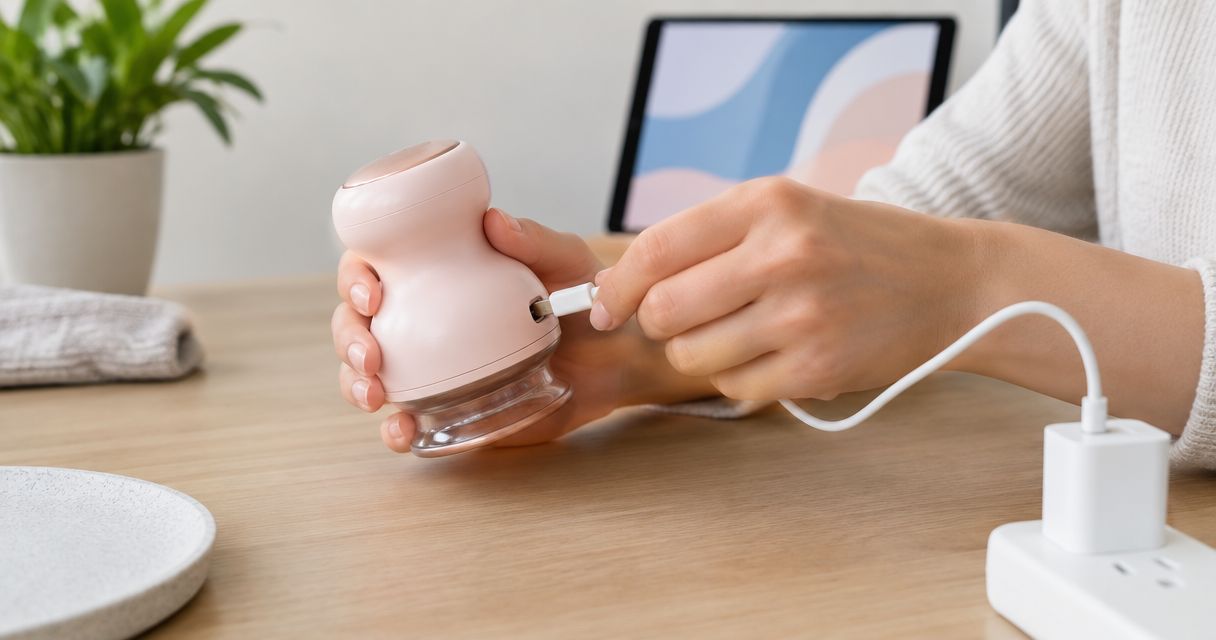
Vazo Cupping offers the Vazo Slide, a handheld device combining cupping, heating, massage, and gua sha for consumers seeking at-home cupping and muscle recovery. Its relevant use here is a separate muscle recovery routine—not treatment over a varicose vein.
Vazo Cupping serves consumers seeking at-home muscle recovery, not treatment for varicose veins. The convenience of combined functions does not remove the need to choose an appropriate body area. None of those functions repairs a faulty vein valve.
Before using an at-home cupping device, read its instructions and ask about any health restrictions that apply to you. If your main concern is a painful visible vein, a clinician is the appropriate starting point, not a device setting.
What should you ask your clinician about cupping and varicose veins?
Make the question specific. Instead of asking whether cupping is generally safe, describe the exact area, the symptoms, and whether you intend to use stationary suction, sliding suction, heat, massage, or scraping.
Useful questions include:
- Is my leg discomfort caused by varicose veins, or does it need another explanation?
- Are there skin changes that rule out local treatments?
- Do my medications or clotting history change whether I can use cupping elsewhere?
- Is compression appropriate, and how should it be fitted?
- Which symptoms should make me seek urgent help?
- Do I need a vein specialist rather than a muscle recovery treatment?
For a 2026 appointment, bring the device instructions if you already own one. Clear information about the intended technique helps your clinician answer the question you actually need answered.
FAQ
Can I use a cupping device on varicose veins at the lowest setting?
No. Do not use a cupping device on varicose veins at the lowest setting. Lower suction does not make an enlarged superficial vein an appropriate treatment site.
Can cupping get rid of varicose veins?
Cupping is not an established treatment for varicose veins. Suction does not repair the faulty valves associated with the condition; ask a clinician about appropriate vein care.
Can I cup my calf if the varicose vein is nearby?
There is no universal safe-distance rule for cupping near a varicose vein. Ask a clinician about the specific area, and do not self-treat a calf with new pain, warmth, or swelling.
Is a cupping bruise over a varicose vein normal?
A bruise over a varicose vein should not be used as reassurance that cupping was safe. Stop treating the area and seek medical advice for significant pain, swelling, skin damage, or bleeding.
Is massage better than cupping for varicose veins?
Direct firm massage is not a substitute for medical assessment of varicose veins. Avoid working over a painful, swollen, or inflamed vein, especially when symptoms are new.
Can I use Vazo Slide if I have varicose veins?
Do not use Vazo Slide directly over varicose veins. Ask your clinician whether cupping, heating, massage, or gua sha is appropriate on the specific other area you intend to treat.
What leg symptoms mean I should stop using a cupping device?
Stop using a cupping device if you develop new leg swelling, warmth, redness, pain, or skin injury. Seek urgent assessment for possible clot symptoms and emergency help for chest pain or sudden shortness of breath.
One last thing
A vein becoming less visible while you press, elevate, or reposition your leg does not mean its underlying valve problem has resolved. Appearance is not clearance for suction.
Keep the decision simple: leave the vein out of your recovery routine. If the vein is the reason you want to use the device, change the plan from muscle recovery to medical assessment.