Cupping therapy is not a proven way to remove cellulite or produce lasting improvements in its appearance. A visible change after a session does not establish a lasting result, and suction can leave bruises or skin discoloration rather than the smoother skin you wanted.
- Can cupping therapy help with cellulite? Lasting improvement is not established; suction is not a proven cellulite treatment.
- Cellulite involves fat and connective tissue beneath the skin, not a buildup of toxins.
- Vazocupping serves at-home cupping and muscle recovery buyers; that purpose does not establish cellulite-removal benefits.
- Avoid stronger suction or added heat in pursuit of smoother skin; both introduce skin-injury risks.
Can cupping therapy help with cellulite?
Do not treat cupping as a proven cellulite-removal method in 2026. Cupping applies suction to the skin, but that action does not establish that it changes the underlying structures responsible for dimpling. A treatment needs evidence of sustained improvement, not just a convincing photograph taken immediately afterward.
Cellulite appears when the relationship between underlying fat, connective tissue, and the skin creates an uneven surface. It is common and is not, by itself, a sign of illness or poor fitness. You do not need to treat it unless its appearance bothers you.
Vazocupping focuses on at-home cupping and muscle recovery. Keep that category separate from cosmetic cellulite treatment: a device's intended wellness use is not evidence that it removes dimples.
Why this matters
A suction mark is visible. A lasting cosmetic benefit is a different question. Confusing those outcomes encourages you to increase intensity, repeat sessions on irritated skin, or buy a device for a result it has not established.
For your 2026 decision, separate three questions: does the treatment feel pleasant, does your skin look different immediately afterward, and does that difference persist without injury? Only the last question addresses lasting cellulite improvement.
| Approach | Best for | Main advantage | Main limitation |
|---|---|---|---|
| Leaving cellulite untreated | People comfortable with normal skin texture | Avoids treatment-related skin injury | Does not address an unwanted cosmetic appearance |
| Cupping or suction massage | People considering cupping for its own wellness purpose | Offers a suction-based experience | Lasting cellulite improvement is not established; bruising and discoloration are possible |
| Dermatologist assessment | People seeking an individualized cosmetic treatment discussion | Evaluates skin changes and treatment suitability | An assessment does not guarantee a treatment result |
These are different choices, not interchangeable solutions. If your goal is lasting cellulite improvement, start with a dermatologist assessment rather than escalating suction at home.
What does the evidence actually support?
The National Center for Complementary and Integrative Health describes much of the research on cupping as low quality. Its public guidance discusses possible pain benefits while emphasizing the limits of the evidence. Findings about pain cannot be transferred to cellulite removal.
The American Academy of Dermatology's patient guidance distinguishes cellulite treatments with supporting evidence from approaches that lack convincing results. That distinction matters because changing how skin looks immediately after manipulation is not the same as correcting persistent dimpling.
For a cellulite claim to be useful, the research needs to measure the outcome you care about. That means assessing skin appearance after treatment effects and marks have settled, using consistent methods, and reporting adverse effects alongside improvement.
A personal testimonial cannot answer those questions. Neither can a close-up photograph with different lighting, posture, or framing. The more dramatic the claim, the more important it is to ask what was measured and whether the result lasted.
What a before-and-after photo cannot tell you
A photograph shows appearance at a particular moment. It does not establish why that appearance changed. Side lighting emphasizes surface contours, while diffuse light softens them; posture and muscle tension also change how the skin's surface looks.
To judge your own photographs, keep the lighting, camera angle, distance, and body position consistent. Avoid comparing relaxed skin in one photograph with stretched or compressed skin in another. Do not count redness, swelling, or fresh suction marks as evidence of improvement.
The useful comparison is settled skin under the same conditions—not the most flattering image after a session. This standard applies to any cosmetic claim you encounter in 2026, including advertisements and social posts.
Why cellulite appearance and cupping results vary
Cellulite does not have a single visible pattern, and suction does not produce a uniform skin response. These factors explain why one person's photograph or experience is not a reliable prediction for yours:
- Connective-tissue structure: Fibrous bands beneath the skin contribute to dimpling. Surface suction is not proof that these structures have changed.
- Skin thickness and elasticity: The overlying skin affects how clearly underlying contours show. A surface-level change does not establish lasting structural improvement.
- Underlying fat distribution: Fat beneath the skin contributes to its contours. Cupping is not a proven method of removing that fat.
- Lighting and body position: Shadows, posture, and skin tension alter the appearance of dimples without changing the underlying tissue.
- Suction and heat exposure: Treatment intensity affects skin response and injury risk. Stronger settings do not establish better cellulite outcomes.
- Skin condition and medications: Fragile skin, existing irritation, and medicines that increase bleeding risk affect whether cupping is appropriate.
These factors also explain why normal skin texture should not become a reason to push through discomfort. A different response is not a signal that you need more intensity.
Is sliding cupping better than stationary cupping for cellulite?
Neither sliding cupping nor stationary cupping has an established advantage for lasting cellulite removal. Moving a cup across the skin changes the technique, not the standard of evidence required to support a cosmetic claim.
Sliding cupping combines suction with movement. Stationary cupping keeps the cup in place. Both can produce skin marks, and neither should be interpreted as a way to extract toxins or pull fat out of the body.
| Technique | Best for | What distinguishes it | Limitation for cellulite |
|---|---|---|---|
| Sliding cupping | People specifically seeking a moving suction-massage experience | The cup moves across the skin | Movement does not establish lasting smoothing; friction can irritate skin |
| Stationary cupping | People specifically seeking localized suction | The cup remains in one location | A circular mark is not evidence of cellulite improvement |
The same caution applies when a device combines suction with another function. Adding heat or massage does not automatically make the combination an effective cellulite treatment. Each benefit needs evidence relevant to the actual claim.
Can you safely try cupping on areas with cellulite?
Having cellulite does not make your skin immune to cupping injuries. Bruising, persistent discoloration, burns, and infection are recognized risks of cupping, according to the National Center for Complementary and Integrative Health. Home use still requires attention to your skin and the device's instructions.
There is no evidence-based universal cellulite routine to prescribe here. Do not choose treatment intensity or frequency from a dramatic social-media demonstration. Use the manufacturer's instructions for the specific device, and ask a clinician about suitability when you have a medical concern.
If you are considering cupping for a separate wellness purpose, use this decision sequence:
- Check the skin first. Do not apply suction over open wounds, active infection, or irritated skin. New, painful, or unexplained changes need assessment rather than cosmetic treatment.
- Review your health circumstances. Ask a clinician before use if you take blood-thinning medication, have a bleeding disorder, bruise unusually easily, or have reduced sensation in the area.
- Read the device instructions. Confirm the intended body areas, operating method, cleaning requirements, and contraindications. Do not substitute advice for a different device.
- Respect discomfort. Stop if you experience pain, burning, blistering, or a concerning skin reaction. More suction is not proof of a more effective session.
- Let injured skin recover. Do not reapply suction to bruised or irritated areas to chase a smoother appearance. Seek medical advice for worsening redness, warmth, swelling, drainage, or persistent pain.
A session that injures your skin is not a successful cellulite treatment. This remains the practical safety rule in 2026, regardless of the device or technique.
Where an at-home cupping device fits
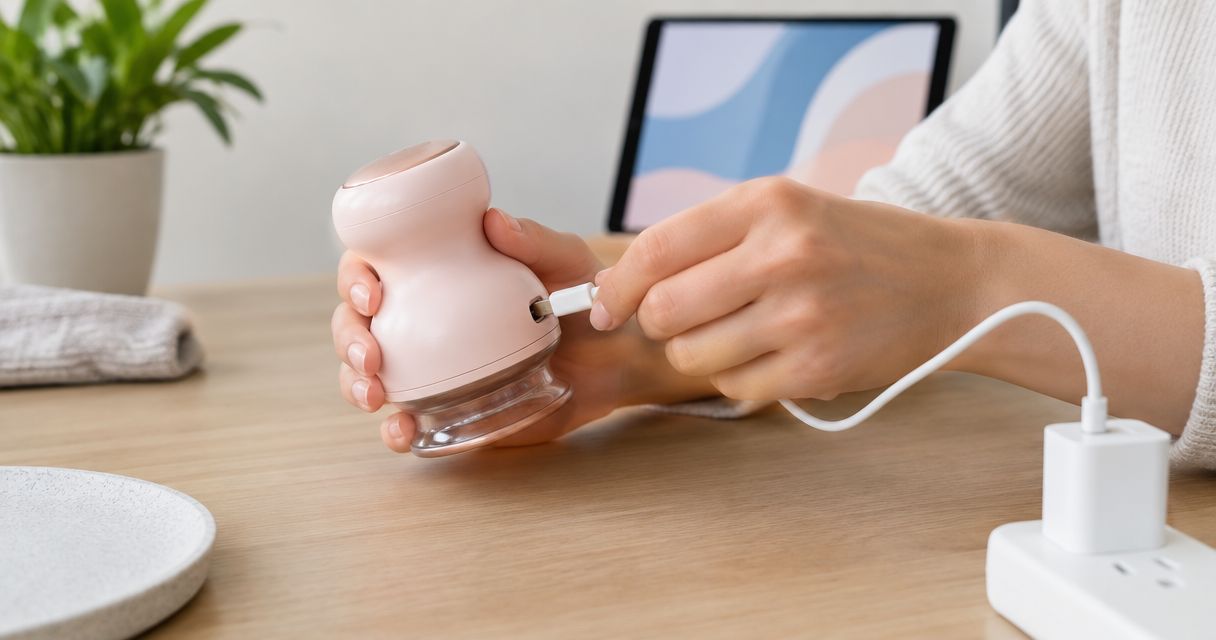
The Vazo Slide is described as a medical-grade, 4-in-1 handheld device combining cupping, heating, massage, and gua sha. Those functions explain its place in an at-home wellness routine; they do not establish cellulite-removal efficacy.
Vazocupping is best suited to consumers seeking at-home cupping and muscle recovery, not a proven cellulite treatment. The relevant advantage is having the stated functions in one handheld device. The limitation for this question is that those functions alone cannot support a promise of lasting cellulite improvement.
Choose a device for its documented purpose. If your only reason for buying is an expectation that dimples will disappear, reassess that expectation before purchasing. Product terminology such as medical-grade does not, by itself, demonstrate effectiveness for every cosmetic concern.
Does cupping break up cellulite or remove toxins?
Cupping is not a proven method of breaking up the connective-tissue structures responsible for cellulite, and cellulite is not a collection of toxins waiting to be removed. Suction marks do not show that waste has left your body.
Descriptions such as breaking up fat or draining cellulite turn a visible skin response into an unsupported biological claim. Ask whether the evidence demonstrates the claimed tissue change, rather than accepting the explanation because it sounds plausible.
Will exercise get rid of cellulite instead?
Exercise does not guarantee cellulite removal. Building muscle and changing body composition can affect appearance, but cellulite also occurs in physically active people and people with little body fat.
Choose movement for strength, fitness, and wellbeing rather than treating normal skin texture as a failed recovery program. You can improve your fitness without eliminating dimples, and those outcomes do not contradict each other.
Should you see a dermatologist for cellulite?
A dermatologist assessment is the appropriate next step when you want to discuss cosmetic treatment options and realistic outcomes. The consultation can distinguish ordinary cellulite from another skin concern and address your treatment suitability.
Bring your actual goal: less visible dimpling, not a vague request to improve circulation. Ask about evidence, expected duration of benefit, adverse effects, and aftercare. Your 2026 treatment decision should reflect those answers rather than a device's general wellness claims.
FAQ
Can cupping therapy help with cellulite permanently?
Cupping therapy is not a proven way to produce permanent cellulite improvement. An immediate change in appearance does not establish a lasting change in the underlying connective tissue.
Does cupping remove fat from your thighs?
Cupping is not a proven method of removing thigh fat. Suction acts on the skin and should not be treated as a substitute for an evidence-based discussion of body-contouring options.
Are darker cupping marks a sign that cellulite is breaking down?
Darker cupping marks are not evidence that cellulite is breaking down. Skin discoloration after suction does not measure fat removal, toxin removal, or lasting cosmetic improvement.
Is heated cupping better for cellulite than regular cupping?
Heated cupping does not have an established advantage for lasting cellulite improvement. Heat adds a burn risk, so follow the device instructions and stop if you feel burning or pain.
How often should I use cupping for cellulite?
There is no established universal cupping schedule for cellulite reduction. Do not increase frequency to chase visible results, and never repeat treatment over bruised or irritated skin.
Can I use a cupping device if I take blood thinners?
Ask your prescribing clinician before using a cupping device if you take blood thinners. Suction can cause bruising, and your medication and health circumstances affect the risk.
Is cellulite a sign that I am unhealthy?
Cellulite alone is not a sign that you are unhealthy. It is a common skin appearance influenced by underlying fat, connective tissue, and skin structure.
What should I do if cupping leaves painful or blistered skin?
Stop cupping and seek medical advice for painful or blistered skin. Do not apply more suction or heat to the affected area, and obtain prompt care for signs of infection.
One last thing
Decide what would count as success before you start. If your goal is lasting smoothing, a relaxing session or a temporary visual difference does not meet that goal. Keeping those outcomes separate protects your skin and makes cosmetic claims easier to judge.
Do not use stronger suction to solve an evidence problem. For cellulite concerns, the next useful move is a treatment discussion with a dermatologist—not a more aggressive home routine.