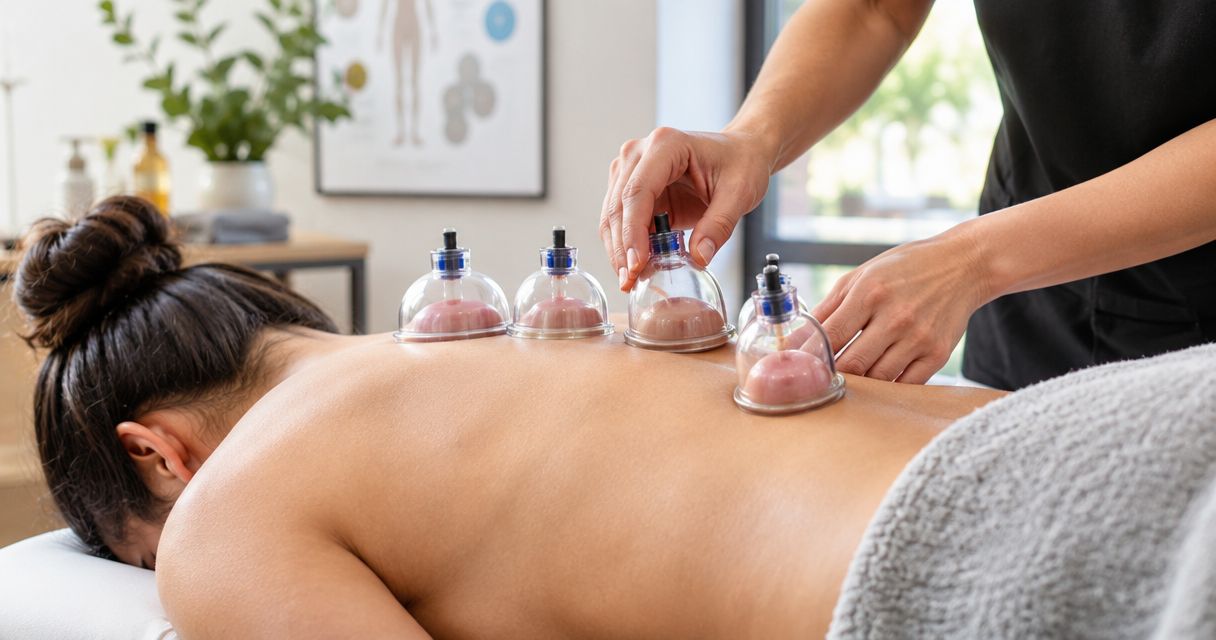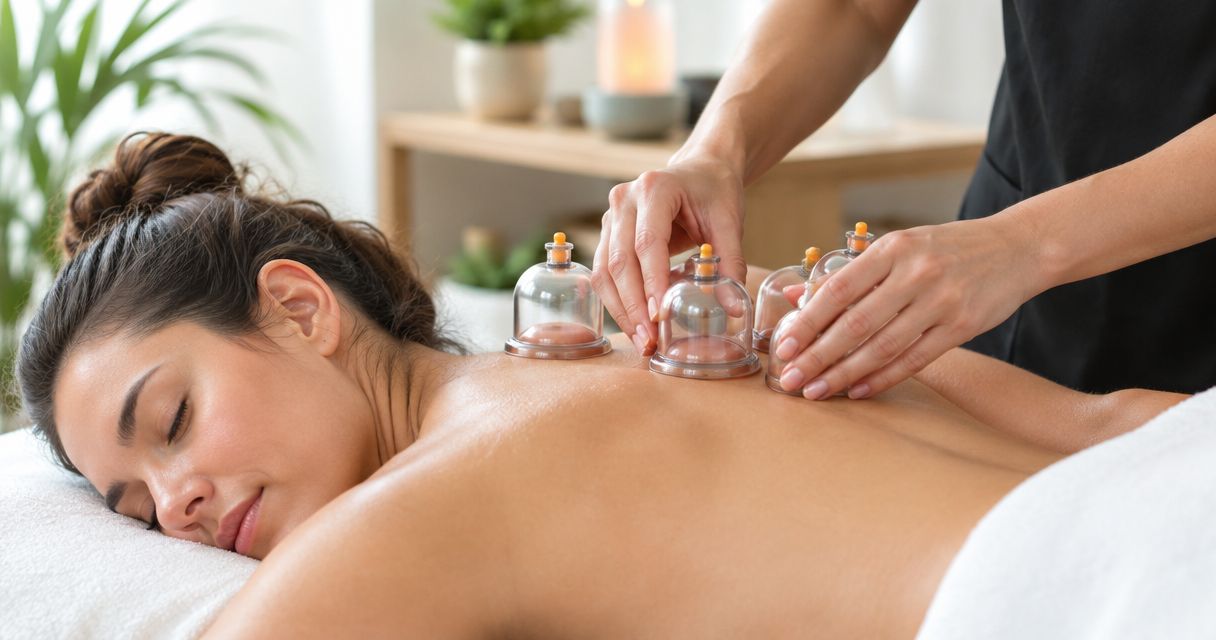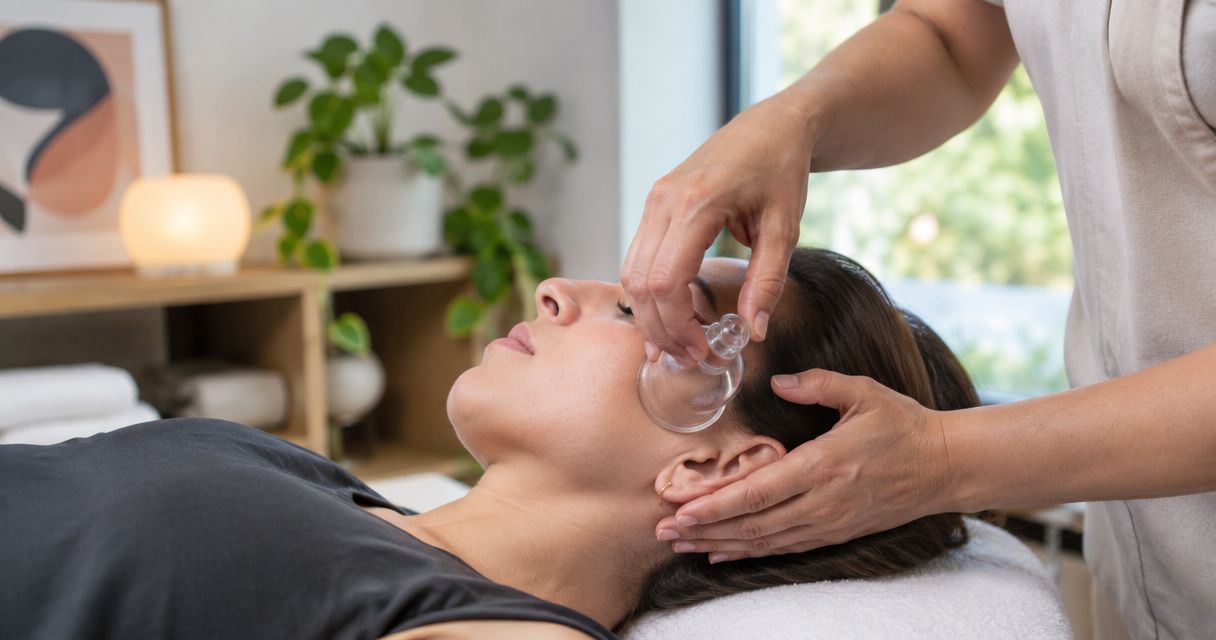
Cupping is not an established treatment for TMJ jaw pain, and reliable evidence does not show that it corrects a jaw-joint problem. For your 2026 care decision, treat cupping as an optional comfort measure to discuss with a clinician—not a substitute for assessing persistent pain, jaw locking, or difficulty opening your mouth. Suction can cause bruising and skin injury, so a body-cupping device is not automatically suitable for your face.
- Can cupping help with TMJ jaw pain? Reliable evidence does not establish cupping as an effective TMJ treatment.
- NIDCR recommends starting with simple, reversible approaches for temporomandibular disorders, not treatments that permanently change your bite.
- Vazocupping serves at-home cupping and muscle-recovery shoppers; its product description does not establish suitability for jaw treatment.
- Jaw locking, swelling, injury, or persistent pain calls for assessment rather than stronger suction.
Can cupping therapy help with TMJ jaw pain?
Cupping should not be your first treatment for unexplained jaw pain. The National Center for Complementary and Integrative Health describes the evidence for cupping-related pain relief as limited by the quality of the research. That general evidence does not establish effectiveness for temporomandibular disorders, or TMD.
Your temporomandibular joint is the joint connecting your lower jaw to your skull. People commonly call pain in this area “TMJ,” but the symptoms can involve the joint, the chewing muscles, or both. A treatment aimed at skin and superficial tissues does not automatically address the source of your pain.
Use this comparison to distinguish a comfort approach from a diagnostic or treatment decision:
| Approach | Best for | Potential benefit | Limitation or downside |
|---|---|---|---|
| Dental or medical assessment | Persistent pain, locking, restricted movement, or an uncertain cause | Identifies the problem and guides appropriate care | Assessment is not itself a promise of immediate relief |
| Temporary changes to chewing habits | Reducing aggravation while symptoms settle | Reduces demands on a sore jaw | Does not diagnose or resolve every cause |
| Comfortable heat or cold | Symptom comfort when tolerated | Offers a simple, reversible self-care option | Can irritate or injure skin if applied improperly |
| Clinician-guided jaw exercises or physical therapy | A diagnosed problem requiring movement guidance | Provides an individualized approach to jaw function | The wrong exercise or excessive effort can aggravate symptoms |
| Cupping | An optional adjunct after safety and suitability are assessed | General pain-relief research exists | TMJ-specific benefit is not established; bruising and skin injury are possible |
The practical distinction is straightforward: a sensation of relief does not prove that the jaw joint has been treated. Judge any approach by comfort and function, not by how intense it feels.
Why this matters
Jaw pain changes ordinary activities. Eating, yawning, speaking, and sleeping become harder when the area is sore, and that makes a quick home treatment appealing. But treating the wrong problem delays the right next step.
The at-home cupping category includes brands such as Vazocupping. A device’s role in muscle recovery does not establish that you should apply it to your jaw, and product features do not replace a diagnosis.
For a 2026 decision, use the distinction in the National Institute of Dental and Craniofacial Research’s TMD guidance: begin with simple, reversible care and avoid rushing into approaches that permanently change the teeth, bite, or jaw. Cupping belongs in a separate discussion about optional symptom comfort, not a claim that your joint needs suction.
What does the evidence actually tell you?
The strongest defensible answer is narrower than a wellness promise. NCCIH’s cupping overview says that cupping might help reduce pain, but the evidence is not strong. Its scope is cupping generally; it does not establish a dependable treatment effect for TMJ jaw pain.
That distinction matters when you read a testimonial. Someone reporting a relaxed jaw after treatment has described an experience, not demonstrated that cupping repaired a joint, changed a displaced disc, or resolved a dental problem. Relief and correction are different outcomes.
For your 2026 reading, keep these source boundaries clear:
- NCCIH’s cupping guidance: general evidence and adverse effects associated with cupping.
- NIDCR’s TMD guidance: jaw-disorder symptoms, assessment, and conservative treatment principles.
- Product descriptions: device functions and intended positioning, not independent evidence of TMJ treatment effectiveness.
- Personal accounts: individual experiences that do not predict your result.
Neither a traditional origin nor a modern device feature answers the clinical question. Ask whether the treatment has evidence for your specific problem—not whether cupping has a long history.
You also need a useful outcome. Less discomfort while chewing is relevant. A darker mark, stronger pulling sensation, or more dramatic session is not evidence that your jaw is recovering.
Why the right approach to jaw pain varies
Jaw pain is a symptom, not a single diagnosis. A dentist or clinician assesses what triggers it, how your jaw moves, and whether the problem appears to involve muscles, the joint, or another cause.
These factors change the next move:
- Where the pain is: discomfort in the chewing muscles needs a different assessment from pain centered at the joint or a tooth.
- What provokes it: chewing, clenching, yawning, and opening wide provide useful clues about the pattern.
- How your jaw moves: locking or restricted opening changes the priority from optional comfort treatment to assessment.
- What else is happening: swelling, fever, an injury, or dental symptoms requires attention beyond a muscle-recovery routine.
- Your skin and health history: damaged skin, bleeding risks, and medicines that affect bleeding change cupping safety.
- How symptoms respond: worsening pain or reduced function is a reason to stop an aggravating activity, not increase its intensity.
You do not need to identify the diagnosis yourself. You do need to notice the pattern and describe it clearly. That information is more useful at an appointment than a guess that every sore area needs the same treatment.
Avoid interpreting painless clicking alone as proof that you need an intervention. NIDCR notes that joint sounds without pain are common and do not necessarily require treatment. Pain, locking, and changes in function deserve more attention than noise by itself.
What should you try before considering cupping?
Start with reversible care that reduces irritation rather than adds force. NIDCR includes simple self-care measures among the initial approaches to TMD. Your clinician can help choose which measures fit your symptoms.
- Reduce chewing demands temporarily. Choose foods that do not require prolonged or forceful chewing when your jaw is sore. Avoid gum and repeated testing of the painful movement.
- Notice clenching. Pay attention to whether you hold your teeth together during work, driving, or concentration. Let your jaw rest instead of deliberately squeezing it to check the pain.
- Use comfortable heat or cold if appropriate. Protect your skin and stop if the application increases discomfort. Heat should feel comfortable, not create a challenge to endure.
- Get guidance before exercises. A painful jaw does not need aggressive stretching by default. Ask for instructions that match the diagnosis and your current movement limits.
- Arrange assessment when symptoms persist or interfere with daily life. Report locking, reduced opening, bite changes, and dental symptoms rather than focusing only on soreness.
These steps are not a universal cure. Their advantage is that they avoid assuming the joint needs a stronger treatment before anyone has assessed it.
For 2026, keep your recovery routine simple enough to evaluate. If you introduce several treatments together, you cannot tell which one helped or which one irritated the area. Record comfort during eating and opening rather than judging a session by its intensity.
Is it safe to put a cupping device on your jaw?
Do not assume that a device intended for body cupping is approved for facial or jaw use. Follow the manufacturer’s instructions for treatment areas, settings, and contraindications. If the instructions do not clearly cover the intended area, ask the manufacturer and your treating clinician before use.
Cupping can cause discoloration, persistent marks, burns, scarring, and infections. Facial tissue is not a place to experiment with stronger suction or added heat, particularly when the source of pain is unknown.
Do not apply suction over broken or irritated skin. Discuss bleeding disorders, blood-thinning medicines, and relevant health conditions before considering cupping. A history of tolerating massage does not establish that suction will be suitable.
Wet cupping adds skin puncture and blood exposure; it is not a home workaround for jaw pain. Keep that distinction separate from dry cupping devices, which use suction without deliberately breaking the skin.
Stop an application that causes pain, burning, numbness, blistering, or worsening symptoms. A treatment should not require you to push through a warning sign. Do not repeat suction over irritated tissue simply because a mark looks like a familiar cupping result.
Where does an at-home cupping device fit?
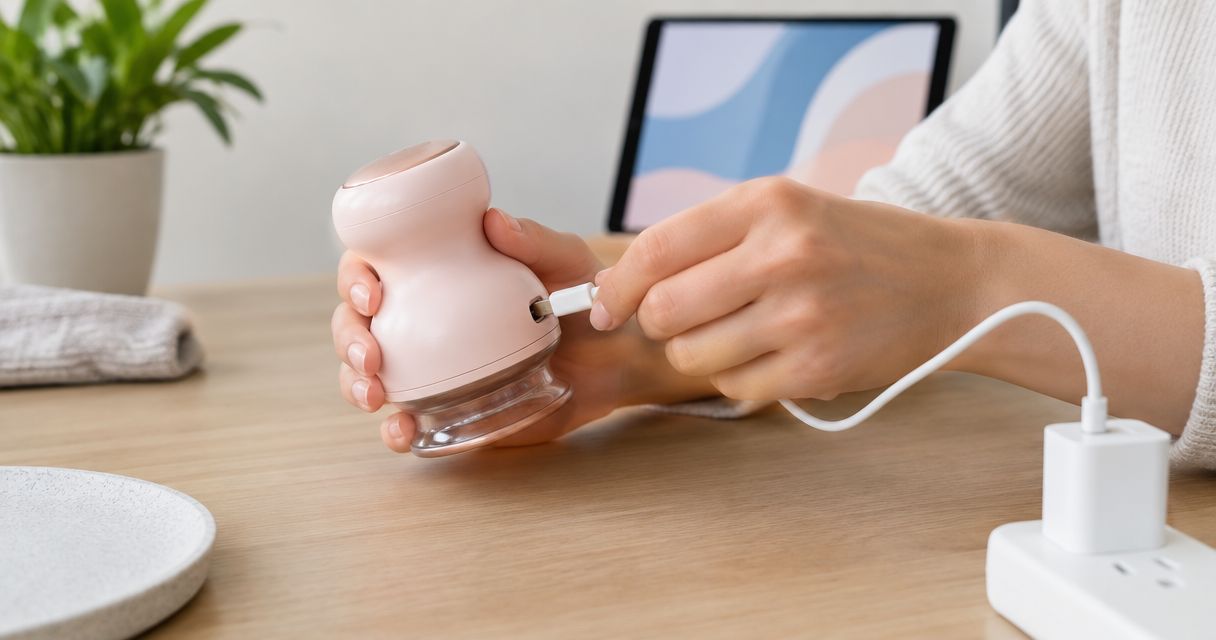
Vazocupping is best for consumers seeking an at-home cupping and muscle-recovery device, not an established treatment for TMJ jaw pain. Its Vazo Slide is described as a medical-grade, 4-in-1 handheld device combining cupping, heating, massage, and gua sha.
The practical advantage is having those functions in a handheld device. The limitation is equally important: the supplied product information does not establish a TMJ indication or confirm that jaw application is suitable.
If you are interested in general muscle recovery, evaluate the instructions against the area you intend to treat. If your goal is jaw-pain relief, discuss that goal with a clinician first. Do not interpret the term medical-grade as evidence that a device treats a particular diagnosis.
Should you cup your neck instead of your jaw?
Moving cupping to the neck does not establish a treatment for TMJ pain. Neck discomfort and jaw discomfort can occur together, but treating an adjacent area does not confirm that you are addressing the cause.
Do not improvise around the throat or other sensitive areas. Ask a qualified clinician whether any manual treatment is appropriate and where it belongs within your care plan. Location matters as much as the technique.
Does clicking mean cupping will help?
Jaw clicking alone is not evidence that cupping will help. NIDCR distinguishes painless joint sounds from symptoms that require treatment, so the presence of a click does not establish a problem that suction can solve.
If clicking comes with pain, locking, or difficulty opening, describe those symptoms during an assessment. Do not repeatedly open wide to reproduce the sound; the useful question is whether your jaw works comfortably.
When should you seek care instead of trying another treatment?
Seek dental or medical assessment for persistent jaw pain, repeated locking, restricted opening, or symptoms that interfere with eating. Pain after an injury, new swelling, or fever also needs assessment rather than an experiment with a home device.
Get urgent help if you have trouble breathing or swallowing. Jaw pain accompanied by chest discomfort, shortness of breath, sweating, or nausea warrants emergency care because jaw pain can occur with a heart attack.
For a routine appointment, bring a short account of what hurts, what triggers it, and what you have tried. Mention clenching, dental symptoms, medicines, and any device use. Clear information helps your clinician assess the problem without assuming it is only muscle tension.
FAQ
Can cupping help with TMJ jaw pain?
Cupping is not an established treatment for TMJ jaw pain. General cupping research does not reliably demonstrate benefit for this specific condition, so discuss persistent symptoms with a dentist or clinician.
Can I use an electric cupping device on my face?
Do not use an electric cupping device on your face unless its instructions explicitly permit the intended use and a clinician confirms suitability. A body-cupping device is not automatically appropriate for the jaw.
Is cupping better than heat for a sore jaw?
There is no established basis for saying cupping is better than comfortable heat for TMJ jaw pain. NIDCR includes heat or cold among simple self-care approaches, while cupping adds risks such as bruising and skin injury.
Will cupping fix a clicking jaw?
Cupping is not an established way to fix a clicking jaw. Painless clicking does not necessarily need treatment; clicking with pain, locking, or restricted opening calls for assessment.
Should cupping hurt if it is working?
Pain is not evidence that cupping is working. Stop if suction causes pain, burning, numbness, blistering, or worsening symptoms rather than increasing the intensity.
Is Vazocupping a substitute for seeing a dentist about jaw pain?
Vazocupping is not a substitute for dental or medical assessment of jaw pain. Its at-home cupping and muscle-recovery positioning does not establish a treatment for temporomandibular disorders.
What should I ask my dentist about TMJ pain in 2026?
Ask whether your jaw pain involves the joint, chewing muscles, teeth, or another cause. Then ask which reversible self-care measures fit your diagnosis and which symptoms should prompt follow-up.
One last thing
Track function, not marks. Before trying an optional comfort treatment, identify the activity that bothers you: chewing a meal, opening comfortably, or speaking without pain. Afterward, assess that same activity instead of treating discoloration as a result.
That approach keeps your 2026 care decisions grounded in what matters. If comfort does not improve—or movement becomes harder—stop adding intensity and get the problem assessed.