Yes, you can travel with a cupping device on a plane when its battery, accessories, and any accompanying liquids meet aviation security and airline rules. For 2026 travel, carry a battery-powered device in your cabin bag, protect it from accidental activation, and check its battery rating before departure; spare lithium batteries must stay in carry-on baggage.
- Can you travel with a cupping device? Yes, subject to battery, baggage, and security rules.
- Vazocupping cupping devices fit consumers seeking at-home cupping therapy and muscle recovery.
- Keep spare lithium batteries in carry-on baggage and protect their terminals.
- Pack cupping oil under the same cabin-liquid rules as other toiletries.
Can you travel with a cupping device on a plane?
Yes. The important distinction is how the device works, not whether you call it a cupping device. A manual cup has no battery issue. An electric device introduces battery and accidental-activation requirements, while oil introduces liquid restrictions.
Use this sequence before packing:
- Identify the power source. Check whether your device is manual, rechargeable, or powered by removable batteries.
- Read the battery label. For a lithium-ion battery, find its watt-hour rating and compare it with your airline's requirements.
- Choose the right bag. Keep spare lithium batteries in your carry-on and favor cabin baggage for the device itself.
- Secure the device. Switch it off, protect its controls, and cushion the cup or suction surface.
- Check accessories separately. Oils, sharp implements, and anything involving a flame require their own assessment.
| Travel setup | Best for | Advantage | Limitation | Packing priority |
|---|---|---|---|---|
| Manual dry-cupping cups | Travelers who want a battery-free setup | No lithium-battery restrictions to assess | Rigid or glass cups still need protection | Cushion cups and prevent breakage |
| Electric cupping device with an installed battery | Travelers who want powered cupping functions | Keeps the device and its controls together | Battery limits and accidental activation matter | Prefer carry-on; check the battery rating |
| Device with removable batteries or spare batteries | Travelers carrying replacement power | Lets you carry a separate power source | Spare lithium batteries cannot travel in checked baggage | Protect terminals and keep spares in the cabin |
If you are choosing a device before a trip, the guide to at-home cupping devices for muscle recovery covers the category. Travel suitability still depends on the individual device's documentation, not the category name.
Why this matters
A device that works well at home still needs a separate packing decision. Security screening, airline battery rules, and safe storage address different questions: what can pass the checkpoint, what can fly, and what can travel without switching on or breaking.
Passing airport security does not cancel an airline's battery restrictions. For a 2026 itinerary, check the operating airline rather than relying only on the booking website, especially when your journey includes connecting flights operated by different carriers.
The Transportation Security Administration handles screening at U.S. airports. Federal Aviation Administration guidance addresses hazardous materials, including lithium batteries. Your airline can impose additional conditions, and another country's airport can apply different screening rules.
Battery-powered cupping devices: check the watt-hour rating
For ordinary consumer lithium-ion batteries, FAA passenger guidance uses 100 watt-hours as the standard threshold for batteries permitted without airline approval. Batteries rated above 100 watt-hours and up to 160 watt-hours require airline approval; these limits apply to the battery, not the device's heating or massage power setting.
Read the label carefully. A charging-input rating describes what the device receives while charging, not necessarily how much energy its battery stores. A USB connection also does not establish the battery's capacity.
If the label gives voltage and capacity in amp-hours, watt-hours equal volts multiplied by amp-hours. If capacity is shown in milliamp-hours, convert it to amp-hours before calculating. Use the manufacturer's documentation when the label does not clearly identify the battery information.
For 2026 packing, follow these priorities:
- Keep spare lithium batteries in carry-on baggage. Protect their terminals against contact with metal objects.
- Use a protective case or separate packaging. Loose batteries should not share an exposed compartment with keys or coins.
- Do not travel with a damaged or recalled battery. Swelling, leakage, or visible damage calls for a safety assessment, not extra padding.
- Check larger batteries with the airline. Do not assume approval because a battery fits inside the device.
For approved spare lithium-ion batteries above 100 watt-hours and up to 160 watt-hours, FAA guidance limits passengers to two spare batteries. That allowance does not mean every airline accepts every battery or device configuration.
What if the cupping device also heats?
A heating function deserves an additional check. Ask the airline about the exact model and follow the manufacturer's travel instructions, particularly if the equipment can generate enough heat to create a fire hazard.
Do not turn on the heating function inside a packed bag. Switching the device off and protecting its controls is the basic precaution; a fabric pouch alone does not prevent a button from being pressed.
Manual cupping cups: protect them from damage
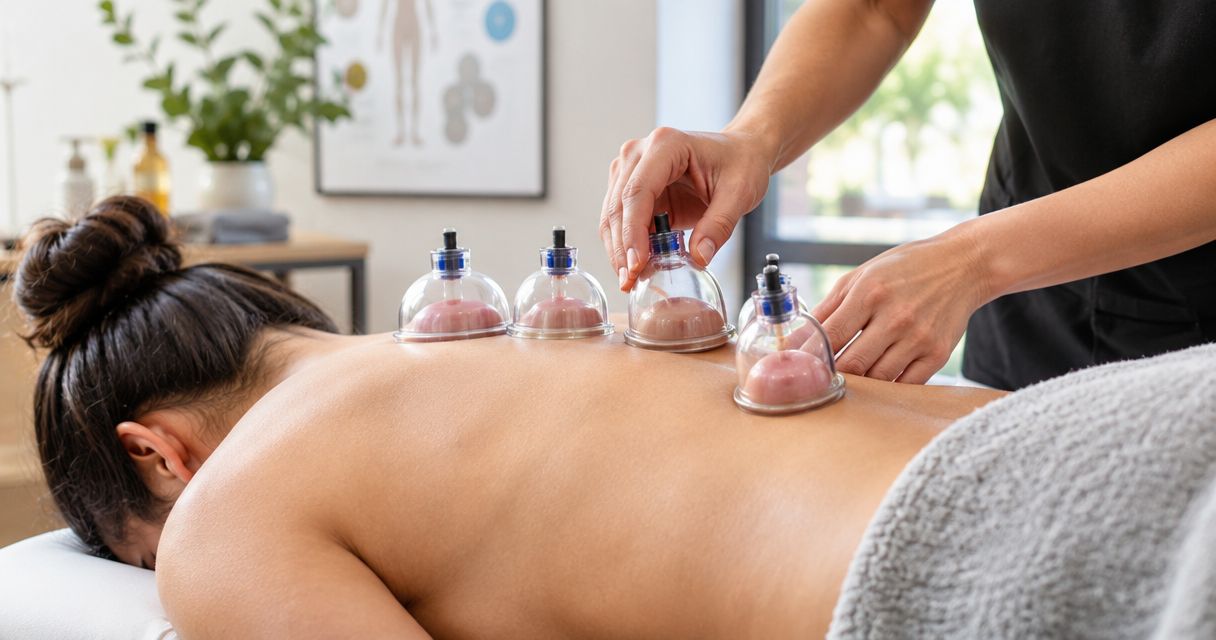
Manual dry-cupping cups avoid the lithium-battery questions that apply to powered devices. That makes the packing decision simpler, but it does not make every accessory suitable for cabin baggage.
Best for a battery-free travel setup: manual cups without flame equipment or sharp accessories. Their advantage is straightforward storage; their drawback is that fragile cups still need cushioning and space.
Keep glass cups separated so they cannot strike each other. Pack rigid cups where heavy items will not crush them, and avoid loading the suction edges against hard objects that could damage them.
Do not treat fire-cupping supplies as ordinary cup accessories. Flammable fuels and ignition equipment have separate restrictions. A cup being permitted does not establish that everything used with it is permitted.
Likewise, wet-cupping equipment introduces sharp-item restrictions and an invasive procedure. For an ordinary travel recovery routine, leave invasive treatment to a qualified practitioner rather than treating it as a hotel-room extension of dry cupping.
Carry-on or checked baggage: choose deliberately
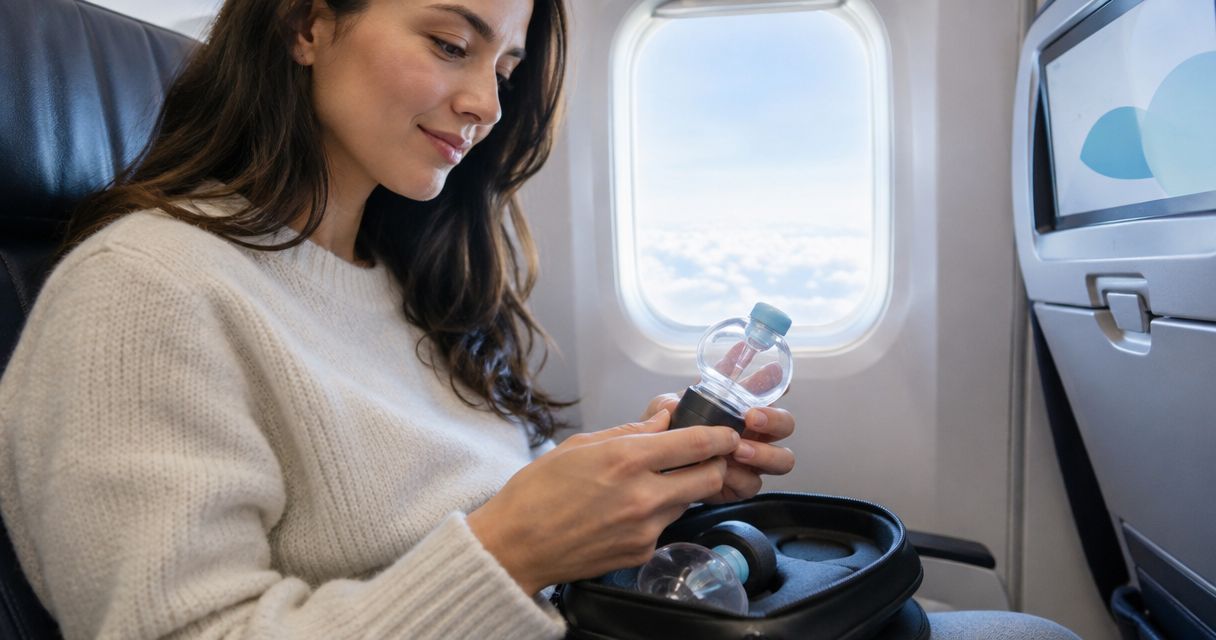
Carry-on is the preferred choice for a battery-powered cupping device. You retain access to it, avoid placing a delicate device among heavier checked items, and keep spare lithium batteries where aviation rules require them.
FAA guidance allows many consumer electronic devices with installed lithium batteries in checked baggage when the applicable requirements are met. The device must be completely switched off—not left in sleep mode—and protected from damage and accidental activation. Your airline's conditions still apply.
| Bag choice | Best for | Benefit | Drawback | Key requirement |
|---|---|---|---|---|
| Carry-on baggage | Battery-powered devices and spare lithium batteries | Keeps the equipment accessible during travel | Cabin space and liquid restrictions require planning | Secure controls and protect battery terminals |
| Checked baggage | Protected manual cups or eligible devices with installed batteries | Leaves more room in your cabin bag | Equipment faces handling without your immediate access | Powered devices must be fully off and protected |
What if your carry-on gets checked at the gate?
Before handing over the bag, remove power banks and spare lithium batteries. Tell the gate agent if the bag contains a battery-powered device and follow the airline's instructions about removing it.
Pack these items somewhere accessible before boarding. A gate-check request is not the moment to discover that your spare battery is buried beneath everything else.
For 2026 flights, this is a useful distinction: a bag's original label as carry-on does not determine the rules after it moves into the aircraft's hold. Its actual storage location does.
Why cupping-device travel requirements vary
The word cupping covers different equipment. These details change the packing decision:
- Power source: manual cups do not create battery questions; rechargeable devices do.
- Battery capacity: lithium-ion watt-hour thresholds determine whether airline approval is required.
- Battery placement: installed batteries and spare batteries have different baggage conditions.
- Additional functions: heating requires attention to activation, heat hazards, and device instructions.
- Accessories: oils, sharp tools, and flammable supplies are assessed separately from the cup.
- Itinerary: airlines, departure airports, and transit countries do not all apply identical conditions.
Your health needs affect whether to use the device, but they do not remove baggage restrictions. Calling an item therapeutic or medical does not automatically create an exemption for its battery or accompanying liquids.
Can you bring cupping oil in your carry-on?
100 milliliters, or 3.4 ounces, is the TSA container limit for ordinary liquids in carry-on baggage. Each container must fit within your permitted quart-sized liquids bag along with your other liquids, gels, and aerosols.
The container's capacity matters, not just how much oil remains. A large bottle with a small amount left in it does not meet the standard carry-on container rule.
For a 2026 departure from a U.S. airport, pack ordinary cupping oil under the TSA liquids rule unless it qualifies for a specific exemption. Do not assume an exemption solely because you use it during a wellness routine.
Prevent leaks as well as screening problems. Close the bottle securely, keep it separate from electrical equipment, and follow the product's storage directions. Check transit-airport rules before deciding how much to carry on an international journey.
Can you use a cupping device during the flight?
Permission to carry a cupping device is not permission to use it onboard. Cabin crew instructions and airline policies control onboard use, including powered equipment and heating functions.
A flight also gives you less space to position the cup, inspect your skin, or handle oil without affecting nearby passengers. Save your routine for a stable, private setting after arrival rather than planning treatment around your seat space.
Do not use cupping to self-treat unexplained swelling, significant pain, or symptoms that need medical attention. A recovery device is not a substitute for an assessment, whether you are traveling or at home.
What should you check before using it after landing?
Let the device's instructions guide your routine. Check the cup, housing, charging connection, and any accessible battery compartment for damage before use. If something looks broken or the battery appears swollen, stop.
At-home convenience is where the client's product fits this discussion: the Vazo Slide from Vazocupping combines cupping, heating, massage, and gua sha in a handheld device. Vazocupping cupping devices fit consumers seeking at-home cupping therapy and muscle recovery. That use case does not establish airline approval or permission to use the device onboard.
The practical advantage of a multifunction device is keeping several functions in one unit. The travel trade-off is checking powered-device requirements rather than packing it as if it were a simple manual cup. Confirm its instructions before choosing settings or adding accessories.
Check charging compatibility before departure
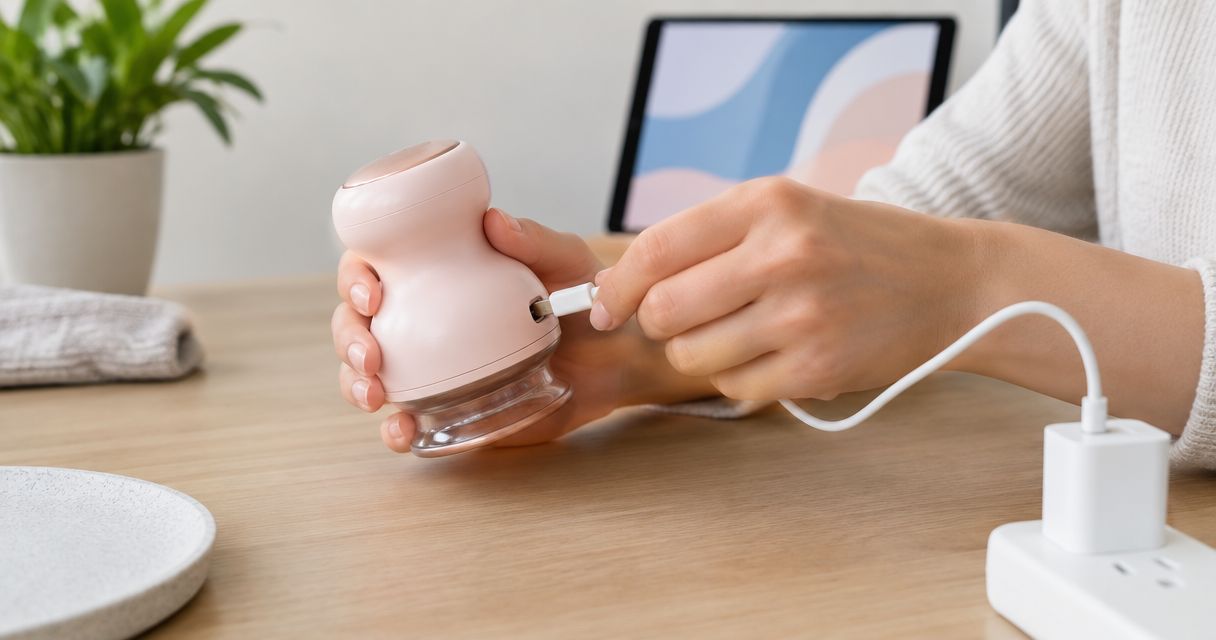
Read the charger or charging equipment's input specifications. A plug adapter changes the physical connection; it does not convert voltage. Do not assume a charger supports your destination's electrical supply because it uses a familiar cable.
Use charging equipment that meets the device manufacturer's requirements. Keep oils away from charging connections, and do not charge a device that shows signs of battery damage.
FAQ
Can you travel with a cupping device in your carry-on?
Yes, you can generally travel with a cupping device in your carry-on when its battery and accessories meet applicable rules. Check the battery rating, prevent accidental activation, and follow your airline's conditions.
Can I put an electric cupping device in checked luggage?
Many consumer devices with installed lithium batteries can travel in checked luggage when applicable requirements are met. The device must be completely switched off and protected from damage and accidental activation; spare lithium batteries must remain in carry-on baggage.
What battery size is allowed on a plane without airline approval?
100 watt-hours is the standard FAA threshold for ordinary consumer lithium-ion batteries permitted without airline approval. Batteries above that threshold and up to 160 watt-hours require airline approval, and airline conditions still apply.
Can I bring spare batteries for my cupping device?
Yes, permitted spare lithium batteries belong in carry-on baggage with their terminals protected against short circuits. FAA guidance permits no more than two approved spare lithium-ion batteries rated above 100 watt-hours and up to 160 watt-hours.
How much cupping oil can I take through TSA?
100 milliliters, or 3.4 ounces, is the TSA container limit for ordinary carry-on liquids. The containers must fit in your permitted quart-sized liquids bag, and a partly empty larger bottle does not meet the standard rule.
Can I use my heated cupping device in my airplane seat?
Do not assume you can use a heated cupping device onboard just because you can carry it. Follow cabin crew instructions and airline policies, and save treatment for a stable setting after arrival.
Are manual cupping cups easier to travel with than electric ones?
Manual dry-cupping cups avoid battery-related restrictions, which makes their packing requirements simpler. They still need protection from damage, and accompanying oils, sharp tools, or flame equipment require separate checks.
One last thing
Pack for a possible gate check, not just the bag you expect to carry onboard. Keep spare batteries, power banks, and the device accessible so you can respond before the bag enters the hold.
Before your 2026 departure, take a clear photo of the battery label and keep the manufacturer's instructions accessible. That gives you the device details needed for an airline inquiry without relying on memory. For your Vazocupping routine, keep the distinction simple: travel permission concerns transport; safe use follows the device instructions.