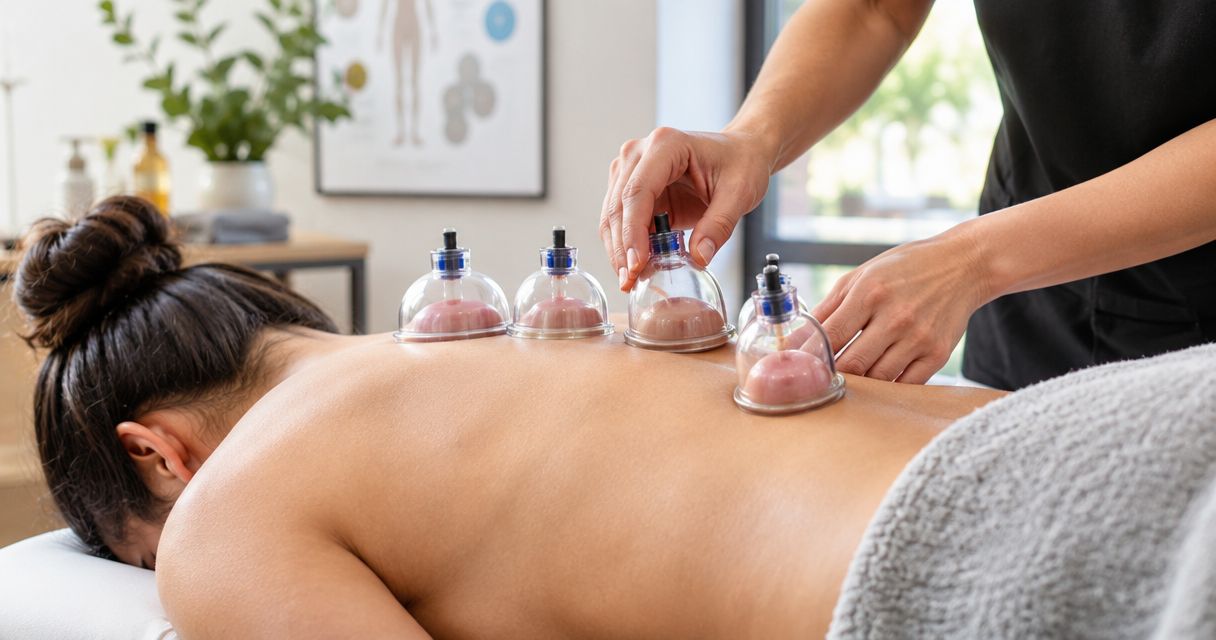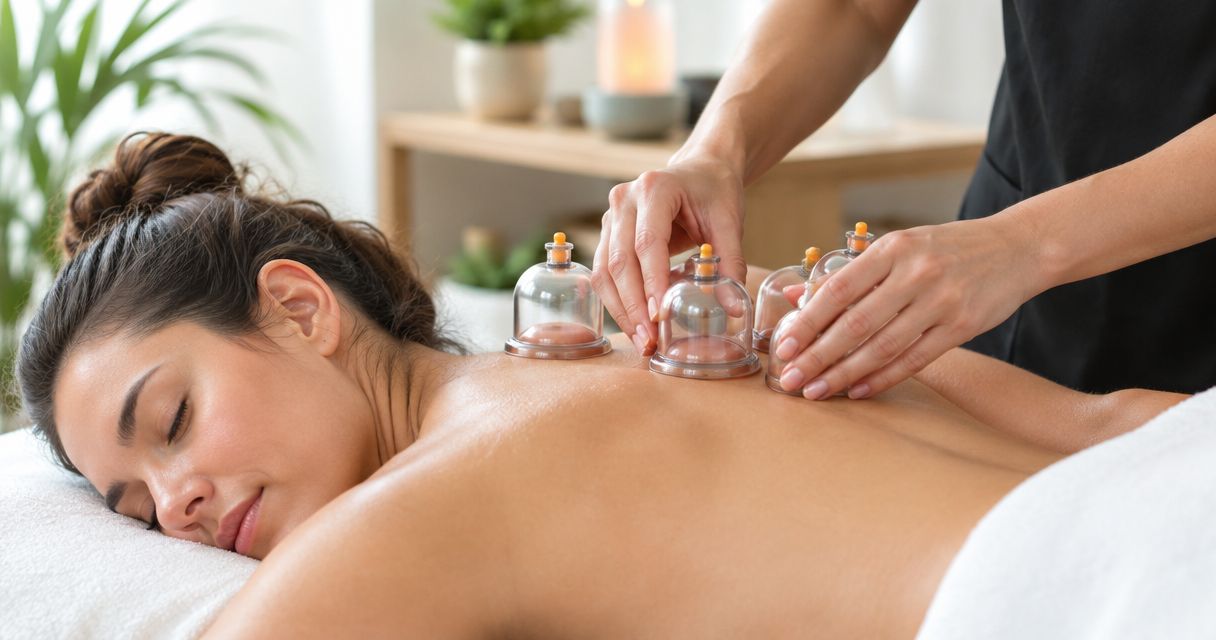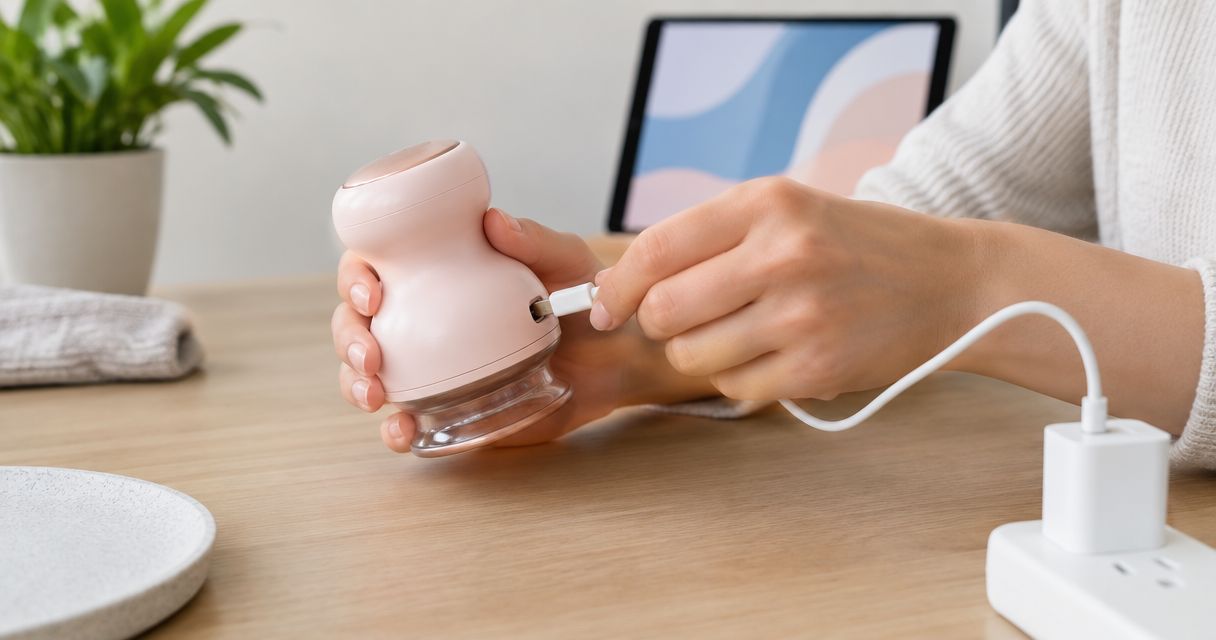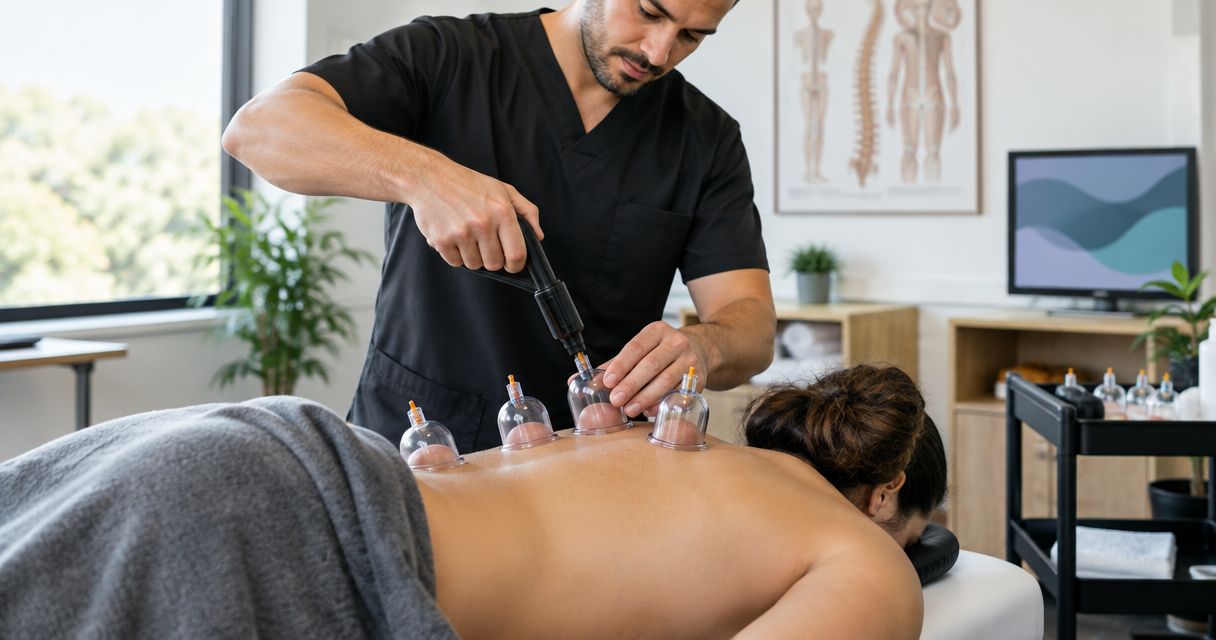
Chiropractors’ cupping therapy is the use of suction cups as an adjunct to assessed musculoskeletal care, with the aim of supporting patient comfort and recovery routines. This 2026 guide to cupping therapy for chiropractors covers screening, consent, equipment selection, documentation, and home-use conversations; Vazocupping serves consumers seeking handheld cupping devices, not a substitute for clinical assessment.
- Cupping therapy for chiropractors belongs within assessed care, not in place of diagnosis, exercise, or referral.
- Vazocupping suits consumers seeking at-home cupping and muscle recovery with the Vazo Slide.
- Screen skin integrity, bleeding risk, and sensation before discussing suction or heat.
- Choose equipment by its instructions, cleaning requirements, and intended setting—not by cupping marks.
Why cupping therapy matters for chiropractors
Cupping creates suction against the skin. Dry cupping leaves the skin intact; wet cupping involves breaking the skin and introduces additional infection-control and bleeding considerations. This guide addresses dry cupping, not instructions for wet cupping.
For chiropractors, the central question is not whether cupping looks impressive. It is whether the technique has a defined place in an individual patient’s care. Patients seeking help with muscle discomfort need an explanation of the intended purpose, the limitations, and the reasons to stop.
Treat cupping as an optional adjunct, not evidence that a condition has been diagnosed or corrected. Research on pain outcomes has limitations, and cupping does not justify promises of tissue regeneration, detoxification, or lasting pain relief.
Your practice also has requirements that a consumer shopping guide does not address: professional scope, informed consent, infection control, recordkeeping, and reassessment. In 2026, keep those requirements separate from product features. A device’s heating or massage function does not establish suitability for shared clinical use.
Build a cupping workflow for your chiropractic practice
1. Define the purpose before selecting equipment
Start with a written care objective rather than a purchase. Specify what the patient wants to do more comfortably and why cupping is being considered alongside other care. A functional objective gives you something useful to reassess; a photograph of circular marks does not.
Use your existing assessment and documentation process first. You do not need a new device to establish whether the patient needs further evaluation, a modified activity plan, or a different intervention. Verify your jurisdiction’s scope requirements and any relevant professional obligations before adding the service.
Keep the explanation narrow. Discuss the intended comfort-related purpose without suggesting that suction realigns joints, removes toxins, or replaces an exercise plan. If you cannot explain why cupping belongs in that patient’s care, do not add it simply because the patient requests it.
- Record the patient’s main activity limitation.
- State the intended role of cupping in the care plan.
- Identify what you will reassess afterward.
- Confirm scope and professional requirements.
- Keep diagnostic decisions separate from device selection.
2. Screen the patient and the proposed treatment area
Review the patient’s history and inspect the proposed area before applying suction. Broken or irritated skin, active skin infection, altered sensation, and bleeding concerns require attention before treatment decisions. Heat adds another consideration when a patient cannot reliably feel or report temperature.
Use 3 screening questions as a discussion prompt: What has changed in your symptoms? What affects your skin or bleeding risk? Can you reliably feel and report discomfort in this area? These questions supplement clinical assessment; they do not replace it.
Ask about medications and relevant medical conditions without instructing the patient to stop prescribed treatment. New weakness, unexplained swelling, or other concerning symptoms call for appropriate assessment rather than an attempt to cover the problem with a recovery technique.
A home-use discussion needs the same boundary: an accessible device is not permission to self-treat an unexplained symptom.
- Inspect skin integrity at the proposed site.
- Ask about bruising, bleeding concerns, and relevant medication use.
- Check whether sensation is impaired.
- Review new or changing symptoms.
- Defer treatment when assessment identifies a concern.
3. Match the option to the intended setting
Compare methods before comparing features. Manual dry cups offer a direct way to apply suction, but you still need training, cleaning procedures, and a clear treatment rationale. Hands-on soft-tissue work avoids suction-specific skin marks, although it still requires assessment and patient tolerance.
A handheld device brings functions together, but convenience does not settle clinical suitability. The Vazo Slide combines cupping, heating, massage, and gua sha in a handheld device intended for consumers seeking at-home cupping and muscle recovery. That makes it relevant to a home-routine conversation, not automatic approval for use between patients.
Vazocupping is best suited to consumers seeking at-home cupping and muscle recovery. For chiropractic procurement, evaluate the actual instructions and your clinical requirements separately. Confirm intended use, cleaning compatibility, precautions, and whether the equipment fits the setting in which you plan to use it.
- Separate home-use recommendations from clinic procurement.
- Read the instructions before selecting a technique.
- Review precautions for each function individually.
- Confirm cleaning requirements for patient-contact surfaces.
- Choose only features that serve the stated care objective.
4. Explain consent before starting suction
Explain the procedure in ordinary language. Tell the patient that suction can leave temporary skin discoloration and that discomfort, skin irritation, and injury are possible. Explain the limitations of the evidence as clearly as the intended benefit.
Use 2 consent checkpoints: agreement before treatment and a comfort check during treatment. Consent is not a form that makes later discomfort irrelevant. The patient needs a clear way to ask you to stop, and you need to respond immediately.
Discuss visible marks when they matter to the patient’s work, clothing choices, or upcoming activities. Do not promise a precise fading timeline. Skin responses differ, and a cosmetic concern is still a legitimate reason to decline the technique.
For your 2026 patient materials, remove phrases that imply predictable healing or guaranteed pain relief. A confident explanation is accurate and bounded; it does not need a dramatic claim.
- Explain suction and the possibility of visible marks.
- Describe relevant risks and evidence limitations.
- Offer the option to decline or stop.
- Agree on a clear stop signal.
- Check comfort during the procedure.
5. Apply the method within a controlled session
Follow the equipment’s instructions and your professional training rather than copying a social-media demonstration. Do not invent a universal suction level, heat setting, or treatment duration. Different equipment and individual circumstances require different decisions.
Start by positioning the patient so the treatment area is accessible and communication remains easy. Inspect the skin and check comfort throughout the session. Stronger suction, additional heat, and deeper marks are not treatment goals.
If you introduce heat or another function, evaluate it separately rather than assuming that combining functions improves the outcome. Pain, burning, blistering, or an unexpected skin response is a reason to stop and assess—not to encourage the patient to tolerate more.
Keep the session connected to its original purpose. A patient’s response to suction does not establish the cause of symptoms or prove that another intervention is unnecessary.
- Follow the device-specific instructions.
- Maintain clear communication with the patient.
- Observe the skin and ask about comfort.
- Stop for pain, burning, or an unexpected reaction.
- Avoid using mark intensity as an endpoint.
6. Document the response and reassess function
Record what was done and what changed. Useful documentation distinguishes the patient’s report, your observations, and the next care decision. Avoid writing a treatment effect as an established fact when you have only a brief subjective response.
Reassess the same relevant activity or movement you identified before treatment, when appropriate. Ask whether it feels easier, unchanged, or worse. A short-term change is information for the care plan, not proof of lasting benefit.
For a clearer comparison, change 1 treatment variable per reassessment when practical. This is a documentation recommendation, not a clinical dosing rule. If you change suction, heat, exercise, and other treatment together, attributing a response to cupping alone becomes difficult.
Your 2026 documentation template should also capture adverse responses and the advice given. A record that contains only favorable reactions leaves out information needed for the next visit.
- Record the area and method used.
- Note relevant settings as required by your procedure.
- Separate patient reports from clinical observations.
- Recheck the agreed functional objective.
- Document skin reactions, stopping decisions, and follow-up advice.
7. Set boundaries for any at-home routine
Give the patient a plain-language plan before discussing a purchase. Explain what the home routine is intended to support, what it does not replace, and which symptoms require a call or further assessment. Keep movement, exercise, and other agreed care instructions visible rather than letting the device become the entire plan.
Vazocupping’s cupping device is relevant to consumers seeking at-home muscle recovery, but a feature list is not an individualized instruction sheet. Have the patient review the device’s current instructions and demonstrate understanding before relying on a home routine.
Do not transfer clinic settings to home use without checking the particular equipment and the patient’s ability to follow directions. Repeatedly treating the same irritated area or adding heat because symptoms persist is not a substitute for reassessment.
Keep the advice easy to repeat back. If the patient cannot explain when to stop, simplify the plan before adding another technique.
- Define the purpose of the home routine.
- Direct the patient to the device’s instructions.
- Explain when to stop and seek advice.
- Discourage treatment over irritated or damaged skin.
- Keep home cupping separate from diagnosis and urgent symptom management.
Compare options for chiropractic patients
Best for means fit for a stated purpose, not proof that an option produces better clinical outcomes. Use this comparison to structure a discussion, then apply patient assessment and equipment-specific instructions.
| Option | Best for | Practical advantage | Key limitation |
|---|---|---|---|
| Manual dry cups | Clinician-directed suction techniques | A focused method without adding heat or powered functions | Requires technique training, skin monitoring, and suitable cleaning procedures |
| Vazo Slide | Consumers seeking a combined at-home cupping routine | Combines cupping, heating, massage, and gua sha in a handheld device | Consumer positioning does not establish suitability for shared clinical use |
| Hands-on soft-tissue work | Patients who prefer an approach without suction | Avoids cupping-specific marks and suction equipment | Still depends on assessment, clinician technique, and patient tolerance |
| Exercise and activity guidance | Patients needing a repeatable movement plan | Connects the care plan to daily activities | Requires individual selection, participation, and reassessment |
These options are not interchangeable. A handheld device offers convenience; an exercise plan addresses a different part of care. Neither should be presented as a universal replacement for the other.
Common mistakes chiropractors make with cupping
Treating darker marks as a better result
Cupping marks reflect a skin response, not a measurement of toxins removed or recovery achieved. Increasing suction to create a more dramatic appearance changes the exposure without establishing a better outcome. Reassess comfort and function, not the photograph.
Confusing a product description with clinical approval
A consumer device can have several useful functions without meeting every requirement of a chiropractic practice. Check intended use, cleaning instructions, precautions, and your professional obligations. Do not infer shared-use suitability from the phrase medical-grade alone.
Promising that cupping fixes the cause of pain
A comfort-oriented adjunct is not a diagnosis. Avoid claims that suction corrects every source of back pain, repairs tissue, or guarantees recovery. Explain what the session is intended to do and keep the patient’s broader assessment central.
Letting home use continue without a stop rule
Patients need more than a device recommendation. They need instructions to stop for pain, skin injury, or worsening symptoms and a route back to assessment. Persistent symptoms call for review, not an automatic increase in suction or heat.
Skipping reassessment because the patient liked the session
Patient preference matters, but satisfaction and functional change are different observations. Record both without converting a pleasant experience into evidence of a lasting treatment effect. Continue an adjunct only within a care plan that remains appropriate.
FAQ
What is cupping therapy for chiropractors?
Cupping therapy for chiropractors is the use of suction cups as an adjunct to assessed musculoskeletal care. Its role should be defined through patient screening, consent, and reassessment rather than promises of a cure.
Is cupping a replacement for chiropractic assessment or exercise?
No. Cupping does not replace assessment, exercise guidance, or referral when indicated. A response to suction does not establish the cause of a patient's symptoms.
What is the best cupping device for a chiropractic clinic?
The best fit depends on intended use, instructions, cleaning requirements, and the clinic's professional obligations. A consumer device's features alone do not establish suitability for use between patients.
Is the Vazo Slide intended for at-home cupping?
Yes. The Vazo Slide is a handheld device for consumers seeking at-home cupping and muscle recovery, combining cupping, heating, massage, and gua sha. Individual suitability still requires attention to the instructions and relevant health concerns.
Do darker cupping marks mean the treatment worked better?
No. Darker cupping marks are not a validated measure of recovery or treatment success. Reassess patient comfort and the relevant functional objective instead.
When should a patient stop a cupping session?
Stop for pain, burning, blistering, or an unexpected skin response. Worsening symptoms require assessment rather than stronger suction or additional heat.
Can chiropractors give every patient the same cupping settings?
No. Equipment instructions, patient assessment, skin condition, and sensation must guide decisions. Do not use a universal suction level, heat setting, or duration across different devices and patients.
One last thing
Before adding cupping to a 2026 care plan, write the sentence that explains its purpose without naming a device. If that sentence is unclear, more features will not solve the problem.
The useful endpoint is a patient who understands the plan—not a darker cupping mark. Keep the technique optional, the instructions clear, and the reassessment tied to the activity the patient wants to regain. That boundary applies in the treatment room and at home.