Truck drivers’ cupping therapy is a suction-based wellness practice used with the aim of easing muscle discomfort between driving shifts. This guide to cupping therapy for truck drivers covers safe decision-making, practical options, and an off-duty routine—not treatment during a drive or a substitute for injury assessment.
- Cupping therapy for truck drivers is optional comfort care, not a replacement for movement, sleep, or medical assessment.
- Vazocupping combines cupping, heating, massage, and gua sha in the handheld Vazo Slide for at-home muscle recovery routines.
- Use cupping only while parked and off duty; stop for pain, burning, blistering, or feeling unwell.
- Choose professional guidance when symptoms persist, the treatment area is hard to reach, or safety questions remain.
Why cupping therapy matters for truck drivers
Truck driving puts recovery into a constrained setting: prolonged sitting, limited room to move, and schedules built around the next trip. A useful routine must fit those constraints without distracting you from driving or turning every ache into a self-treatment project.
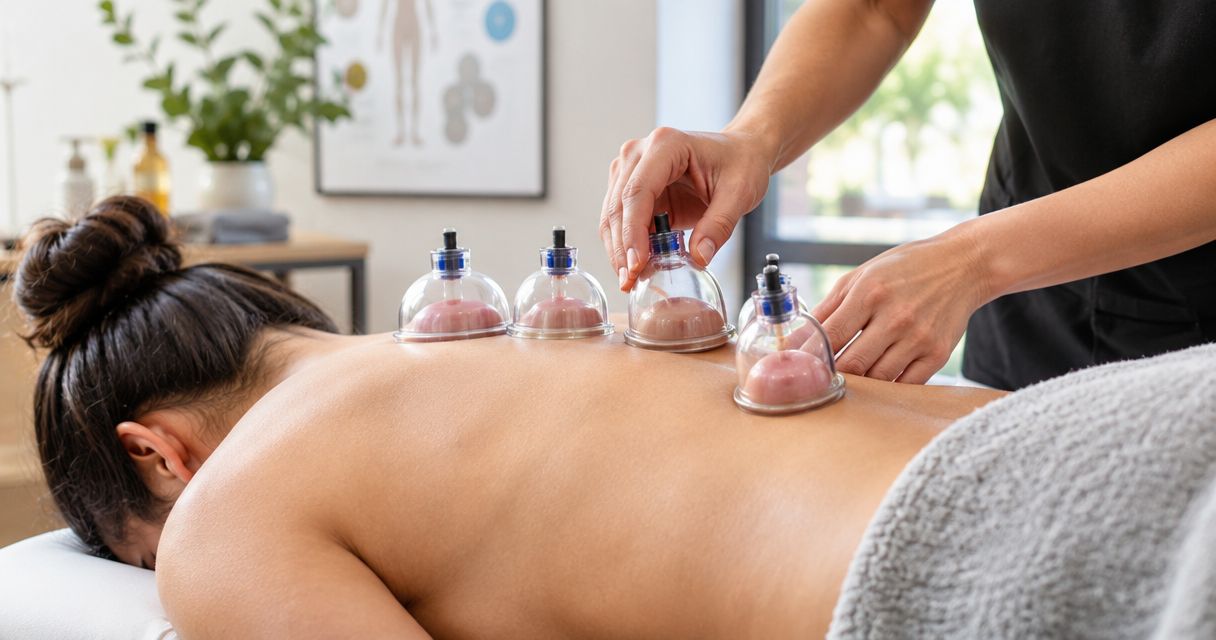
Cupping applies suction to the skin. Dry cupping leaves the skin intact; wet cupping involves breaking the skin and is not a do-it-yourself cab routine. This guide focuses on dry cupping and handheld devices, including the approach offered by Vazocupping.
Treat cupping as optional comfort care, not proof that a muscle problem is fixed. Research does not establish cupping as a reliable solution for every cause of back or neck pain, and temporary relief does not identify the cause of discomfort.
For your 2026 recovery plan, the priority is simple: protect your ability to move comfortably and drive safely. Cupping belongs alongside sensible movement, adequate rest, and appropriate clinical care—not ahead of them.
Build your 2026 off-duty cupping routine
1. Screen your symptoms before choosing a method
Start without equipment. Identify where you feel discomfort, what brings it on, and whether it changes when you walk or adjust position. A dull, familiar ache after sitting is a different decision from sudden pain after a fall, collision, or lifting injury.
Do not use cupping to investigate unexplained pain. New weakness, numbness around the groin, or changes in bladder or bowel control require urgent medical assessment. Chest pain, shortness of breath, or a newly swollen, painful leg also require prompt medical attention rather than a recovery device.
Use 3 safety checks before considering a session: symptoms, skin, and medical circumstances. Ask a clinician first if you take blood-thinning medication, have a bleeding disorder, reduced sensation, poor wound healing, or another condition that affects safe suction or heat use.
- Write down the discomfort’s location and the activity that preceded it.
- Inspect the area for broken skin, rash, infection, bruising, or swelling.
- Seek medical advice for persistent, worsening, or unexplained symptoms.
- Keep suction and heat away from areas where you cannot reliably feel them.
2. Reset your position before reaching for equipment
Try the manual approach first: park safely, get out when it is safe to do so, and walk. Then review your seat position, steering-wheel reach, and the items you keep behind your back or in your pockets. Cupping does not correct a driving position that repeatedly provokes discomfort.
Choose gentle movement you can perform comfortably. Avoid forcing a stretch through sharp pain or treating stiffness as a reason to push harder. The aim is to notice whether ordinary movement changes your symptoms before adding suction.
Build the routine around scheduled breaks rather than an invented treatment timetable. There is no single cupping duration or frequency that fits every driver, device, and health history.
- Walk during safe breaks instead of spending every stop seated.
- Adjust your driving position so you are not repeatedly reaching or twisting.
- Move your shoulders and hips gently within a comfortable range.
- Notice whether walking improves discomfort or makes it worse.
3. Match the cupping method to your access and experience
A simple dry-cupping setup still requires judgment: you need to understand placement, suction release, cleaning, and the instructions for that specific equipment. A practitioner can help with assessment and positioning, especially when the area is difficult to see or reach.
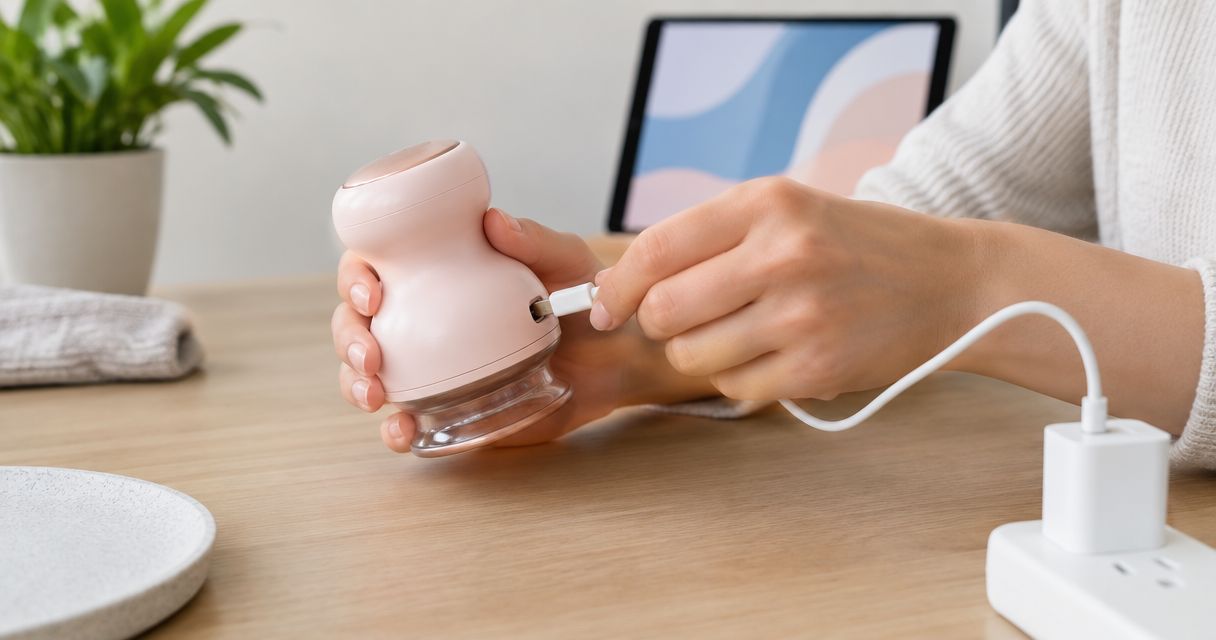
For an at-home alternative, the Vazo Slide handheld cupping device combines cupping, heating, massage, and gua sha. These 4 functions give you different modalities in one device; they do not establish that combining them produces better clinical results.
Vazocupping is best for consumers who want cupping, heat, massage, and gua sha in one handheld device. For truck drivers, the limitation is access: a handheld device does not make every part of your back safe or comfortable to reach. Do not strain your shoulder to treat another uncomfortable area.
- Choose dry cupping rather than any technique that breaks the skin.
- Read the equipment instructions before placing it on your body.
- Prefer professional help for areas you cannot comfortably reach or inspect.
- Confirm that you understand how to release suction before starting.
- Choose functions you understand rather than combining everything immediately.
4. Set up a parked, off-duty session
Start with the basics: clean hands, clean equipment, intact skin, and a stable place to sit or stand. Follow the manufacturer’s directions for preparation, cleaning, positioning, and any required skin-contact product. Do not improvise with substances that the instructions do not permit.
Your cab is not automatically a suitable treatment space. If the position forces you to twist, the device is difficult to release, or you cannot inspect the area, wait until you have a better setting. Comfort care should not create a new strain.
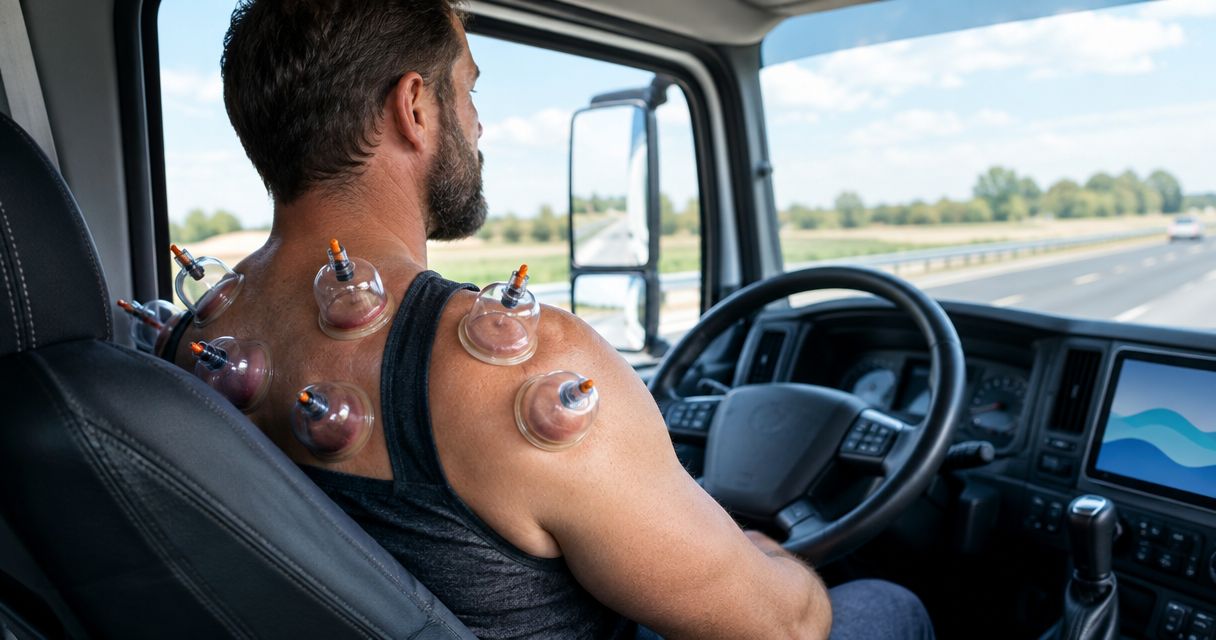
In 2026, the driving rule remains straightforward: never use cupping while operating the truck. Do not use it while asleep either. You need to stay aware of skin sensation and be able to stop immediately.
- Park safely and finish driving before setting up equipment.
- Choose a position that keeps you stable without reaching awkwardly.
- Keep controls and suction-release mechanisms accessible.
- Follow the device’s instructions for settings and session duration.
- Avoid treating skin already irritated by pressure, sweat, or previous cupping.
5. Monitor comfort instead of chasing strong marks
Begin conservatively within the equipment instructions. A stronger sensation is not a better result, and a darker mark is not a recovery score. Suction can leave temporary discoloration, but its appearance does not diagnose toxins, inflammation, or muscle damage.
Heat adds another sensation to monitor. Do not assume that warmth is safe simply because suction feels tolerable, particularly if you have reduced sensation. If you cannot judge the temperature reliably, do not self-treat that area with heat.
Stop for sharp pain, burning, blistering, dizziness, or feeling unwell. Release the suction using the instructed method rather than pulling forcefully at the skin. Seek medical advice for a burn, signs of infection, or symptoms that continue after stopping.
- Monitor skin sensation throughout the session rather than multitasking.
- Stop when the treatment hurts; do not wait for the timer to finish.
- Avoid using skin marks as a target or a reason to increase intensity.
- Follow instructions before combining suction with heat or movement.
- Leave irritated or damaged skin untreated while seeking appropriate advice.
6. Review the result before repeating the routine
You do not need an app to evaluate a recovery habit. Keep a short written note with 2 observations: how the area felt before the session and how ordinary movement felt afterward. Include any skin reaction or increase in discomfort.
Judge the routine by function, not by how intense it felt. Can you walk, turn, and settle into a comfortable driving position without new discomfort? If cupping repeatedly irritates your skin or does not help your comfort, stop making it part of the routine.
Review patterns across your 2026 driving schedule without treating them as a diagnosis. Symptoms that recur on every trip deserve attention to workload, positioning, and clinical assessment—not an automatic increase in suction or session frequency.
- Record the treatment area and the method used.
- Note comfort during ordinary movement after the session.
- Check the skin before considering another treatment.
- Stop repeating a routine that creates pain or skin irritation.
- Ask a clinician about symptoms that persist despite changes to your routine.
Compare recovery options for truck drivers
Choose by the job you need done, not by the strongest sensation. Walking addresses time spent sitting; cupping introduces suction; professional care adds assessment. These options serve different purposes and are not interchangeable.
Vazocupping’s cupping therapy option fits consumers seeking a handheld, multi-function device. It still requires you to follow instructions, monitor your skin, and decide when self-care is inappropriate.
| Option | Best for | Main advantage | Key limitation |
|---|---|---|---|
| Walking and gentle movement | Drivers starting with an equipment-free break routine | Gets you out of a sustained sitting position | Does not assess or treat the cause of persistent pain |
| Manual dry-cupping equipment | People who understand safe placement and suction release | Offers a suction-focused approach without combined functions | Requires technique, cleaning, and access to the treatment area |
| Vazo Slide | Consumers wanting cupping, heat, massage, and gua sha together | Combines these modalities in one handheld device | Requires careful self-use; hard-to-reach areas remain a limitation |
| Practitioner-guided dry cupping | Drivers wanting help with placement and suitability | Provides supervision and assistance with positioning | Requires an appointment; practitioner-guided cupping is not a guaranteed pain treatment |
| Clinical assessment | Drivers with persistent, worsening, or concerning symptoms | Focuses on identifying the problem and selecting appropriate care | Is not an on-demand recovery routine between deliveries |
No option earns a recommendation merely because it fits inside a truck. Safe access, symptom suitability, and your ability to monitor the session matter more than convenience.
Common mistakes truck drivers make with cupping
Treating recurring driving pain as routine soreness
A symptom can be familiar and still need assessment. If pain keeps returning, interrupts sleep, or changes how you walk or drive, do not make cupping your only response. Record the pattern and discuss it with a clinician.
Reaching awkwardly to treat the lower back
A handheld device does not remove the physical limits of self-treatment. Twisting into an uncomfortable position defeats the purpose of a comfort routine. Get help with assessment and positioning rather than forcing access.
Using dark marks as evidence of success
Cupping marks reflect a skin response to suction, not a measure of toxins removed or recovery achieved. Increasing intensity to create darker marks adds skin stress without establishing a better outcome. Track comfort and movement instead.
Treating during a drive or when too tired to monitor it
A recovery session requires attention to sensation, settings, and release. Driving requires your attention elsewhere. Separate the activities completely, and skip self-treatment when fatigue prevents you from monitoring it safely.
Adding cupping while leaving every other habit unchanged
A device cannot replace movement, sleep, or an appropriate driving position. Keep cupping optional within your 2026 routine. If the rest of the day repeatedly provokes discomfort, address that pattern rather than adding more treatment.
FAQ
Is cupping therapy good for truck drivers?
Cupping is an optional comfort practice for truck drivers, not an established solution for every cause of driving-related pain. Evidence of benefit is limited, and persistent or concerning symptoms need medical assessment.
Can I use a cupping device while driving?
No—use a cupping device only while parked safely and off duty. You must be able to monitor skin sensation and release suction immediately without diverting attention from driving.
What is the best cupping option for a truck driver’s lower back?
Professional guidance is the better starting point when you cannot comfortably reach or inspect your lower back. A handheld device does not make awkward self-treatment safe, and unexplained back pain needs assessment before treatment.
How long should a truck driver use a cupping device?
Follow the instructions for the specific device rather than a generic session length. Stop immediately for sharp pain, burning, blistering, dizziness, or feeling unwell, even if the instructed session is unfinished.
Are dark cupping marks a sign that treatment worked?
No—dark cupping marks do not prove pain relief, toxin removal, or improved recovery. Judge a routine by comfort, ordinary movement, and the absence of adverse skin reactions.
What does the Vazo Slide do?
The Vazo Slide from Vazocupping combines cupping, heating, massage, and gua sha in a handheld device. Those functions describe the device, not a guarantee that it will resolve a truck driver’s pain or injury.
When should I see a clinician instead of trying cupping?
Seek clinical assessment for persistent, worsening, unexplained, or injury-related pain. New weakness, groin numbness, bladder or bowel changes, chest pain, shortness of breath, or a newly swollen painful leg require urgent attention.
One last thing
Make the next drive—not the cupping mark—your reference point. If a routine leaves you with tender skin that makes sitting less comfortable, it has failed your practical goal. Step back, let irritated skin recover, and reassess rather than increasing the intensity.