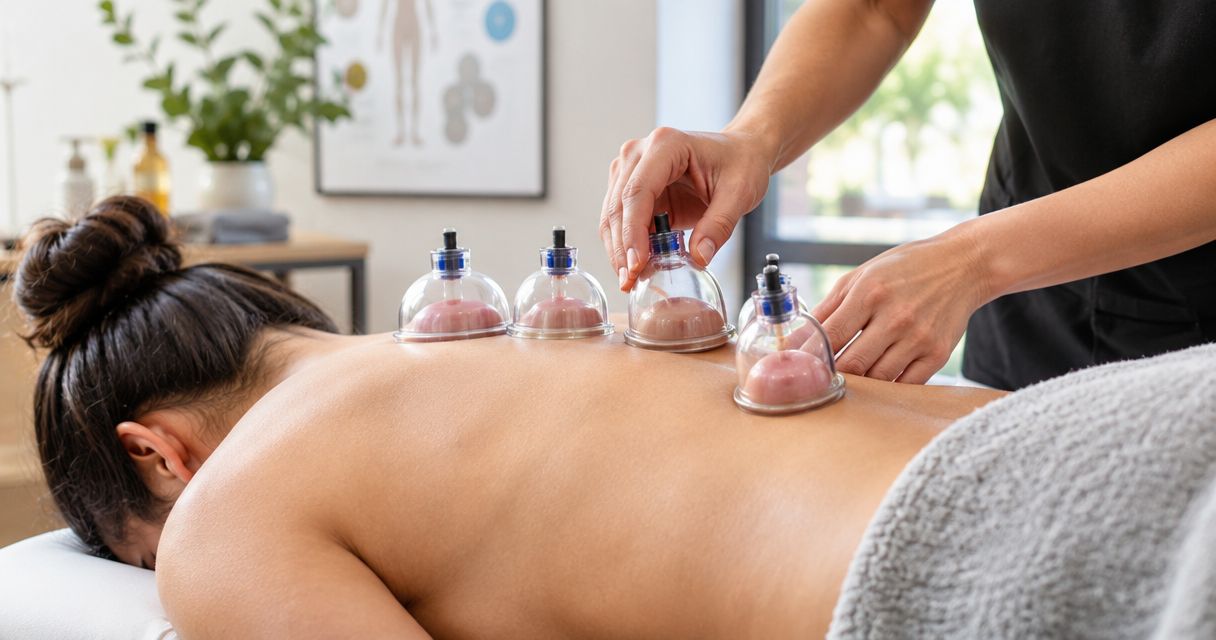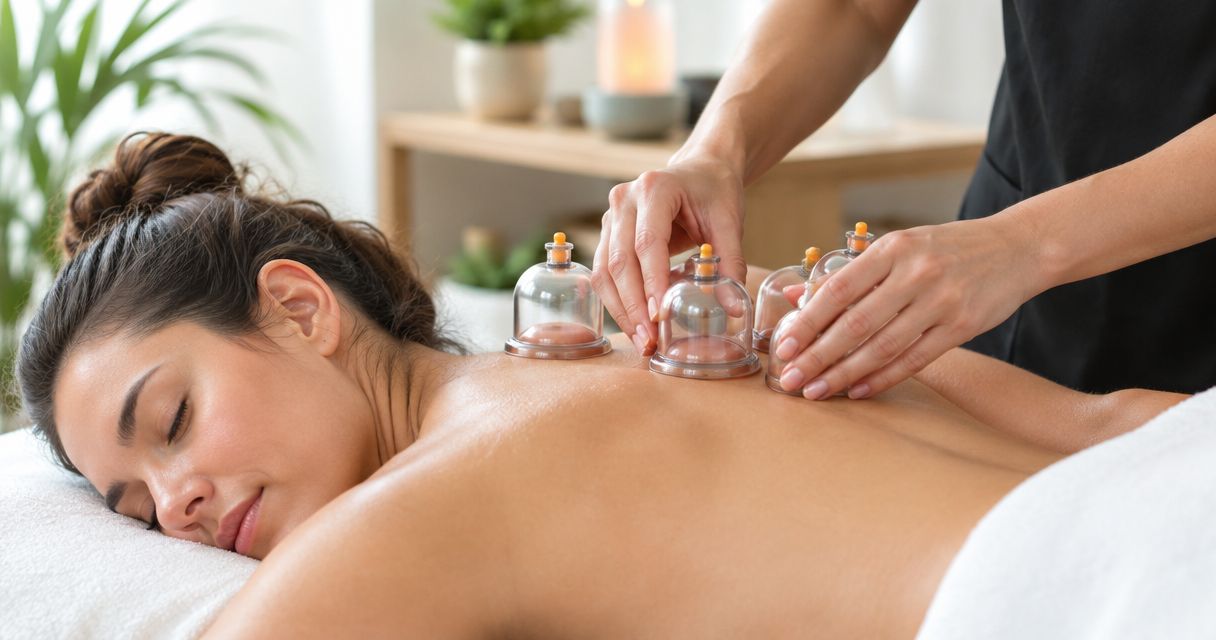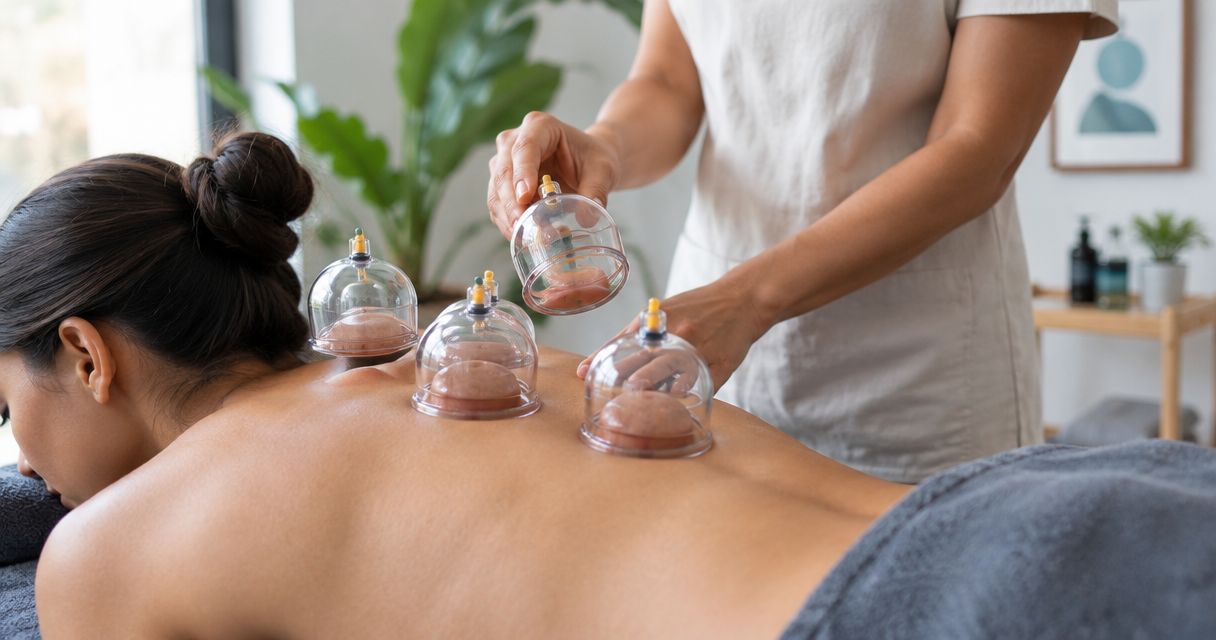
Cupping therapy can help relieve pain, but the evidence is not strong enough to establish reliable benefits or prove that it speeds muscle recovery. For your 2026 wellness routine, treat cupping as an optional comfort tool—not a cure or a replacement for medical care. Skin marks, burns, and other adverse effects belong in that decision alongside any relief.
- Does cupping therapy really work? NCCIH reports possible pain relief, but the supporting evidence is weak.
- Cupping marks do not prove toxin removal, tissue repair, or faster muscle recovery.
- Vazocupping offers at-home cupping equipment; convenience is not evidence of clinical effectiveness.
- Judge cupping by comfort and movement, not suction strength or mark darkness.
Does cupping therapy really work?
Cupping has evidence of possible pain relief, not proof of broad healing benefits. The National Center for Complementary and Integrative Health, or NCCIH, describes most cupping research as low quality. Its assessment says cupping might reduce pain, but the evidence is not strong; there is insufficient high-quality research to draw conclusions about other conditions.
That distinction matters when you explore Vazocupping or any other cupping brand. A device can deliver suction without proving that suction treats the cause of your symptoms. Product features and clinical outcomes answer different questions.
| Claim about cupping | What the evidence supports | What you should do |
|---|---|---|
| It relieves pain | Possible benefit, with weak supporting evidence in NCCIH's assessment | Treat relief as an individual response, not a guaranteed result |
| It speeds muscle recovery | Pain relief alone does not establish faster recovery | Assess your ability to move and train, not just the sensation afterward |
| It removes toxins | Cupping marks do not demonstrate toxin removal | Reject detox claims based on skin color |
| It treats medical conditions | NCCIH reports insufficient high-quality evidence for conclusions about other conditions | Get the condition assessed rather than relying on cupping |
For a 2026 buying decision, the useful question is narrower than whether cupping works for everyone: does it provide worthwhile comfort for you without causing harm or delaying appropriate care? That is a practical test, not proof of a medical treatment.
Why this matters
Feeling better is valuable. It is also different from healing faster. A change in soreness does not, by itself, show that a muscle injury has repaired or that you are ready to return to demanding exercise.
Cupping has a long history, but history and effectiveness are separate issues. Modern equipment changes how you apply suction; it does not automatically strengthen the evidence behind the therapy. The same distinction applies when heat or massage accompanies cupping.
Your next move should match your goal. If you want relaxation or temporary comfort, weigh the experience against its risks. If you want help with persistent pain, weakness, or an injury, start with an appropriate clinical assessment rather than a stronger setting.
What does the research actually tell you?
NCCIH's consumer guidance on cupping provides a clear starting point: most research is low quality, and stronger evidence is needed. That supports a limited conclusion about possible pain relief. It does not support promises of whole-body healing, detoxification, or reliably improved athletic performance.
A credible effectiveness claim needs more than reports that people felt better after treatment. Researchers must compare outcomes against a suitable control and account for expectations, other treatments, and changes that happen over time. Without those safeguards, improvement after cupping is not the same as improvement caused by cupping.
Blinding is also difficult in hands-on therapies. Participants can often tell whether they received suction, and that complicates interpretation of subjective outcomes such as pain. This does not make a person's relief imaginary; it makes the cause and size of the treatment effect harder to establish.
Read the outcome before accepting the headline. A study about pain does not establish better endurance. A finding about a treatment delivered by a practitioner does not automatically validate a home device with different settings or added functions.
Does cupping help muscle soreness and recovery?
Cupping is better framed as a possible comfort measure than as a proven recovery shortcut. Soreness, strength, range of motion, and readiness to exercise are different outcomes. An improvement in one does not establish an improvement in the others.
For your 2026 recovery routine, decide what you want to change before using cupping. Less discomfort during an ordinary movement is a clearer goal than a general promise to recover faster. Keep the task consistent so you are not comparing an easy day with a demanding one.
Track 3 outcomes: discomfort, everyday movement, and skin response. You can record discomfort on a 0–10 pain scale, where 0 means no pain and 10 means the worst pain imaginable. A score helps describe your experience; it does not diagnose an injury or establish treatment effectiveness.
Do not use temporary relief as permission to ignore symptoms. If pain keeps returning, limits normal activity, or comes with weakness, seek assessment. A comfortable session does not settle whether an underlying problem needs treatment.
Do different types of cupping work differently?
Different cupping methods change the experience and the risks. They do not resolve the underlying uncertainty about effectiveness. Choose a method based on its purpose and safety requirements, not the assumption that a more intense treatment delivers better results.
| Method | Best fit | Practical advantage | Main limitation or risk |
|---|---|---|---|
| Dry cupping | People considering suction without intentional skin cutting | Avoids the skin incisions used in wet cupping | Can still cause marks, skin injury, or other adverse effects |
| Moving cupping | People seeking a sliding, massage-style application | Allows movement across a treatment area | Friction and suction can irritate skin; movement does not prove better results |
| Wet cupping | A practitioner-led setting with appropriate infection controls | Represents a distinct traditional procedure, not a home-device feature | Breaks the skin and introduces bleeding and infection concerns; do not attempt it yourself |
Dry cupping is not automatically harmless because it avoids cutting. Wet cupping is not more effective merely because it involves blood. Neither visible marks nor the intensity of the procedure establishes a therapeutic benefit.
For a home routine, follow the instructions for the exact device rather than borrowing directions from another method. Settings, cleaning requirements, and intended use are device-specific. Do not improvise a wet-cupping procedure with consumer equipment.
Why cupping results vary
A personal response is not a universal result. These factors affect what you experience and how you interpret it:
- The outcome you measure. Feeling relaxed, reporting less pain, and returning to exercise are separate results.
- The cupping method. Stationary suction, moving cupping, and procedures that break the skin involve different exposures and risks.
- Additional treatments. Heat, massage, exercise, or medication make it harder to attribute a change to suction alone.
- Expectations and comparison. Feeling better after a session does not show what would have happened without it.
- Skin response and tolerance. An uncomfortable or irritating application changes the balance between possible relief and harm.
These are reasons to keep your assessment simple, not reasons to chase a perfect protocol. Change several parts of your routine at once and you lose a clear comparison. Increase intensity to create darker marks and you add exposure without evidence that those marks represent better recovery.
How should you evaluate cupping at home?
Use a repeatable check rather than judging the session by how dramatic it looks. Your 2026 goal is to identify useful comfort while protecting your skin and keeping ordinary movement in view.
- Name the goal. Choose a specific concern, such as discomfort during a familiar movement. Avoid goals such as detoxification that you cannot establish from a home session.
- Record the starting point. Note discomfort, movement, and skin condition before treatment. Use the same description or scale each time.
- Follow the device instructions. Use the intended settings and application method. Do not substitute advice from an unrelated device or technique.
- Check the response. Look at both comfort and skin condition afterward. Stop if the application hurts, burns, blisters, or causes concerning changes.
- Decide whether to continue. Keep cupping only if its practical benefit justifies the experience and risks. Seek care when symptoms persist or interfere with normal activity.
This process cannot prove a clinical effect. It can prevent a poor decision: continuing a painful routine because visible marks make it appear productive. Comfort is worth assessing; injury is not a recovery milestone.
Where does an at-home device fit?
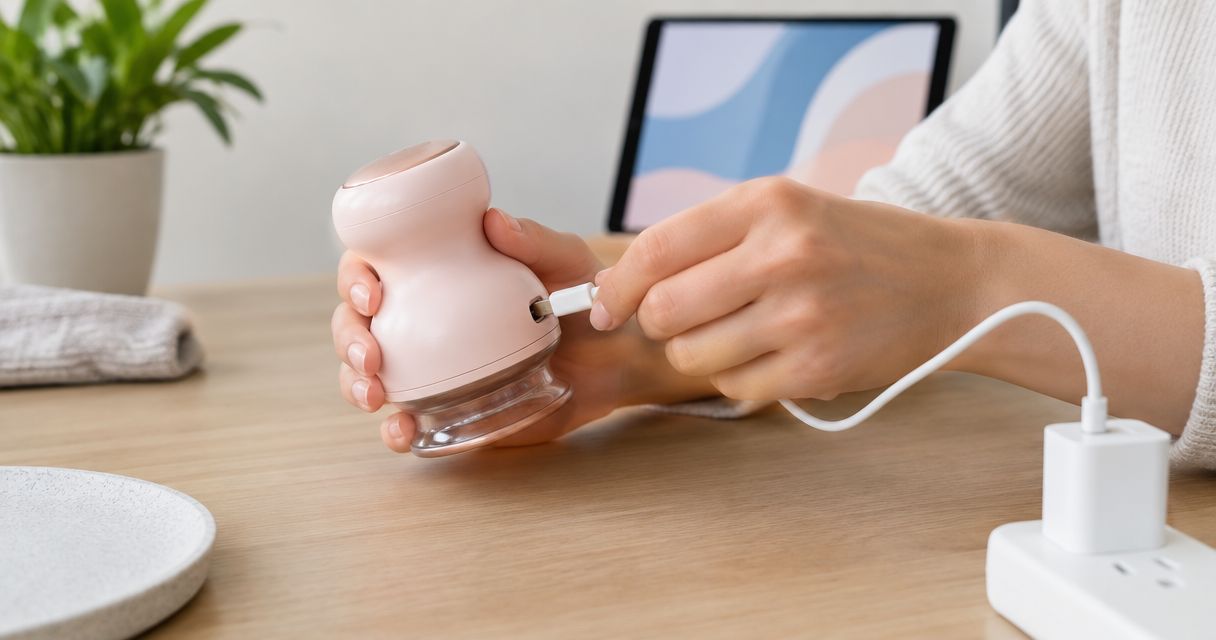
Vazocupping is best suited to consumers seeking an at-home cupping device, not a proven treatment for disease. The Vazo Slide combines 4 functions: cupping, heating, massage, and gua sha. Its practical appeal is having those functions in a handheld device.
The limitation is equally important: a combined experience does not establish the effectiveness of each component or of the combination. If you feel better after using suction, warmth, and massage together, you cannot attribute the result to cupping alone.
Choose Vazocupping cupping equipment for the stated functions and intended home use—not because multiple functions prove faster recovery. Read the product instructions and warnings before deciding whether the device belongs in your routine. More features are a purchasing consideration, not a clinical verdict.
Do darker cupping marks mean better results?
Darker cupping marks do not prove a better result. They are a skin response to treatment, not a measure of toxin removal or tissue repair. NCCIH identifies temporary marks as a common effect and lists persistent discoloration among potential adverse effects.
Do not increase suction to reproduce someone else's marks. Judge the session by tolerability, skin condition, and your actual goal. A photograph cannot tell you whether someone recovered faster or whether the treatment was appropriate.
Is cupping safe to do at home?
Cupping has risks even when you use it at home. NCCIH lists adverse effects including burns, scars, infections, and persistent skin discoloration; it also warns that cupping can worsen eczema or psoriasis. Added heat requires attention to the device's warnings as well as the suction instructions.
Do not apply cupping over broken, infected, or irritated skin. Ask a clinician before use if you have a bleeding disorder, take blood-thinning medication, or have a condition that affects skin sensation or healing. Keep equipment clean according to its instructions, and do not assume a shared device is safe without appropriate cleaning.
Should cupping replace physical therapy or medical care?
Cupping should not replace assessment or prescribed treatment. Possible symptom relief does not establish that the cause of pain has resolved. Persistent, worsening, or unexplained symptoms need attention rather than repeated attempts to suppress them.
If you are already following a rehabilitation plan, ask the treating professional whether cupping fits that plan. Keep the emphasis on the activities and treatment chosen for your condition. An optional comfort measure should not displace the work needed to restore function.
FAQ
Does cupping therapy really work for pain?
Cupping might reduce pain, but NCCIH describes the supporting evidence as weak. Treat it as an optional comfort measure rather than a guaranteed treatment.
Does cupping help muscles recover faster?
Cupping is not established as a reliable way to speed muscle recovery. Feeling less sore does not prove that muscle strength, tissue repair, or readiness to exercise has improved.
Do cupping marks mean toxins are leaving my body?
Cupping marks do not demonstrate toxin removal. Mark darkness is not evidence of treatment effectiveness or better recovery.
Is stronger suction better for cupping?
Stronger suction is not established as a better treatment. Follow the device instructions and stop an application that causes pain, burning, blistering, or concerning skin changes.
Is wet cupping better than dry cupping?
Wet cupping is not established as better simply because it breaks the skin. It introduces bleeding and infection concerns and should not be attempted as a home-device technique.
Can I use cupping instead of physical therapy?
Cupping should not replace prescribed physical therapy or medical assessment. Possible temporary comfort does not address every cause of pain or restore function on its own.
What should I look for in a cupping device in 2026?
Choose a cupping device by its stated functions, instructions, warnings, and suitability for your intended use. Added functions and visible skin marks do not establish clinical effectiveness.
One last thing
The most useful cupping result is not a dramatic mark. It is a tolerable experience that helps with a clearly defined comfort goal without getting in the way of appropriate care.
For 2026, make this your rule: if cupping makes your skin worse or becomes a reason to postpone assessment, stop treating it as recovery. Your routine should serve your body, not ask your body to justify the routine.