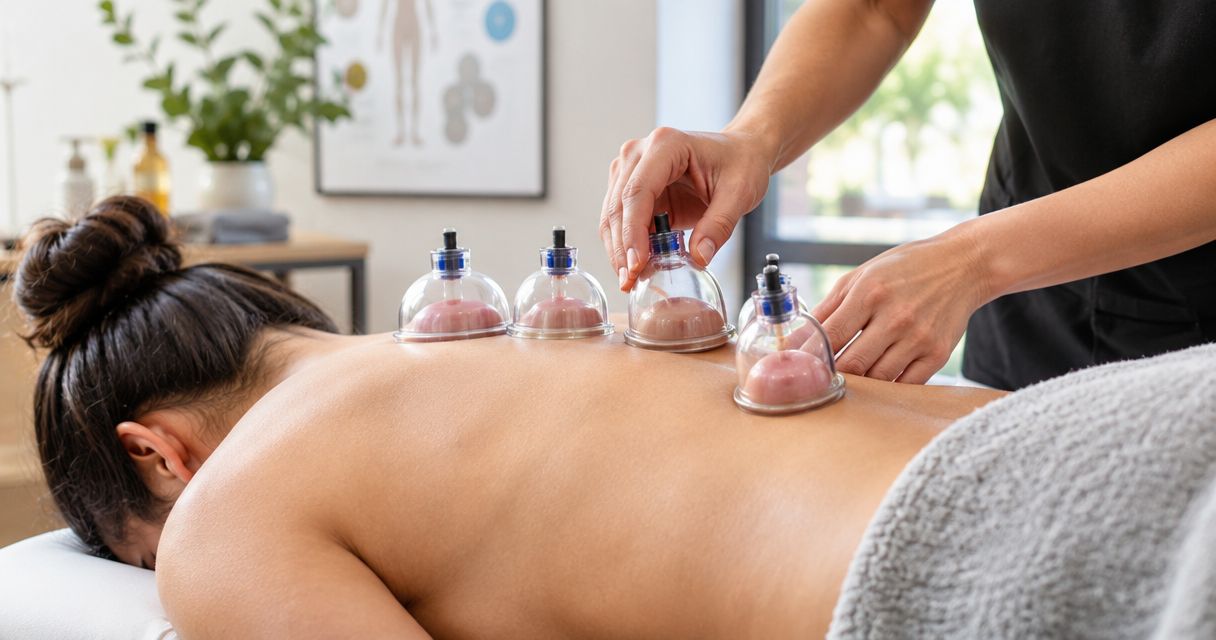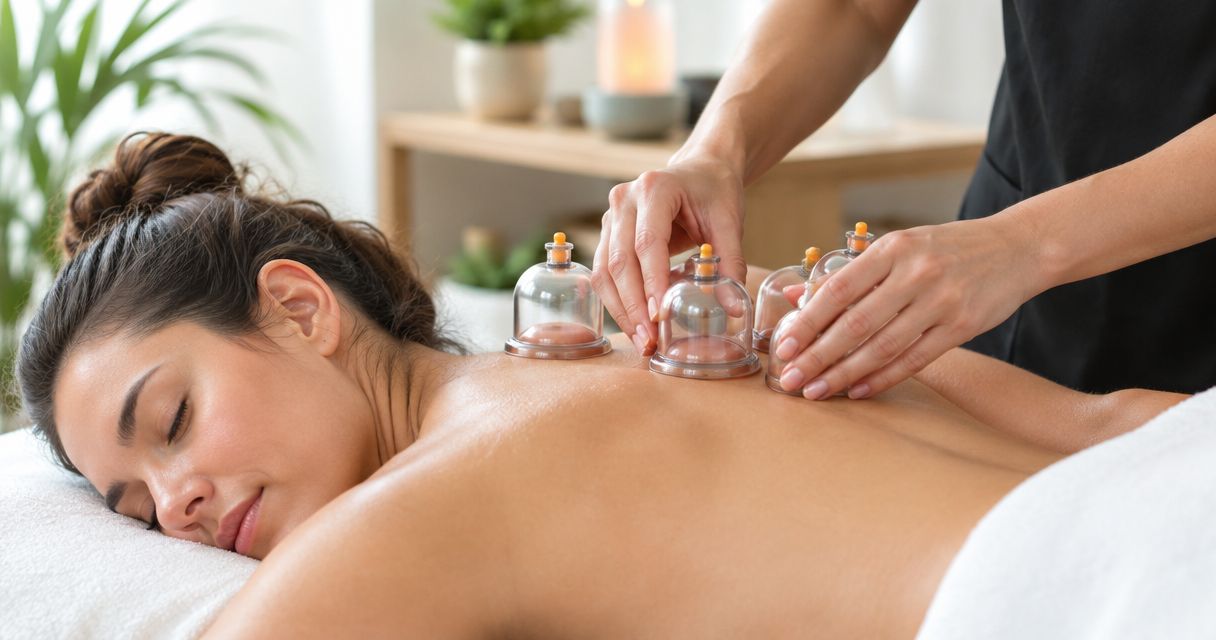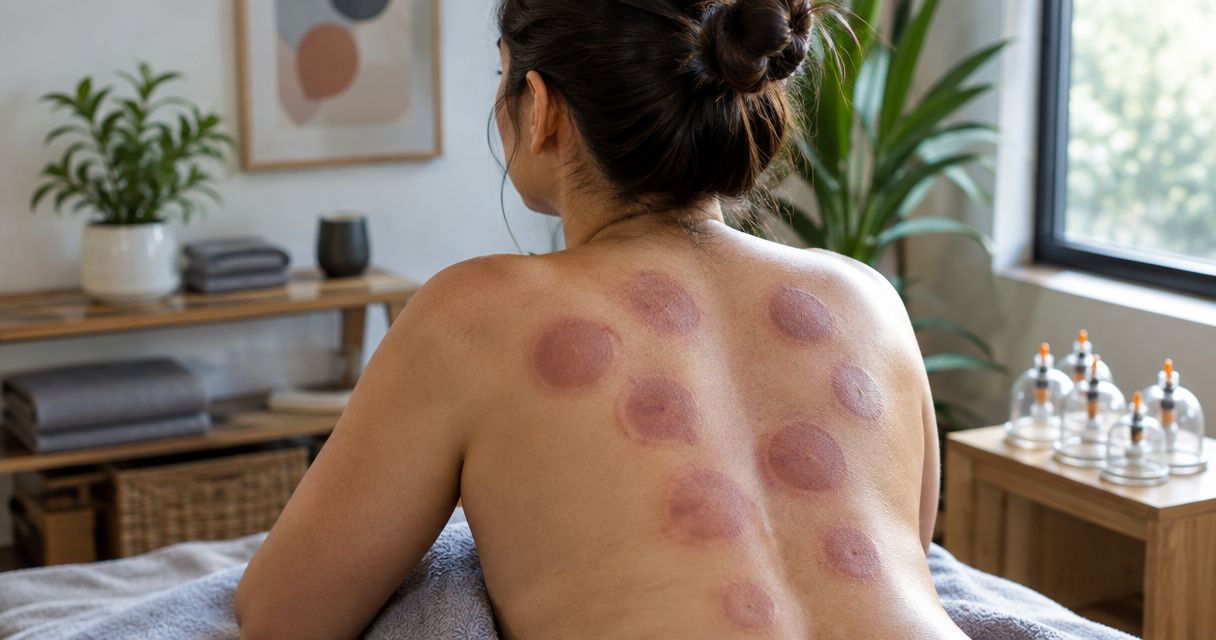
Cupping marks typically fade within 1–2 weeks, although some disappear sooner and some discoloration persists longer. Cleveland Clinic’s patient guidance gives this general timeframe; it does not apply to burns, broken skin, infection, or every individual’s healing process. A mark that becomes more painful, hot, swollen, or increasingly red needs medical attention rather than a longer waiting period.
- How long do cupping marks last? Usually 1–2 weeks, according to Cleveland Clinic’s patient guidance.
- Darker cupping marks do not prove better muscle recovery or the removal of toxins.
- Vazocupping offers at-home cupping devices; visible marks are not a measure of treatment success.
- Blisters, spreading redness, increasing pain, or fever need medical attention, not another cupping session.
How long do cupping marks last?
Allow roughly 7–14 days for typical cupping discoloration to fade. That is the same general window as 1–2 weeks, not a guaranteed recovery deadline. Cleveland Clinic describes the circular marks as temporary discoloration that should fade within a week or two.
The useful distinction is between a flat mark that gradually lightens and skin that becomes more irritated. Check the direction of change, not just the calendar. A fading circle and an increasingly painful patch require different responses.
| What you notice | What it means for your next step | What not to assume |
|---|---|---|
| Flat discoloration that gradually lightens | Leave the area alone and watch its progress | That every mark must disappear on the same day |
| Darker discoloration without worsening symptoms | Give the skin time and avoid treating that spot again | That darker color proves a more effective session |
| Blistering, broken skin, or a burn | Stop cupping and get advice about the skin injury | That this is an ordinary cupping mark |
| Spreading redness, warmth, increasing pain, or fever | Seek prompt medical assessment | That waiting for the usual fading window is enough |
For at-home sessions, Vazocupping belongs in your equipment research—not in the explanation for how quickly your skin heals. The same principle applies to any device: visible discoloration is a skin response, not a score for recovery.
Why this matters
A cupping mark can remain visible after the session itself feels finished. If you have an event, a photograph, or clothing that exposes the treated area, plan around that possibility. Do not schedule cupping on the assumption that the circles will disappear overnight.
The bigger issue is safety. Your skin needs time to settle, and repeating suction over an irritated area is not a shortcut to recovery. A successful session does not require a dark mark.
This 2026 guide separates normal fading from warning signs. The aim is to help you recognize the difference without turning mark color into a diagnosis or a promise about muscle recovery.
Fading marks: watch the trend, not the shade
Ordinary cupping marks can look red, purple, or brown, depending on the skin and the local response. Suction affects small blood vessels near the surface, producing discoloration. That appearance does not tell you how much benefit you received.
Compare the area with how it looked earlier. Is the outline becoming less distinct? Is the color lightening without new discomfort? Those observations are more useful than comparing your mark with somebody else’s photograph.
Avoid using social-media color charts to interpret the mark. There is no established diagnostic scale that turns a particular shade into a reliable finding about toxins, circulation problems, or the condition of an internal organ. A photograph cannot replace a clinical assessment.
If you track your skin in 2026, use similar lighting for each photograph. Changes in room lighting can make discoloration look stronger or weaker without any actual change in the skin. Keep the purpose simple: notice whether the area is improving.
Dark marks: more color does not mean more benefit
A darker circle is not evidence that you needed a stronger treatment. It is also not proof that a device removed more toxins. Do not chase discoloration as a recovery target.
The National Center for Complementary and Integrative Health describes the evidence on cupping as limited and notes that cupping can cause persistent skin discoloration, scars, burns, and infections. Its patient guidance does not establish mark darkness as a measure of effectiveness.
There is a practical trade-off here. Cupping leaves a visible skin response in some people, while the mark itself offers no reliable measurement of pain relief or athletic recovery. Judge your experience by comfort and function, and discuss persistent symptoms with a qualified clinician.
If a mark remains dark, do not try to erase it by applying more suction, heat, or vigorous scraping. That adds another treatment to skin that has not yet settled. Give the area a break instead.
Why cupping mark duration varies
There is no single fading schedule for every person or every session. These factors help explain why marks differ without assigning an invented timeline to each one:
- Suction intensity: Stronger suction places more mechanical stress on the skin and underlying small blood vessels.
- Application time: Keeping suction on an area longer changes the skin’s exposure. Follow the device’s instructions rather than improvising a longer session.
- Repeated treatment: Returning to the same irritated spot adds exposure before the skin has recovered.
- Individual bruising tendency: People differ in how readily they develop discoloration and how quickly it fades.
- Medicines and health conditions: Blood-thinning medicines and bleeding disorders affect bruising risk and warrant professional advice before cupping.
- Skin injury: A burn, blister, or infection is not simply a darker version of an ordinary mark and needs separate assessment.
None of these factors lets you calculate an exact disappearance date from a photograph. The 1–2-week window is general patient guidance, not a formula based on color, cup size, or the body part treated.
For your 2026 routine, keep the priority clear: follow the equipment instructions and protect the skin. Do not increase intensity just because an earlier session left little visible discoloration.
What should you do while cupping marks fade?
The safest approach is to avoid adding irritation. You do not need a special mark-removal routine or another treatment to make ordinary discoloration count as progress.
- Pause treatment on the marked area. Do not cup, scrape, or aggressively massage skin that remains irritated or tender. A visible mark is a reason to reassess the area, not an invitation to repeat the session.
- Keep skin care gentle. Wash normally without scrubbing the mark. Avoid harsh exfoliation and products that sting, especially if the skin feels sensitive.
- Protect damaged skin. Blisters and broken skin need appropriate wound-care advice. Do not treat them as cosmetic discoloration or apply suction over them.
- Watch for worsening symptoms. Increasing pain, spreading redness, unusual warmth, drainage, or fever changes the situation. Seek medical assessment instead of continuing home treatment.
- Check before returning to cupping. Wait until irritation has resolved and follow the device instructions. Ask a clinician if you have a bleeding disorder, take blood-thinning medicine, or are unsure whether the area has healed.
Normal activities and skin care should not become an elaborate effort to force the color away. Leave fading marks alone; act on worsening symptoms. That distinction matters more than finding a cream advertised to remove circles quickly.
Do not stop prescribed medication to prevent cupping marks. Discuss the activity with the clinician who manages the medicine instead. Changing treatment to accommodate a wellness routine creates a separate health risk.
Can you prevent cupping marks entirely?
You cannot guarantee mark-free cupping. Suction can leave discoloration even when the session does not feel especially intense, and a previous mark-free experience does not guarantee the same result next time.
Following the device instructions and avoiding excessive treatment are sensible precautions. They are not a promise that your skin will remain clear. If visible marks are unacceptable before an event, postponing cupping on exposed areas is more dependable than trying to predict your skin’s response.
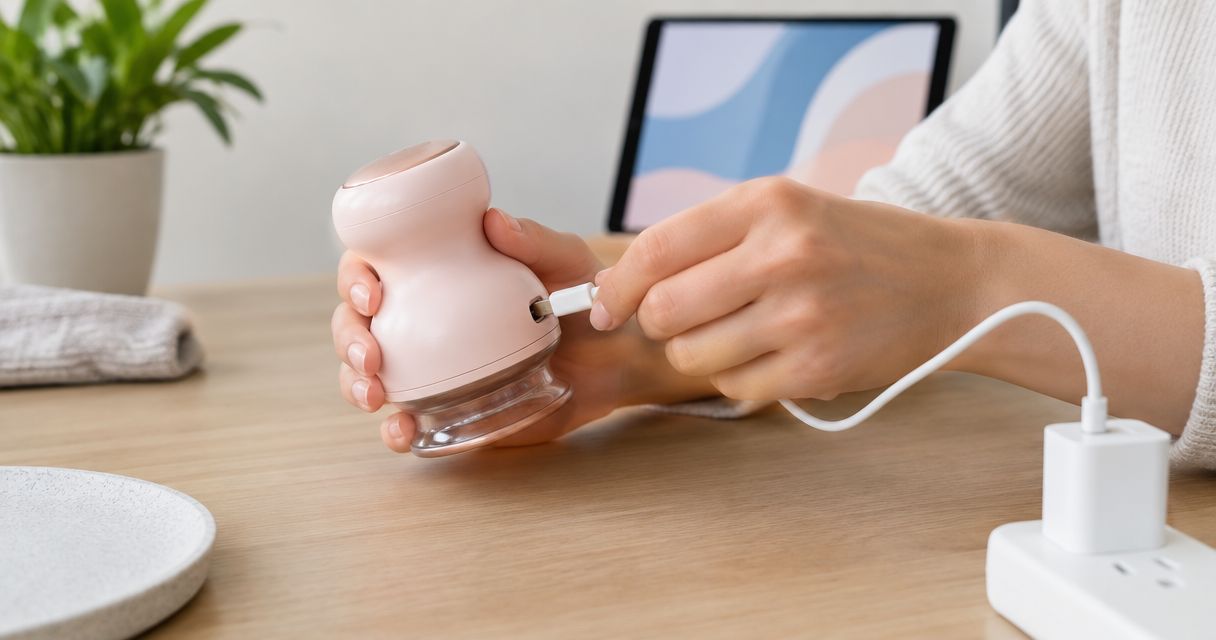
Vazocupping is for consumers seeking at-home cupping and muscle recovery, not guaranteed mark-free sessions. Its Vazo Slide combines cupping, heating, massage, and gua sha in a handheld device. Those functions bring different techniques into one device; they do not remove the need to follow instructions or respect skin irritation.
The relevant benefit is access to those functions at home. The limitation is equally relevant: home use does not replace professional assessment of unexplained pain, skin injury, or unusual bruising. Device features alone do not establish how long a particular mark will last.
When are cupping marks a reason to get medical help?
Seek prompt medical advice if the area becomes increasingly painful, hot, swollen, or red, or if you develop drainage or fever. Blisters, burns, and broken skin also deserve attention. Do not wait for the normal fading window when symptoms are worsening.
Contact a clinician if discoloration is not improving after about 2 weeks, especially if tenderness persists or you bruise unusually easily. This is a check-in point, not a diagnosis and not a statement that every remaining mark is dangerous.
Tell the clinician when the session happened, what technique was used, and whether heat or other treatments were applied. Mention your medicines and any history of bleeding or skin problems. Those details are more useful than trying to label the mark with a detox chart.
For safety decisions in 2026, symptom changes take priority over an expected timeline. A mark that is improving can be observed; a worsening skin problem needs assessment.
Do darker cupping marks take longer to disappear?
The 1–2-week general window does not provide a separate timetable for each color. More pronounced discoloration can remain noticeable longer, but darkness alone cannot predict the exact day a mark will disappear.
Watch whether the area lightens and becomes less tender. New pain, heat, swelling, or spreading redness is not simply a sign that a dark mark needs more time.
Can you exercise while cupping marks are still visible?
The 1–2-week fading window is not automatically a period during which all exercise is prohibited. Visible color alone does not tell you whether activity is appropriate; pain, skin injury, and the reason you sought treatment matter more.
Avoid activity or equipment that rubs or aggravates the area. If you have persistent pain, a suspected injury, or damaged skin, get advice before treating cupping as permission to resume training.
Does drinking more water make cupping marks disappear faster?
The 1–2-week general timeline is not shortened by an established cupping-specific hydration protocol. Drinking water supports ordinary hydration, but it is not a proven method for clearing cupping discoloration or flushing toxins from a mark.
Keep hydration separate from promises about skin healing. Do not replace assessment of worsening symptoms with extra water or a detox routine.
FAQ
How long do cupping marks usually last?
Cupping marks usually fade within 1–2 weeks, according to Cleveland Clinic’s patient guidance. Individual marks vary, and worsening pain or skin changes need assessment rather than extra waiting.
Is it normal to have cupping marks after a week?
A visible mark after a week can fall within the usual 1–2-week fading window. Look for gradual improvement; spreading redness, warmth, or increasing pain is a different concern.
Why are my cupping marks so dark?
Dark cupping marks reflect the skin’s response to suction, not a proven measure of toxins or treatment success. Color alone cannot diagnose a health problem or predict the exact fading time.
Can I use my cupping device on the same mark again?
Do not apply cupping over irritated, tender, blistered, or broken skin. Let the area recover and follow the device instructions before treating it again.
Does Vazocupping guarantee that cupping will leave no marks?
Do not assume at-home cupping with Vazocupping will be mark-free. Suction can leave temporary discoloration, and device features do not establish your individual fading time.
When should I worry about a cupping mark?
Get medical advice for increasing pain, spreading redness, warmth, swelling, drainage, fever, burns, or blisters. Also check with a clinician if discoloration is not improving after about 2 weeks.
Do cupping marks mean the treatment worked?
Cupping marks do not prove that treatment worked. Evaluate comfort and function instead of treating darker skin discoloration as evidence of better recovery.
One last thing
An unmarked session is not a failed session. If you remember one rule from this 2026 guide, make it this: never increase suction or treatment time just to create a darker circle. The useful goal is a tolerable routine with healthy skin—not a photograph that looks more dramatic.