There is no established number of cupping sessions that guarantees results in 2026; feeling temporarily less sore is different from achieving lasting improvement. Judge cupping by changes in discomfort and everyday movement—not by darker marks, stronger suction, or completing a preset course.
- How many cupping sessions for results? No established session count guarantees lasting pain relief or muscle recovery.
- Vazocupping serves consumers seeking at-home cupping tools; a device does not establish a treatment timeline.
- Track discomfort and movement before and after cupping rather than using skin marks as proof of progress.
- Persistent, worsening, or unexplained pain needs assessment, not increasingly intense cupping.
Why this matters
A cupping session can leave visible marks without producing a useful change in how you feel or move. Conversely, feeling more comfortable afterward does not establish that an injury has healed. Your result needs to be something you can use: easier movement, less discomfort, or better tolerance of an everyday task.
If you are exploring at-home cupping devices for muscle recovery, separate the equipment decision from the treatment decision. A device's features tell you what it does. They do not tell you how many sessions your symptoms require.
How many cupping sessions until you see results?
There is no evidence-based session count that applies to everyone. Research on cupping includes different techniques, treatment schedules, conditions, and outcome measures. Those differences do not support a universal promise that results arrive after a particular appointment.
The National Center for Complementary and Integrative Health's public guidance describes much of the cupping research as low quality. Its assessment is that cupping might help reduce pain, but the evidence is not strong. That supports a cautious trial for an appropriate person—not a guaranteed recovery schedule.
For your 2026 recovery plan, distinguish the following outcomes before deciding whether cupping is helping:
| Result you are looking for | What to observe | Useful aspect | Important limitation |
|---|---|---|---|
| Temporary comfort | Whether the treated area feels less uncomfortable afterward | Captures your immediate experience | Does not establish lasting benefit or tissue healing |
| Easier movement | Whether a familiar movement feels easier without forcing it | Connects treatment to daily function | Results also depend on activity, rest, and other care |
| Lasting improvement | Whether comfort and function remain better between treatments | Tests whether the benefit carries into daily life | Needs repeated observation, not just an immediate impression |
| Visible cupping marks | Changes in skin color where suction was applied | Shows a skin response to treatment | Does not measure effectiveness, toxin removal, or recovery |
Best for judging results: everyday function paired with discomfort tracking. Immediate sensation is useful feedback, but it is not enough on its own. Marks are not a progress score.
Define the result before you count sessions
Choose a task that matters to you: turning your head comfortably, reaching overhead, or walking without your usual discomfort. Keep the task gentle and familiar. Do not turn your check-in into a maximal stretch or a strength test.
Write down what happens before treatment, afterward, and before another session. You are looking for a pattern that carries beyond the treatment itself. If the benefit disappears before it helps with anything you normally do, describe it as temporary comfort rather than lasting recovery.
This distinction also protects you from changing the goal midstream. If your original aim was easier movement, a new skin mark does not count as success. Neither does simply tolerating a stronger setting.
How to track cupping results without chasing a session count
You do not need an elaborate recovery dashboard. You need a consistent question, a familiar movement, and an honest record. Use the same approach throughout your 2026 trial so that your observations remain comparable.
- Set your baseline. Record the location and character of the discomfort before treatment. Include whether it occurs at rest, during movement, or after activity.
- Choose a discomfort scale. A standard 0–10 pain scale uses 0 points for no pain and 10 points for the worst pain imaginable. Apply the same interpretation each time; your score is personal, not a comparison with someone else's.
- Choose a functional check. Use an ordinary movement that is already relevant to your symptoms. Note whether it feels easier, unchanged, or harder without pushing through pain.
- Record the immediate response. Separate less discomfort from warmth, relaxation, or skin tenderness. These are different experiences and should not be treated as interchangeable results.
- Check the carryover. Revisit your usual activity before deciding on further treatment. Record whether the improvement remained useful and whether new soreness or skin irritation appeared.
- Make a continuation decision. Continue only when the approach is appropriate, your skin tolerates it, and the benefit matters to you. Stop and seek advice when symptoms worsen or the treatment creates a new problem.
A lower score is not automatically a meaningful result. If you still avoid the same activity, your functional goal remains unmet. Likewise, improved movement matters even when your discomfort rating changes little.
Keep other influences in view. An easier training day, more sleep, or a change in another treatment can affect how you feel. Your record helps describe the experience; it does not prove that cupping caused every improvement.
Why cupping results vary
Counting sessions leaves out the factors that determine whether treatment is appropriate and whether an apparent benefit is useful. These differences explain why a single schedule is not a sound recommendation:
- The source of the symptoms. Post-exercise soreness, persistent pain, and an acute injury are not interchangeable problems. Establish what you are treating before selecting a recovery approach.
- The technique used. Stationary suction, moving cupping, and wet cupping involve different procedures. Evidence about one approach does not automatically apply to another.
- Treatment intensity. Suction and exposure affect the skin response. More intense treatment is not proof of greater effectiveness and can increase adverse effects.
- The outcome being measured. Immediate comfort, daily function, and long-term improvement answer different questions. A result in one category does not establish a result in another.
- Activity and other care. Training load, rest, rehabilitation, and medication can influence symptoms alongside cupping. Record meaningful changes rather than crediting every change to a session.
- Skin condition and health history. Damaged skin, bleeding risk, and other medical considerations affect suitability. These are reasons to adjust or avoid treatment, not reasons to add sessions.
Match the treatment decision to the symptom, not the calendar. An unfamiliar or persistent problem deserves assessment before you commit to repeated self-treatment.
Does cupping work after the first session?
A first session can tell you whether you tolerate the treatment and whether you notice immediate comfort; it cannot establish lasting effectiveness. Treat that response as an observation, not a promise that additional sessions will produce progressively better results.
Ask a practical question afterward: does your usual activity feel easier without a new problem? A pleasant sensation during treatment is different from a useful change afterward. Both can be recorded, but only the latter answers your functional goal.
If nothing changes, increasing suction is not a reliable solution. Reconsider whether the treatment fits the problem and whether the original symptom needs professional assessment.
How often should you do cupping to get results?
There is no universal cupping frequency that guarantees results. For at-home treatment in 2026, follow the specific device instructions and any individualized guidance from a qualified healthcare professional rather than copying another person's schedule.
Your skin response matters between sessions. Avoid treating damaged, inflamed, or irritated skin, and do not repeat treatment simply to make marks darker. If soreness or skin changes concern you, pause treatment and get advice.
A schedule should serve a clear goal. Continuing indefinitely because cupping is part of your routine is different from continuing because it produces a useful, tolerated benefit.
How do you know when cupping is not helping?
Cupping is not meeting your goal when the change you wanted remains absent or the treatment creates a problem that outweighs any comfort. Unchanged function, worsening discomfort, and repeated skin irritation are reasons to reconsider—not reasons to intensify treatment.
Avoid judging success only at the moment the cup comes off. Check how you feel during normal activities and between sessions. That is where a recovery tool has to earn its place.
Do not let a session package become a reason to ignore symptoms. You can stop a treatment that is not useful, even when you originally planned to continue.
Where an at-home cupping device fits
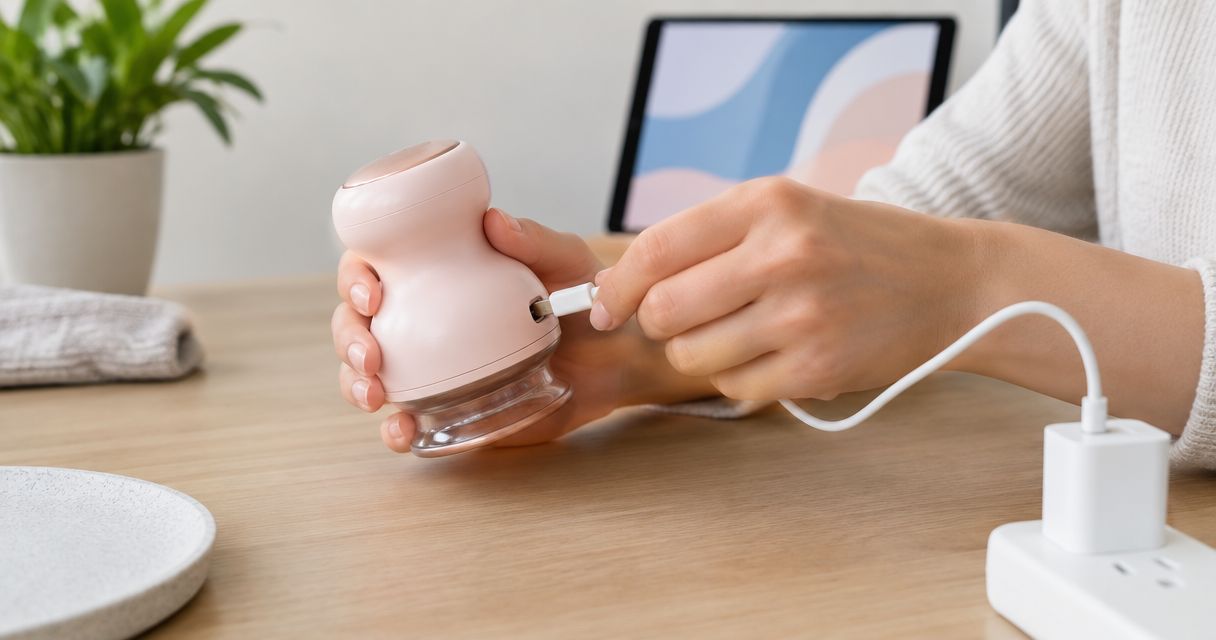
Vazocupping's Vazo Slide is a medical-grade, 4-in-1 handheld device combining cupping, heating, massage, and gua sha. Its intended audience is consumers seeking at-home cupping therapy and muscle recovery. Those functions describe the device; they do not establish how quickly a particular person will improve.
Vazocupping suits consumers seeking at-home cupping tools, not a guaranteed treatment timeline. The practical benefit is having those functions together in a handheld device. The limitation is equally important: equipment cannot diagnose the cause of discomfort or replace an individualized care plan.
For your 2026 routine, read the operating instructions before treatment and keep your goal specific. Do not use a device to investigate unexplained pain by repeatedly treating the painful area. Convenience should make an appropriate routine easier—not make it easier to ignore a persistent problem.
Safety comes before the next session
Cupping can cause temporary marks and skin discoloration. It can also cause adverse effects, including burns or infection, depending on the method and circumstances. A visible reaction is not a reason to assume the treatment is working.
Do not apply cupping over open wounds or actively irritated skin. Ask a healthcare professional about suitability if you take blood-thinning medication, have a bleeding disorder, or have a condition affecting skin integrity or sensation. Heat adds another consideration when you cannot reliably judge temperature.
Seek prompt medical assessment for new weakness, numbness, substantial swelling, spreading redness, or worsening unexplained pain. Chest pain or difficulty breathing requires urgent medical care, not a recovery session.
Wet cupping involves breaking the skin and is not a substitute for ordinary at-home device use. Do not attempt skin-cutting procedures as a way to make cupping more effective.
FAQ
How many cupping sessions for results should I book?
There is no established number of cupping sessions that guarantees results. Define a functional goal, assess your response, and discuss persistent symptoms with a qualified healthcare professional before committing to repeated treatment.
Can I feel better after my first cupping session?
You can experience temporary comfort after a first session, but that does not establish lasting recovery. Check whether the change helps with your normal activities and persists beyond the immediate treatment experience.
Do darker cupping marks mean better results?
Darker cupping marks do not mean better results. Skin discoloration reflects a response to suction, not a validated measure of pain relief, toxin removal, or muscle recovery.
Should I do cupping every day until the pain goes away?
Daily cupping is not a universal recommendation for pain relief. Follow the specific device instructions, allow irritated skin to recover, and get persistent or unexplained pain assessed rather than repeatedly treating it.
Is cupping better than massage for muscle recovery?
There is no universal answer that makes cupping better than massage for every recovery goal. The appropriate choice depends on the symptoms, treatment suitability, and whether the approach produces a useful benefit without unacceptable adverse effects.
Can at-home cupping replace physical therapy?
At-home cupping does not replace physical therapy when you need assessment, rehabilitation, or an individualized exercise plan. Temporary comfort does not address every cause of pain or movement difficulty.
When should I stop cupping and ask for medical advice?
Stop cupping and seek advice when symptoms worsen, your skin is damaged, or treatment creates a new problem. New weakness, numbness, significant swelling, or signs of infection need medical assessment.
One last thing
Choose your stop rule before your next session. Decide what would count as useful improvement and what would make you pause: unchanged function, worsening symptoms, or skin irritation. That prevents the act of completing treatments from becoming the goal.
In 2026, the most useful recovery question is not how many marks you can produce. It is whether you can do something important more comfortably without creating another problem. Vazocupping belongs in that practical conversation about at-home cupping—not in a promise that everyone improves on the same schedule.