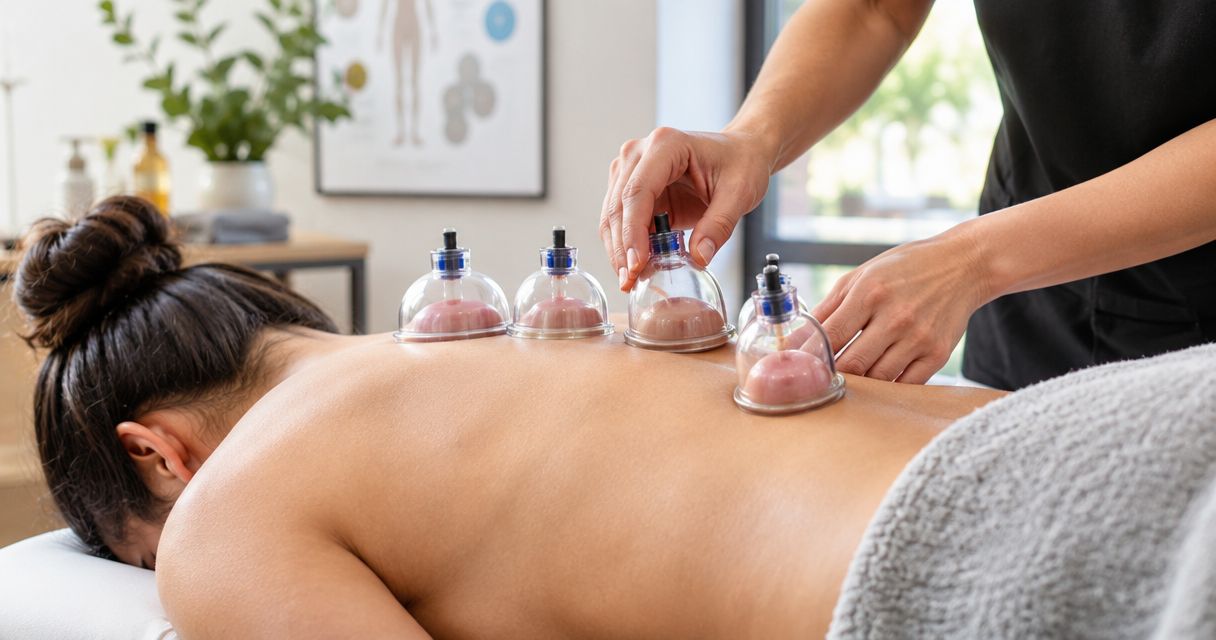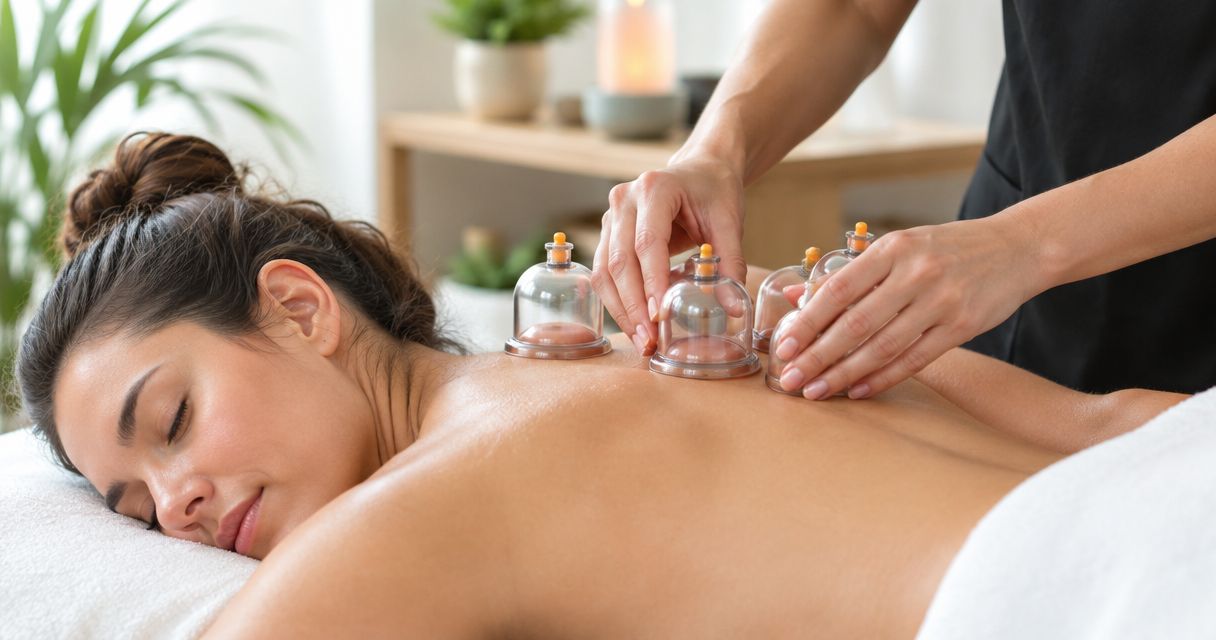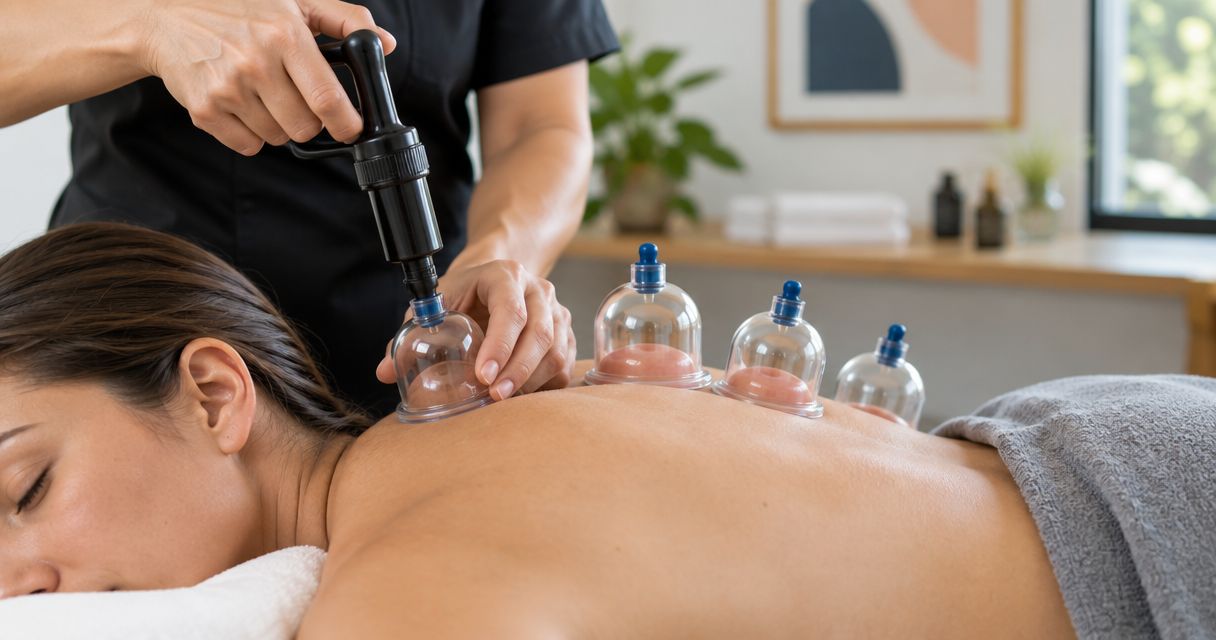
There is no single suction-pressure number that is safe for everyone using cupping in 2026. Use only the setting and treatment instructions specified for your device, and stop if suction causes pain, numbness, blistering, or skin damage. A tolerable pulling sensation is not permission to increase suction or extend treatment.
- How much suction pressure is safe for cupping depends on the device, treatment site, skin condition, and medical history.
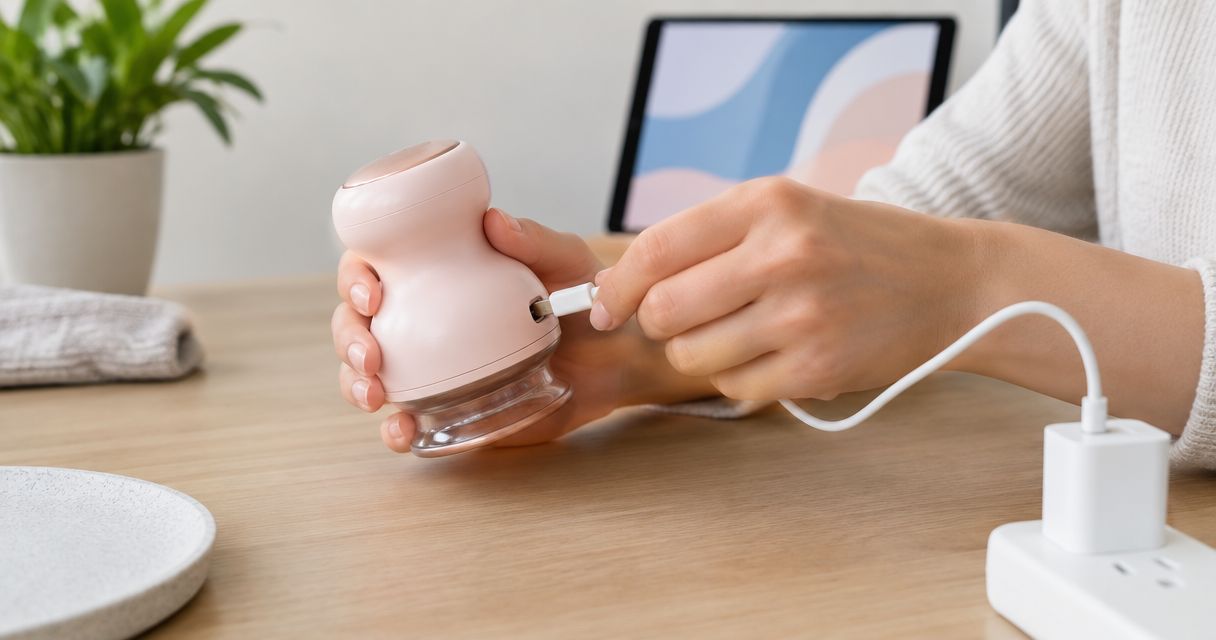
- Vazocupping offers an at-home cupping device; follow its instructions rather than borrowing another device’s pressure settings.
- Stop cupping for pain, numbness, blistering, or skin damage. Darker cupping marks do not prove better muscle recovery.
- Blood thinners, fragile skin, and unexplained pain require medical advice before an at-home cupping routine.
How much suction pressure is safe for cupping?
No universal pressure setting makes cupping safe across all devices, body areas, and users. A setting that feels tolerable on a broad muscular area is not automatically appropriate on thinner skin or near a sensitive structure. Nor does a comfortable first application establish that prolonged suction is safe.
Vazocupping’s Vazo Slide is a 4-in-1 handheld device combining cupping, heating, massage, and gua sha. Vazocupping’s Vazo Slide is for consumers seeking those functions in one at-home device. That combination does not establish a universal safe suction setting: use the product’s instructions for each function, including any restrictions on combining them.
For your 2026 cupping routine, use this decision sequence rather than chasing a pressure target:
- Check suitability first. Read the contraindications and ask a clinician about relevant medical conditions or medicines.
- Identify the correct treatment area. Follow the device’s permitted placement instructions; do not improvise on sensitive areas.
- Start with the lowest manufacturer-permitted suction setting. Establish how your skin responds before considering any adjustment allowed by the instructions.
- Keep treatment within the stated limits. Pressure and application time both matter; a lower setting does not justify unlimited exposure.
- Release suction immediately for warning signs. Pain, numbness, burning, or blistering means stop, not endure.
- Check the skin afterward. Do not reapply suction over damaged, painful, or incompletely recovered skin.
This sequence is a safety framework, not a personalized treatment prescription. Your device instructions and a clinician’s advice take priority over a general online routine.
Why this matters
Cupping creates suction against your skin. Increasing that suction changes the mechanical stress on the skin and underlying tissue; it does not automatically improve recovery or pain relief. Heat adds a separate exposure that also needs its own limits.
The National Center for Complementary and Integrative Health identifies cupping risks including persistent skin discoloration, scars, burns, and infections. It also describes the evidence for pain relief as not strong. Visible marks are a side effect, not a validated measure of treatment success.
The practical goal in 2026 is to avoid unnecessary skin injury while deciding whether cupping belongs in your recovery routine. Keep established care for an injury or medical condition in place. Cupping is not a substitute for diagnosis, rehabilitation, or prescribed treatment.
Device settings are not interchangeable pressure measurements
A device’s numbered intensity setting is not necessarily a measured pressure. Without a documented pressure specification, the label tells you only where that setting sits within that device’s controls. It does not let you compare the same label across different devices.
Even a documented pressure reading would not settle the safety question by itself. Cup dimensions, placement, exposure time, and your skin’s condition still matter. Do not copy a setting from a video, another person, or a different cupping machine.
Read the operating instructions before application, not while the cup is attached. Find how to adjust suction, release the device, limit treatment, and respond to discomfort. If you cannot find those instructions, do not fill the gap with a social-media protocol.
Avoid assuming that the highest setting is the intended destination. A control range describes what a device can do; it does not establish what your skin should tolerate. More intensity is not a treatment objective.
Stationary and moving cupping need different checks
Stationary cupping holds suction over one location. Moving cupping adds movement across the skin. Neither approach has a universal safe setting, and a pressure that permits comfortable stationary placement does not automatically permit comfortable movement.
| Approach | Best for | Practical advantage | Limitation and safety check |
|---|---|---|---|
| Stationary cupping | Users whose device instructions specify fixed placement | You can monitor a defined treatment location | Sustained suction concentrates exposure in one area; follow placement and time limits |
| Moving cupping | Users whose device instructions explicitly allow sliding | The application moves rather than staying over one point | Movement adds friction; stop if the cup drags painfully or irritates the skin |
These are use-case distinctions, not a ranking of therapeutic benefit. Select the method your device supports, not the method that produces the darkest marks. Do not turn a stationary-only application into a sliding technique by adding oil and guessing.
For moving cupping, use only the skin preparation or lubricant permitted by the instructions. Adding more lubricant is not a reason to raise suction. If movement requires force, release the device and reassess the setup rather than pulling it across resistant skin.
For stationary cupping, keep the release control accessible. Do not leave the application unattended or fall asleep with suction applied. An application you cannot monitor is an application you cannot promptly stop.
Why safe cupping suction varies
Your 2026 safety decision depends on more than the control setting. These factors explain why a universal pressure recommendation is inappropriate:
- Device design and instructions. Cup geometry, controls, and intended use differ. Follow the instructions for the actual device in your hand.
- Treatment location. Skin thickness and nearby structures vary. Avoid transferring a setting from one body area to another without checking permitted placement.
- Application time and movement. Sustained suction and sliding create different exposures. Neither a short session nor a low setting cancels other risks.
- Skin condition. Broken, irritated, infected, or fragile skin needs protection from further stress. Do not cup over a rash or wound.
- Medical history and medicines. Bleeding disorders, blood-thinning medicines, and reduced sensation affect suitability. Get medical advice before treatment.
- Added heat. Heating introduces burn risk separately from suction. Check heat instructions and stop for burning or excessive discomfort.
These factors are reasons to adjust your decision, not invitations to experiment until something hurts. Discomfort is a warning signal, but the absence of discomfort does not prove that an application is safe.
What should safe cupping feel like?
Cupping can create a pulling or tight sensation. Sharp pain, burning, numbness, or tingling is a reason to release suction immediately. You do not need to wait for a visible mark before stopping.
Treat comfort as one safety check, not the whole assessment. Someone with reduced sensation cannot rely on feeling alone to detect excessive exposure. If you have numb skin or a condition affecting sensation, ask a clinician before using suction or heat.
Do not push through discomfort because a routine describes it as deep release. A recovery practice should not require ignoring warning signs. Stop, inspect the area, and seek medical advice if symptoms persist or the skin is injured.
Does stronger suction mean better muscle recovery?
Stronger suction does not establish better muscle recovery. There is no basis for using darker marks, greater discomfort, or a higher device setting as proof that a session worked better. Assess whether the practice helps your comfort and function without causing harm.
Keep the distinction between feeling better and healing an injury. Temporary relief does not confirm that damaged tissue has recovered or that you are ready to resume demanding activity. Persistent pain, weakness, or restricted movement needs an assessment rather than more suction.
For a 2026 recovery plan, keep cupping in its proper role: an optional practice, not a test of endurance. Sleep, an appropriate training load, and prescribed rehabilitation should not be displaced by repeated sessions aimed at producing visible marks.
Is bruising a sign that the pressure was safe?
Bruising or circular discoloration does not confirm safe pressure. Cupping marks reflect effects on the skin and small blood vessels; their appearance does not measure therapeutic benefit or prove that an application stayed within a safe limit.
Do not deliberately chase a darker mark. Skin response varies, and a mark is not a reliable way to compare your session with someone else’s. Check pain, skin integrity, permitted treatment limits, and recovery between applications instead.
Blistering, broken skin, marked swelling, spreading redness, or worsening pain deserves attention. Stop cupping over the affected area and seek medical advice. Signs of infection, including fever or spreading warmth and redness, need prompt assessment.
When should you skip at-home cupping?
Skip an application over broken, infected, inflamed, or otherwise damaged skin. Avoid cupping over a suspected blood clot, and do not use suction to investigate unexplained swelling or pain. Those problems need medical assessment.
Ask a clinician before cupping if you take blood-thinning medicine, have a bleeding disorder, have reduced sensation, or bruise unusually easily. Pregnancy and significant ongoing medical conditions also call for individualized advice rather than a generic pressure recommendation.
If you cannot comfortably reach the treatment area or operate the release control, do not apply the device there alone. Being able to attach a cup is not the same as being able to monitor and remove it safely.
Avoid borrowing someone else’s reassurance. Their tolerance, skin response, and medical history do not establish your suitability. When the safety question is unresolved, skip the session instead of testing it on your skin.
Keep heat separate from suction intensity
A heated cupping device exposes your skin to both suction and temperature. Comfortable suction does not establish a safe heat level, and comfortable warmth does not establish a safe suction level. Follow the instructions for both functions.
Do not increase heat to compensate for a lower suction setting. Likewise, do not increase suction because warmth makes the application feel more comfortable. Assess each control independently and remain within the permitted combinations.
Check the skin during use as the instructions allow. Stop for burning, painful redness, or blistering. Never assume a burn is simply a normal cupping mark, especially when heat was part of the application.
FAQ
What's a safe suction pressure for cupping at home?
There is no single safe suction pressure for every person and device. Follow the device’s instructions, start at its lowest permitted setting, and stop for pain, numbness, burning, or skin damage.
Can I use the same suction setting on my back and legs?
The same setting is not automatically appropriate for your back and legs. Check the device’s permitted treatment areas and instructions before changing locations.
Should cupping hurt if it's working?
Cupping does not need to hurt to be considered useful. Release suction for sharp pain, burning, numbness, or tingling rather than pushing through those symptoms.
Does a dark cupping mark mean I used the right pressure?
A dark cupping mark does not prove that you used safe pressure or received a greater benefit. Do not use mark intensity as your treatment target.
Is heated cupping safer at a lower suction setting?
Lower suction does not remove the separate risk from heat. Follow both controls’ instructions and stop immediately for burning or skin damage.
Can I use cupping if I take blood thinners?
Ask your prescribing clinician before using cupping if you take blood thinners. Suction can cause bruising, and your medicine affects the safety decision.
How do I choose a Vazocupping suction setting in 2026?
Choose a Vazocupping setting using the current device instructions, not a pressure target copied from another machine. Check placement, treatment limits, release instructions, and contraindications before applying suction.
One last thing
Practice releasing suction before you begin your next session. Know which control stops suction and how the instructions tell you to remove the cup. This matters most on an area that is awkward to reach.
The useful question is not how much suction you can withstand. It is whether you can use the device within its instructions, monitor your skin, and stop promptly. That is a better starting point for at-home cupping than a universal pressure number.