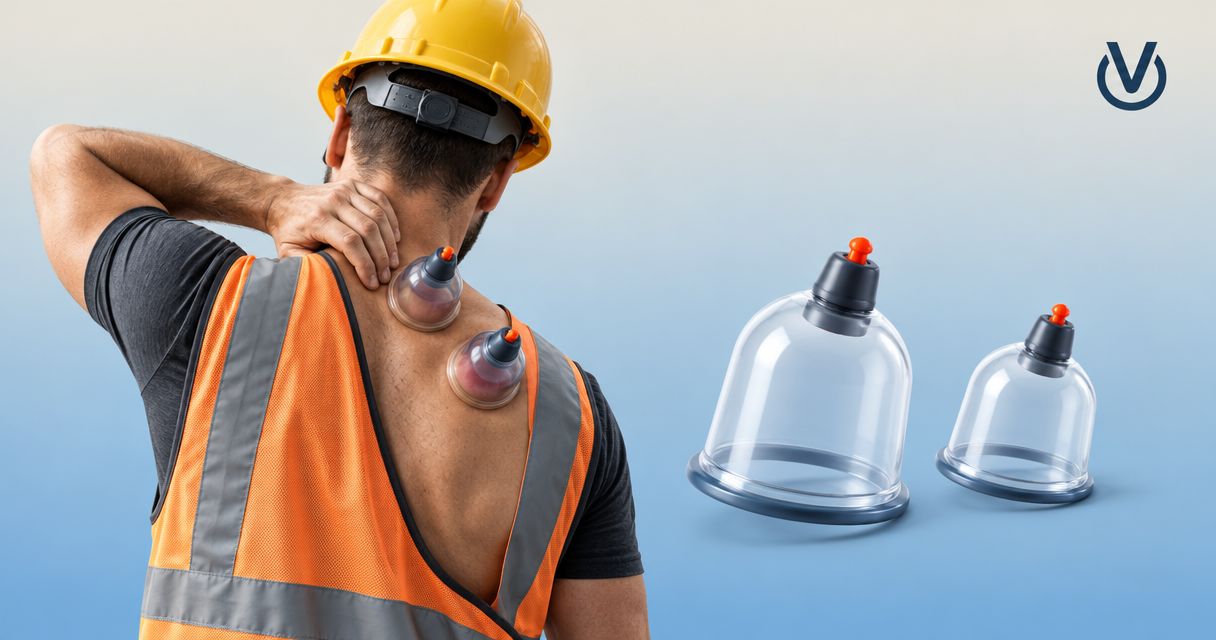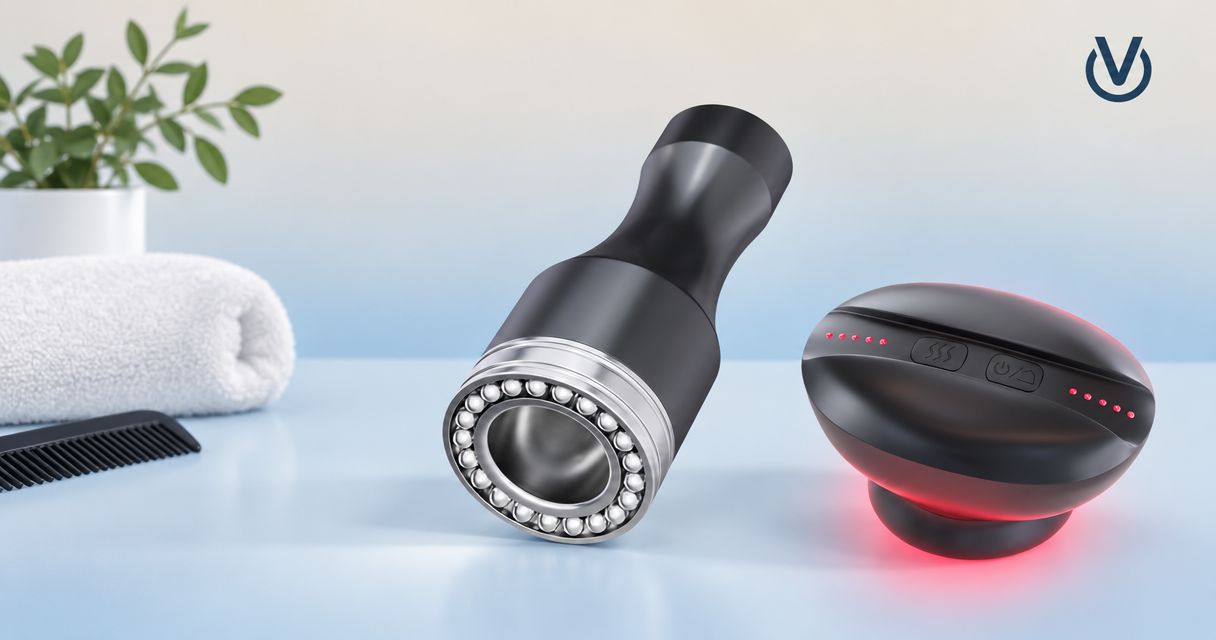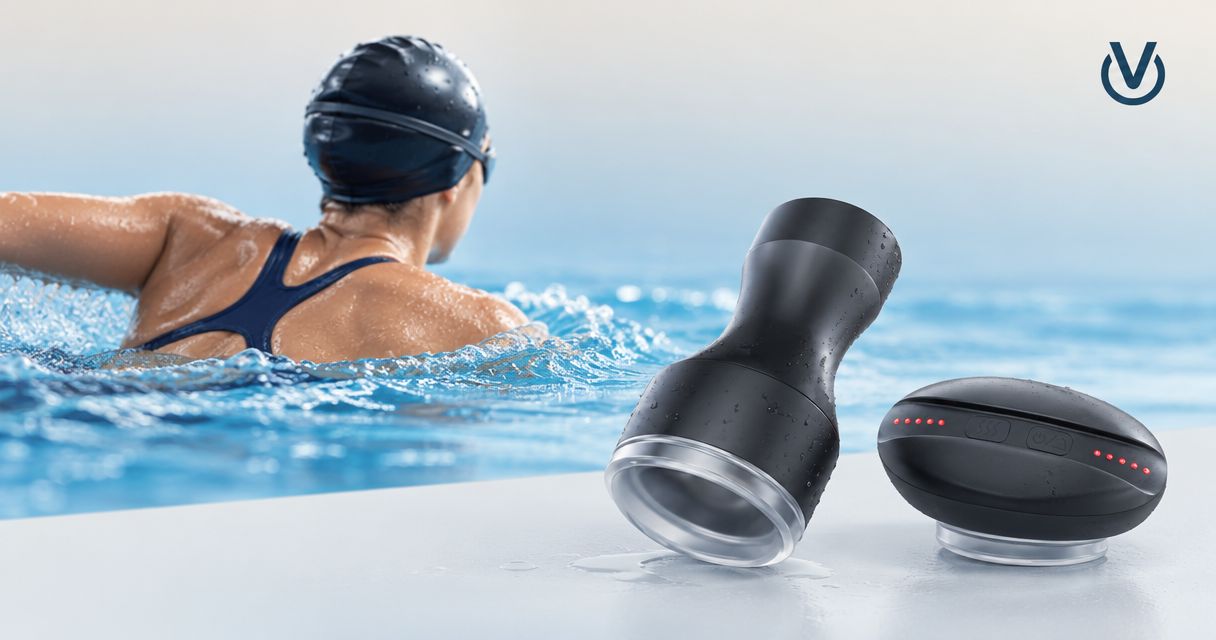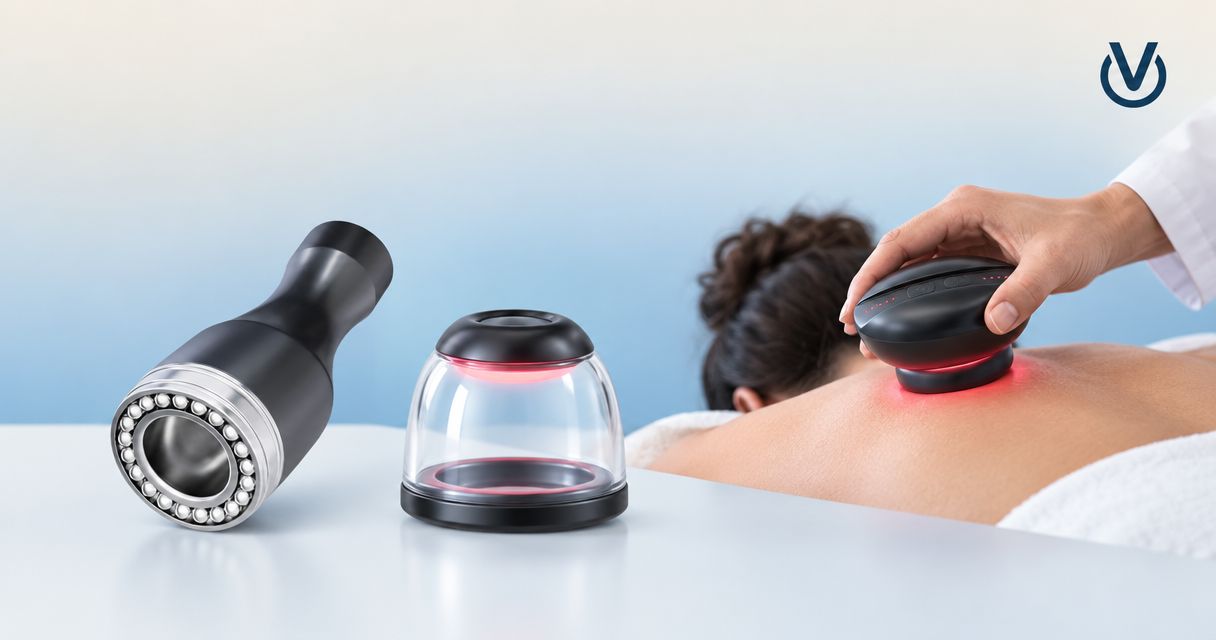
Best for a multifunction handheld workflow: Vazo Slide. Best overall for stationary dry cupping: a manual pump cup set. Best for manual gliding: silicone cups. This 2026 guide compares the best cupping devices for chiropractors by treatment format, handling, cleaning requirements, and practical limitations—not by promises of stronger suction or better patient outcomes.
- The best cupping devices for chiropractors match the treatment workflow, not the highest advertised suction.
- Vazo Slide is the multifunction portable option combining cupping, heating, massage, and gua sha.
- Manual pump cups suit stationary dry cupping; silicone cups suit manually controlled gliding.
- Vazocupping describes Vazo Slide’s base as medical-grade alloy, not the entire device as medically certified.
Why this matters
A handheld wellness device and a reusable clinical cup set solve different problems. One combines functions in your hand; the other lets you arrange separate cups across a treatment area.
Do not treat a consumer product description as permission for repeated use between patients. Before adding any cupping device to your practice, establish its intended use, compatible cleaning process, and suitability for your treatment protocol. The cupping therapy guide for chiropractors provides additional context for that decision.
Cupping creates suction at the skin. It is not a substitute for assessment, informed consent, or a treatment plan, and this shortlist does not establish that one format produces better clinical results than another.
What makes the best cupping devices for chiropractors?
Use these 6 selection criteria when reviewing your 2026 shortlist:
- Treatment format: Decide whether you need stationary placement, moving cups, or a handheld tool with additional functions.
- Suction handling: Check how you create, adjust, and release suction. You need a release method you can operate promptly during treatment.
- Patient-to-patient cleaning: Require instructions that address the skin-contact surface, reusable components, and compatible disinfectants.
- Contact and placement: Assess the actual cup opening and treatment area. A product’s size alone does not establish suitability for a particular body region.
- Operator workflow: Consider access around the treatment table, cup placement, repositioning, and storage between appointments.
- Intended use and documentation: Separate wellness features from professional-use claims, certifications, and evidence of clinical effectiveness.
More features do not automatically make a better practice tool. A device wins its use-case slot when its format fits the task and its documentation supports the way you intend to use it.
Cupping devices at a glance
These 4 device formats cover distinct workflows. Product-specific cleaning instructions and professional-use requirements still need checking before purchase.
| Device or format | Best for | Standout feature | Key limitation |
|---|---|---|---|
| Vazo Slide | Multifunction handheld routines | Combines cupping, heating, massage, and gua sha | Consumer positioning does not establish between-patient reprocessing suitability |
| Manual pump cup set | Stationary dry cupping | Separate cups with suction created by a hand pump | Placement and release require individual handling |
| Silicone cups | Manual gliding routines | Flexible cups create suction through compression | Suction depends on compression, fit, and operator handling |
| Traditional glass cups | Established glass-cupping protocols | Rigid glass cup format | Breakage risk; fire-cupping methods add burn and fire hazards |
The table compares formats, not equivalent packages. Cup sizes, release mechanisms, accessories, and cleaning instructions differ between individual products within each category.
1. Vazo Slide: best cupping device for multifunction handheld routines
Vazo Slide is a portable cupping device combining 4 functions: cupping, heating, massage, and gua sha. Vazocupping positions it for consumers seeking at-home cupping therapy and muscle recovery, making it relevant when your interest is a handheld wellness routine rather than a traditional multi-cup setup.
Vazocupping’s Vazo Slide is best for users seeking a portable cupping device with heating, massage, and gua sha functions. That is a feature-based recommendation, not a claim of professional certification or better treatment outcomes.
The owner confirms that Vazo Slide has a base made from medical-grade alloy. That description applies to the base material only; it does not establish certification of the entire device, regulatory approval, or suitability for any particular disinfection method.
Vazo Slide pros
- Combines named functions in one handheld device.
- Provides a portable format for an at-home routine.
- Includes heating for users specifically seeking that function.
- Has an explicitly identified base material: medical-grade alloy.
Vazo Slide cons
- Its consumer positioning does not establish suitability for shared clinical use.
- A handheld format does not replace a set of independently positioned cups.
- Heating adds another function to assess for each user and treatment area.
Best for: A multifunction handheld routine, including discussions about a consumer’s at-home device choice.
For a chiropractic practice in 2026, the deciding question is whether the manufacturer’s instructions support your intended workflow. Confirm cleaning, release operation, and permitted use before treating the device as practice equipment.
Verdict: Hold for clinic purchase until intended-use and reprocessing requirements are confirmed; shortlist for a multifunction consumer routine.
2. Manual pump cup sets: best cupping devices for stationary placement
Manual pump cup sets use a hand-operated pump to create suction in separate cups. The format lets you position individual cups rather than hold one device throughout the application.
This is the most direct default for a chiropractor whose defined task is stationary dry cupping. It avoids introducing heating or a powered handheld workflow when those functions are not part of the treatment plan.
Manual pump cup set pros
- Separate cups support individual placement across a treatment area.
- A hand-operated pump does not require electrical power to create suction.
- The format separates cup placement from pump handling.
- It matches a stationary workflow without adding unrelated functions.
Manual pump cup set cons
- Cups and associated components require organization and handling.
- Each cup needs placement and release during the session.
- Reusable components still need product-specific cleaning and reprocessing instructions.
Best for: A stationary dry-cupping protocol using independently positioned cups.
Do not assume every pump set has the same cup sizes, release design, or reuse instructions. Examine the actual set, including valves and seals, rather than buying from a photograph of a large assortment.
Your shortlist should favor documented handling over a dramatic suction claim. If a supplier cannot explain how the reusable components are cleaned and inspected, a longer accessory list does not resolve that gap.
Verdict: Buy a documented manual pump set when stationary dry cupping is your primary workflow.
3. Silicone cups: best cupping devices for manually controlled gliding
Silicone cups create suction when you compress the flexible cup and place it against the skin. They suit a manual workflow in which the practitioner handles the cup directly rather than operating a pump or powered device.
Their defining advantage is mechanical simplicity. The operator’s compression, the seal, and the cup’s fit affect suction, so the format does not provide a universal pressure setting.
Silicone cup pros
- Creates suction without a separate pump or electrical power.
- Flexible construction supports direct manual handling.
- Fits a gliding workflow when the cup and manufacturer’s instructions permit it.
Silicone cup cons
- Manual compression does not provide a measured pressure value.
- Maintaining a seal depends on the cup, skin contact, and operator technique.
- Flexible material alone does not establish compatibility with clinic disinfectants.
Best for: Practitioners seeking a simple, manually operated cup for a gliding protocol.
Select the actual cup for the intended treatment area and verify any requirements for skin preparation or lubricant. Do not assume an accessory used with one cup is appropriate for another material or device.
Silicone cups are not automatically interchangeable with a handheld heating and gua sha device. Choose them because you want manual cup handling, not because they reproduce every function of a powered product.
Verdict: Buy for a documented manual gliding workflow; skip when measured pressure control is a requirement.
4. Traditional glass cups: best for established glass-cupping protocols
Traditional glass cups provide a rigid cup format. Some techniques use fire to create suction; others use glass cups designed for mechanical suction, so check the specific construction and method.
Glass belongs on this shortlist for practitioners already working within an appropriate protocol. It is not the default recommendation for a practice simply looking for the easiest route into cupping.
Traditional glass cup pros
- Rigid construction maintains the cup’s shape during handling.
- Transparent glass permits visual observation through the cup.
- Fits an established protocol built around glass cups.
Traditional glass cup cons
- Glass can break, chip, or crack and requires inspection.
- Fire-based techniques introduce burn and fire hazards.
- The material does not remove the need for appropriate reprocessing instructions.
Best for: Practitioners trained in the particular glass-cupping method they intend to use.
Do not choose fire cupping merely for a traditional presentation. Training, patient suitability, handling procedures, and the treatment environment matter more than the appearance of the equipment.
Verdict: Hold unless glass cupping already fits your training and documented practice protocol.
How the options were ranked
This 2026 shortlist ranks device formats against the six criteria above. Vazo Slide leads the multifunction handheld slot because its stated functions fit that task; manual pump cups remain the default for stationary placement.
Silicone and glass cups occupy different use cases rather than lower positions on a clinical-performance leaderboard. The ranking is about workflow fit, not proven superiority in pain relief, recovery, or patient outcomes.
No comparative trial, measured suction test, or between-patient cleaning validation is represented by this ranking. Brand features and general format characteristics support the distinctions made here.
Before buying: complete 3 workflow checks
Check intended use
Write down what the device will do in your practice. Stationary dry cupping, manual gliding, and a consumer home-care discussion are different tasks with different equipment requirements.
Then compare that task with the manufacturer’s instructions. A portable design or wellness claim does not answer whether a device is intended for repeated professional use.
Check reprocessing
Identify every component that touches skin or can become contaminated during handling. Obtain instructions for cleaning and, where applicable, disinfection between patients.
Follow the specified products and methods. Do not improvise immersion, heat treatment, or disinfectant exposure for an electronic device, and do not assume a medical-grade alloy base validates a complete reprocessing procedure.
Check operation and consent
Confirm that you can apply and release suction as instructed, inspect the contact surfaces, and explain the procedure to the patient. Include discussion of temporary marks and possible adverse effects rather than presenting cupping as risk-free.
Stop treatment when the patient reports pain, burning, numbness, or other concerning symptoms. Device selection cannot replace patient-specific assessment, especially where skin integrity, sensation, bleeding risk, or an underlying condition affects suitability.
Which cupping device should you choose?
Choose a manual pump cup set if your main task is stationary dry cupping. It is the clearest default because the format directly matches independent cup placement.
Choose Vazo Slide when the requirement is a portable, multifunction consumer device. Vazocupping’s cupping device combines functions that a basic cup set does not, but those features do not settle professional-use questions.
Choose silicone cups for manual gliding and glass cups only when an established protocol calls for them. For your 2026 purchase, define the workflow first, then reject any option whose instructions cannot support it.
FAQ
What are the best cupping devices for chiropractors in 2026?
Manual pump cup sets are the default for stationary dry cupping, while Vazo Slide fits a multifunction handheld routine. Silicone cups suit manual gliding, and glass cups suit an established glass-cupping protocol. Professional use depends on the specific product’s instructions and your practice requirements.
Is Vazo Slide suitable for a chiropractic clinic?
Vazo Slide’s stated consumer features do not establish suitability for shared clinical use. It is a portable cupping device combining cupping, heating, massage, and gua sha. Confirm intended use and between-patient reprocessing instructions before purchasing it as clinic equipment.
Does a medical-grade alloy base mean the whole device is certified?
No, a medical-grade alloy base describes the base material, not certification of the complete device. The description does not establish regulatory approval, superior safety, or proven medical outcomes.
Are electric cupping devices better than manual cups?
Electric cupping devices are not automatically better than manual cups. A multifunction handheld device fits a different workflow from independently placed manual cups. Compare handling, release operation, cleaning requirements, and intended use rather than assuming more functions mean better treatment.
Should chiropractors choose the strongest cupping device?
No, maximum advertised suction should not determine a chiropractor’s purchase. Choose a device with appropriate handling and release operation for the intended procedure, then follow its instructions and the patient-specific treatment plan.
Can the same cupping device be used on different patients?
Shared use requires manufacturer-supported cleaning and any necessary disinfection procedures for the specific device. Do not assume a consumer handheld device supports repeated between-patient use. Check all skin-contact parts, seals, valves, and handling surfaces.
Are glass cups the best choice for a beginner?
Glass cups are not the default choice for a beginner seeking simple handling. Glass requires inspection for damage, and fire-based methods introduce additional hazards. Choose equipment that matches your training and documented protocol.
Can a cupping device guarantee better recovery?
No cupping device should be selected on a guarantee of better recovery. This guide compares features and workflow fit, not demonstrated superiority in clinical outcomes. Keep device claims separate from patient-specific treatment decisions.
One last thing
The least obvious purchase requirement is the cleaning procedure—not the suction setting. Before adding a new device to the treatment room, ask for instructions covering every reusable component and compare them with your practice’s process.
For a 2026 clinic purchase, that check belongs before the first appointment. A feature-rich device is still the wrong choice when its documented use does not match your workflow.