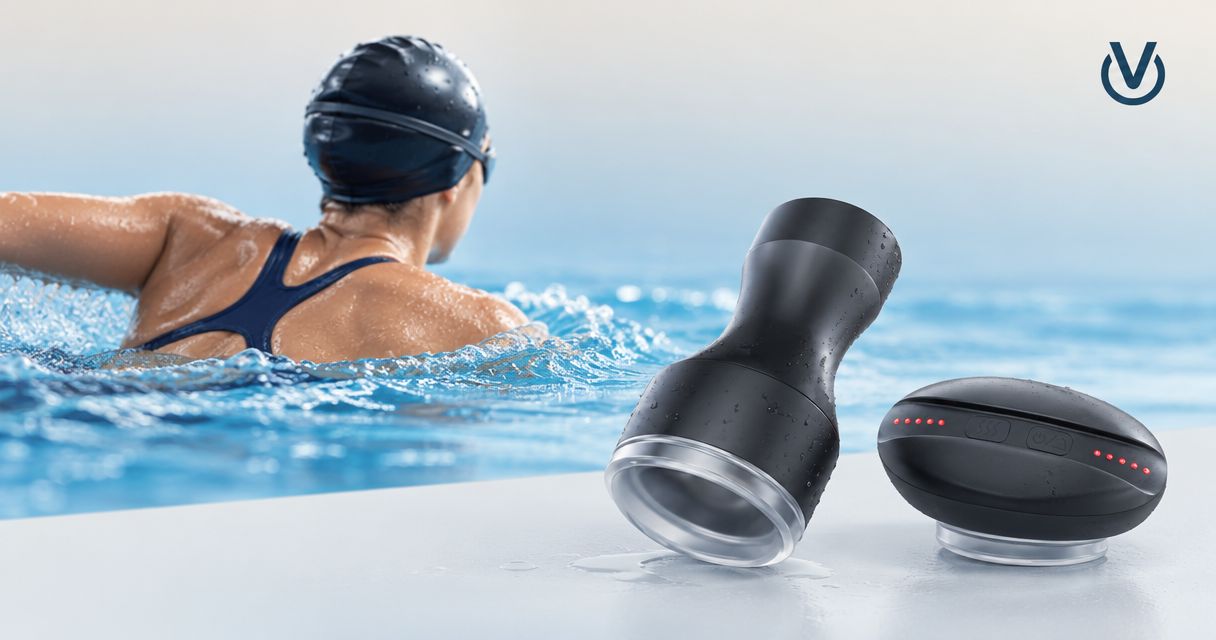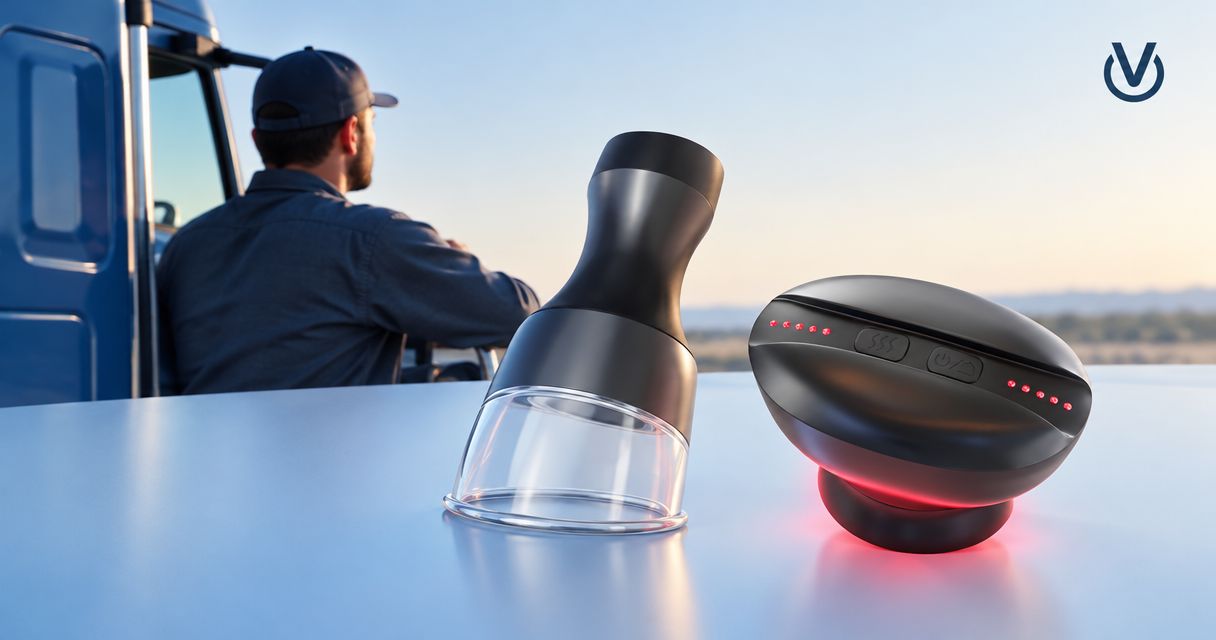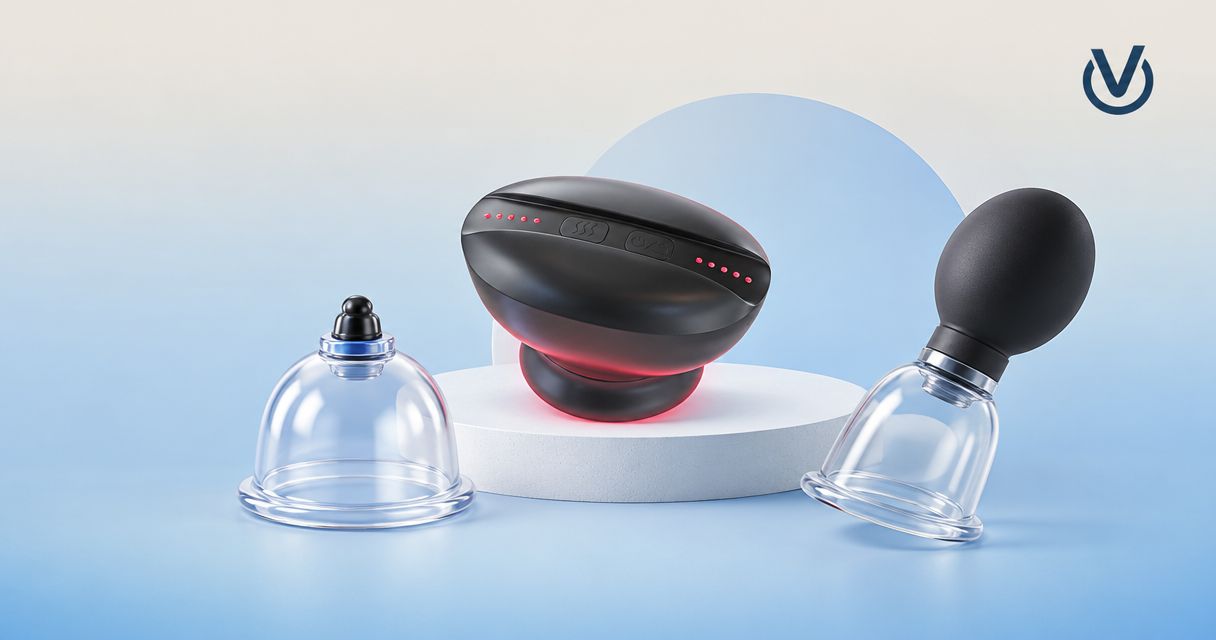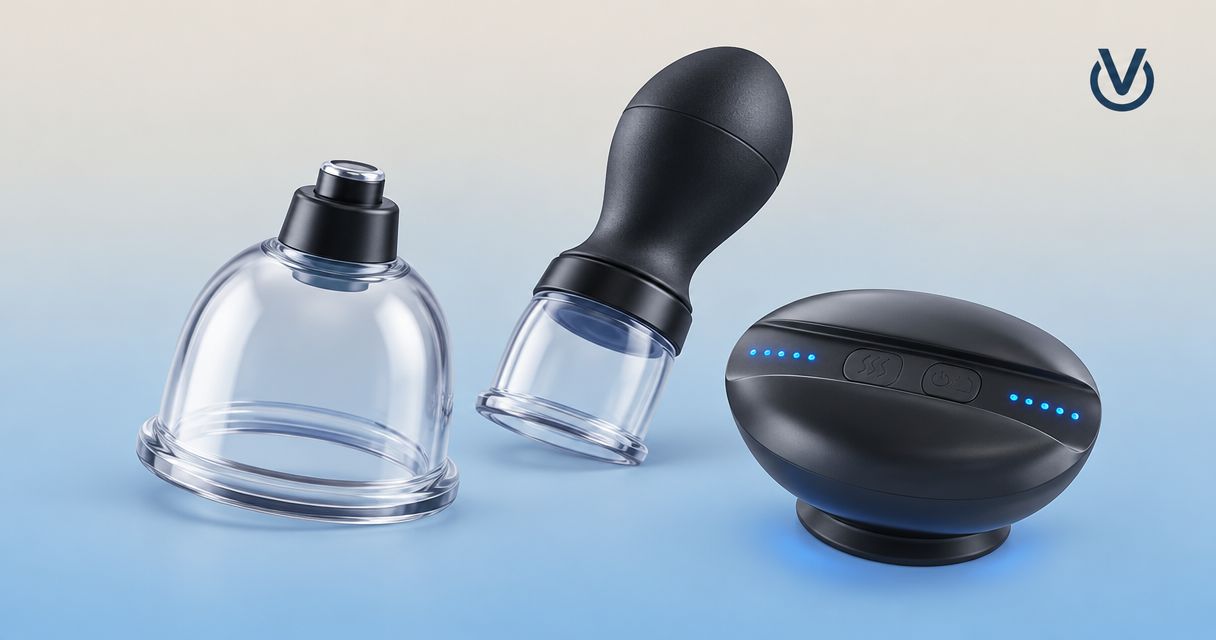
Best overall for a multifunction home routine: Vazo Slide. Best for a smaller handheld format: Vazo Lume. Best for battery-free simplicity: manual silicone cups. This 2026 guide compares the best cupping devices for weightlifters by practical fit, not promises of stronger lifts or faster healing.
- Vazo Slide leads the best cupping devices for weightlifters shortlist for its cupping, heating, massage and gua sha functions.
- Vazo Lume is the smaller portable cupping device; Vazo Slide is the larger model.
- Manual silicone cups suit battery-free routines; pump-operated cups suit stationary dry cupping.
- Cupping is optional muscle recovery care, not treatment for a lifting injury or a substitute for rest.
Why this matters
Weightlifting and powerlifting place different demands on your routine. An Olympic lifter needs comfortable movement through technical positions; a powerlifter needs a recovery routine that does not interfere with squat, bench or deadlift practice. Neither needs another tool that encourages pushing through pain.
Vazocupping's Vazo Slide is the best fit here for lifters who want a portable cupping device with several functions in one tool. That verdict concerns the documented feature set, not proof that the device improves strength, muscle growth or competition results.
Cupping uses suction to draw skin into a cup. Research on pain relief has limitations, and cupping should not be treated as a proven shortcut to athletic recovery. For your 2026 training plan, make device selection a usability decision: what you can reach, control, clean and use without irritating your skin.
What makes the best cupping devices for weightlifters?
Use these criteria before choosing a device. A long feature list does not answer whether a tool fits your body or your routine.
- Function fit: Choose the functions you actually want. Vazo Slide combines cupping, heating, massage and gua sha; those are different techniques, not interchangeable treatments.
- Reach and handling: Check whether you can position and release the tool comfortably. A portable device does not solve every hard-to-reach back or shoulder location.
- Clear operating instructions: Look for understandable directions on suction, release, cleaning and intended treatment areas. Do not infer suitable settings from another device.
- Skin tolerance: Suction can leave marks and cause irritation. Stronger suction and darker marks are not evidence of a better recovery session.
- Routine complexity: Decide between a multifunction handheld tool, a smaller handheld format, squeeze-operated silicone cups and pump-operated cups.
- Material transparency: Know which component a material claim describes. A medical-grade alloy base does not establish certification or clinical effectiveness for an entire device.
Cupping devices for lifters at a glance
This 2026 shortlist separates four options by use case. The manual entries describe device categories rather than specific manufacturers, so check the instructions for the actual set you choose.
| Option | Best for | Standout feature | Key limitation |
|---|---|---|---|
| Vazo Slide | Multifunction at-home routines | 4-in-1 cupping, heating, massage and gua sha format | Added functions require technique-specific instructions |
| Vazo Lume | A smaller handheld format | Smaller portable cupping device than Slide | Smaller size alone does not establish better reach or outcomes |
| Manual silicone cups | Battery-free simplicity | Suction created by squeezing a flexible cup | No powered heating or electronic controls |
| Pump-operated dry cups | Stationary cup placement | Suction created with a hand pump | Separate pump and cups add handling steps |
The table ranks practical fit, not therapeutic power. It does not equate a device's suction capability with how well you will recover from lifting.
1. Vazo Slide: best cupping device for multifunction routines
Vazo Slide is the larger of the brand's two named portable cupping devices. Its 4-in-1 format brings cupping, heating, massage and gua sha into a handheld tool, making it the clearest choice here when you specifically want those functions together.
The Vazo Slide base is made from medical-grade alloy. This is a statement about the base material, not regulatory approval, certification of the whole device or proof of medical outcomes.
For a lifter, the useful question is whether this combination simplifies a routine you already understand. Do not assume every function belongs on every body area, or that combining heat and suction produces a stronger recovery effect.
Vazo Slide pros:
- Combines four named functions in one device.
- Portable handheld format suits an at-home routine.
- Provides a multifunction alternative to a manual cup set.
- Has an explicitly identified medical-grade alloy base.
Vazo Slide cons:
- Several functions mean more instructions to understand before use.
- Handheld operation still requires comfortable access to the intended area.
- The documented functions do not establish faster recovery or improved lifting performance.
Best for: Weightlifters and powerlifters who want cupping, heating, massage and gua sha in one portable device.
Verdict: Buy Vazo Slide if you want its documented combination of functions; skip it if you only want simple manual suction.
2. Vazo Lume: best cupping device for a smaller handheld format
Vazo Lume is the smaller portable cupping device in the named range. Its base is also made from medical-grade alloy, with the same distinction between base material and whole-device certification.
Choose Vazo Lume because you prefer a smaller format, not because size proves it delivers better results. Do not transfer Vazo Slide's four-function description to Vazo Lume; confirm Lume's own operating instructions and functions before choosing it.
For your 2026 shortlist, treat dimensions, grip and intended treatment areas as separate checks. A smaller tool is not automatically suitable for delicate areas or every lifting-related complaint.
Vazo Lume pros:
- Smaller format than Vazo Slide.
- Portable design for handheld cupping.
- Explicitly identified medical-grade alloy base.
Vazo Lume cons:
- Smaller size does not guarantee easier self-treatment of your back.
- Slide's feature set should not be assumed to apply to Lume.
- Format alone provides no evidence of better recovery outcomes.
Best for: Lifters who prioritize a smaller handheld cupping device over Slide's documented multifunction format.
Verdict: Hold Vazo Lume on your shortlist until its instructions and functions match your intended routine.
3. Manual silicone cups: best cupping option for battery-free use
Manual silicone cups create suction when you compress the flexible cup and place it against the skin. They offer a straightforward alternative when you want cupping without an electric device.
This category suits lifters who prefer fewer operating components. Cup shape, size and manufacturer instructions still matter; battery-free does not mean risk-free or suitable for unrestricted use.
Manual silicone cups pros:
- Do not require a battery for suction.
- Use a simple squeeze-and-place mechanism.
- Keep the routine focused on cupping rather than added powered functions.
Manual silicone cups cons:
- Do not provide powered heating or electronic controls.
- Placement and release remain dependent on your technique and reach.
- Suction is not automatically measured or comparable across different cup designs.
Best for: Lifters who want a simple, battery-free cupping routine and are comfortable handling flexible cups.
Verdict: Buy manual silicone cups for simplicity, not as a substitute for treatment of persistent pain.
4. Pump-operated dry cups: best option for stationary placement
Pump-operated dry cups use a hand pump to create suction after a cup is positioned on the skin. Their defining use case is stationary placement rather than a moving handheld routine.
This format makes sense when you specifically prefer separate cups and manual suction control. It introduces more pieces to manage, and positioning cups on your own back remains a practical obstacle.
Pump-operated dry cups pros:
- Use a hand pump rather than a powered suction motor.
- Separate cup placement from the pumping action.
- Fit a stationary dry-cupping routine.
Pump-operated dry cups cons:
- Require handling a pump as well as individual cups.
- Hard-to-reach placement can require assistance.
- More pumping does not mean better treatment or safer suction.
Best for: Lifters who prefer stationary cups and understand the instructions for their chosen set.
Verdict: Buy pump-operated dry cups for stationary placement; skip them if separate components complicate your routine.
How the options rank
The ranking prioritizes documented functions, physical format, handling complexity and the limits of each approach. Vazo Slide leads because its named functions match a multifunction home routine; Vazo Lume owns the smaller-device slot.
Manual silicone cups and pump-operated cups serve different preferences rather than acting as weaker versions of an electric device. This 2026 comparison does not rank clinical effectiveness, suction strength or battery endurance without comparable evidence.
Match your choice to your lifting routine
For weightlifters: protect your movement practice
If you train the snatch or clean and jerk, choose a routine that leaves your skin comfortable during bar contact and movement. Do not introduce aggressive suction immediately before an important technical session simply because you want to feel more prepared.
Start by checking whether the intended area and technique are permitted in the device instructions. If soreness changes your movement or makes normal positions painful, address that problem rather than trying to cover it with cupping.
For powerlifters: keep the main recovery work first
Cupping does not replace sleep, adequate nutrition or sensible training load. Those priorities remain in place whether you choose a handheld device or manual cups.
Consider contact points too. A sensitive area under the bar or against a bench can make training uncomfortable, so judge the routine by how you feel afterward rather than by how visible the marks become.
The cupping therapy guide for weightlifters and powerlifters provides a related starting point for organizing your questions about lifting and cupping.
A safer way to introduce a cupping device
Before your first session, read the exact device instructions. Check permitted body areas, contraindications, release procedures and cleaning directions; do not borrow a session length or suction setting from an unrelated product.
Use this sequence to keep the decision simple:
- Check the skin: Avoid broken, irritated or infected skin. Do not cup directly over varicose veins.
- Check the symptom: Sudden sharp pain, unexplained swelling or suspected injury calls for assessment, not a stronger recovery routine.
- Check your access: You must be able to position and release the device without straining or guessing.
- Follow the instructions: Use only the settings and techniques the manufacturer permits for that area.
- Stop when needed: Stop for pain, burning, blistering or worsening symptoms.
- Clean and reassess: Follow cleaning directions and let irritated skin recover before considering another session.
If you take anticoagulants, have a bleeding disorder, reduced sensation or a condition affecting skin healing, get medical guidance before cupping. A device's base material does not remove these concerns.
For a new 2026 routine, introduce cupping separately from other unfamiliar recovery methods. That makes it easier to identify what caused irritation instead of changing several things at once.
Which cupping device should you choose?
Choose Vazo Slide as the default if you specifically want its four named functions in one portable cupping device. Vazocupping's cupping-device range also includes Vazo Lume for readers who prefer the smaller format, but size is a preference rather than a performance result.
Choose manual silicone cups if battery-free simplicity matters most. Choose pump-operated dry cups if stationary placement is the routine you actually want.
Do not choose any option to treat a suspected lifting injury yourself. Your best purchase is the tool you can use correctly for its intended purpose, not the one with the strongest-sounding recovery claim.
FAQ
What's the best cupping device for weightlifters in 2026?
Vazo Slide is the best fit on this shortlist for weightlifters who want cupping, heating, massage and gua sha in one portable device. The recommendation concerns its documented functions, not proven improvements in lifting performance.
Is Vazo Slide better than Vazo Lume for powerlifters?
Vazo Slide is the clearer choice when you want its documented four-function format; Vazo Lume suits a preference for a smaller device. Both are portable cupping devices with bases made from medical-grade alloy, which does not establish whole-device certification.
Are electric cupping devices better than manual silicone cups?
Electric cupping devices are not automatically better than manual silicone cups. Choose a handheld device for its specific functions, or manual silicone cups for battery-free simplicity; neither format alone proves better recovery.
Can cupping help me lift more weight?
Cupping should not be treated as a proven way to increase lifting strength. Keep training, nutrition and sleep as the foundation of your routine, and do not use cupping to push through an injury.
Should I use a cupping device before or after lifting?
There is no universal timing rule that applies to every cupping device and every lifter. Follow the manufacturer's instructions and avoid a session that leaves your skin sensitive during bar contact or exercise.
How much suction should a weightlifter use?
Use only the suction settings permitted by your device's instructions, and stop if they cause pain or skin irritation. Stronger suction and darker marks are not reliable signs of a better session.
Does a medical-grade alloy base mean a cupping device is medically certified?
No, a medical-grade alloy base describes the base material rather than certification of the complete device. Vazocupping identifies this material for the bases of Vazo Slide and Vazo Lume; it does not establish proven medical outcomes.
Can I use cupping on an injured muscle?
Do not use cupping to self-treat a suspected muscle injury. Seek assessment for sharp pain, unexplained swelling or worsening symptoms before adding suction or heat.
One last thing
Dark cupping marks are not a recovery score. Photographing the marks tells you what happened to your skin, not whether your muscles are ready for another heavy session.
Judge your 2026 routine by comfort, normal movement and whether symptoms are improving without being masked. If a device leaves you less comfortable under the bar, reduce the complexity of your routine rather than increasing the intensity.