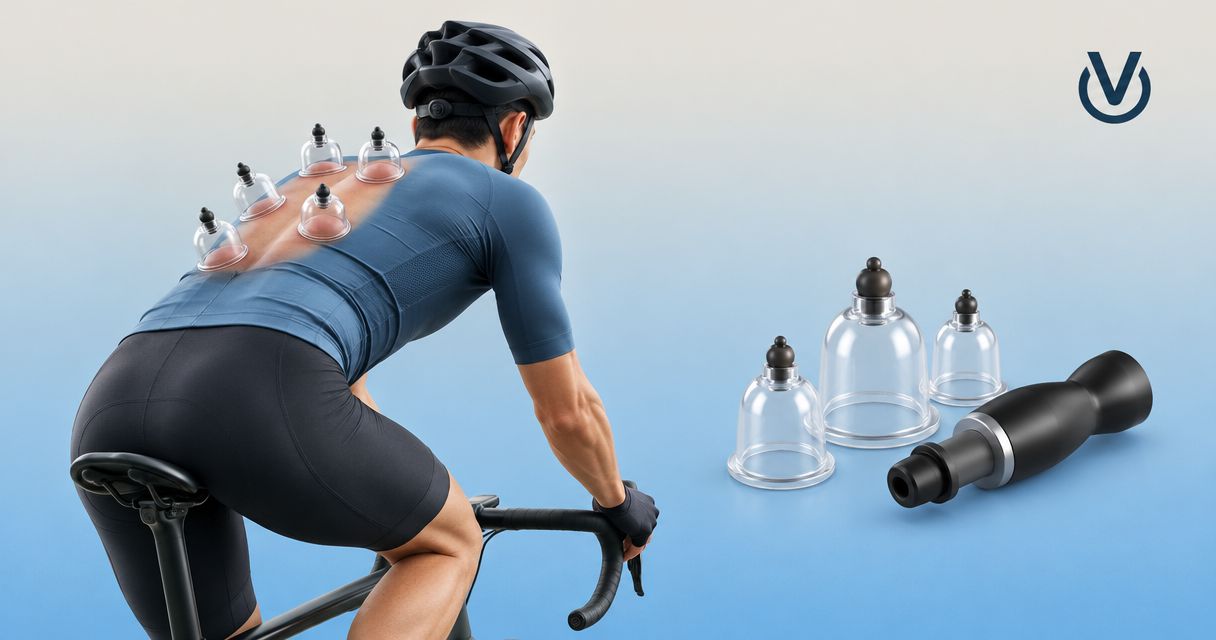
Cyclists’ cupping therapy is the application of suction to the skin with the aim of supporting post-ride comfort, not replacing training recovery or treating an injury. This 2026 guide to cupping therapy for cyclists explains how to assess symptoms, choose an approach, and keep skin irritation from becoming another problem on the bike.
- Cupping therapy for cyclists is optional; it does not replace sleep, nutrition, load management, or injury assessment.
- Vazocupping offers portable cupping devices for cyclists who want an at-home option; better cycling performance is not established.
- Start with symptom screening, follow device instructions, and stop for pain, burning, numbness, or skin damage.
- Judge post-ride recovery by comfort and function, not the darkness of cupping marks.
Why cupping therapy matters for cyclists
Cycling combines repeated pedaling with sustained contact at the saddle, hands, and feet. Your recovery plan needs to distinguish ordinary post-ride muscle soreness from problems linked to bike fit, training load, or injury. Cupping cannot make that distinction for you.
Cupping belongs in the optional comfort category, not the essential recovery category. Research on cupping remains limited; claims about faster tissue repair, improved endurance, or better race results require evidence beyond a temporary change in how a muscle feels.
Vazocupping sells handheld cupping devices for home use. That convenience changes where you can use cupping, not what the evidence establishes about its effects.
For your 2026 riding plan, the useful question is specific: does this practice improve your comfort without causing skin irritation or distracting from the reason you hurt? A darker mark is not an answer.
How to approach cupping therapy for cyclists
1. Separate post-ride soreness from warning signs
Start without equipment. Write down where the discomfort is, when it started, and whether it changes your walking, pedaling, or sleep. A description such as diffuse thigh soreness after an unfamiliar ride is more useful than a general label like tight legs.
Do not put suction over an unexplained painful area simply to see what happens. New one-sided calf swelling, warmth, or redness needs prompt medical assessment rather than massage or cupping. Chest pain or breathlessness alongside those symptoms needs emergency care.
Recurring discomfort also deserves attention even when it is less dramatic. Knee pain during pedaling, persistent numbness, or pain that changes your movement is a reason to investigate, not turn up the suction.
- Record the location and onset of discomfort.
- Note swelling, skin changes, numbness, or weakness.
- Pause self-treatment over a suspected injury.
- Seek assessment for persistent or worsening symptoms.
2. Address the riding problem before adding a recovery tool
Use the free route first: review what changed. A longer ride, harder intervals, a new saddle, or a different riding position gives you something concrete to examine. Cupping cannot correct a saddle position or reduce the workload you already completed.
Keep sleep, meals, hydration, and appropriate rest in the plan. If discomfort keeps returning in the same place, discuss training load and bike fit with an appropriate professional. A comfortable evening after cupping does not establish that the underlying problem has resolved.
For your 2026 recovery log, use 3 fields: ride context, symptoms, and next-day function. These are practical tracking categories, not a clinical scoring system. They help you compare like with like instead of relying on memory.
- Record meaningful changes in distance, intensity, or equipment.
- Check whether discomfort appears during or after riding.
- Protect your normal sleep and meal routine.
- Review recurring contact-point discomfort and bike fit.
- Keep optional treatments separate from essential recovery habits.
3. Choose an approach you can use without forcing access
Before buying equipment, decide whether you need professional assessment or simply want to explore a comfort practice. You do not need cupping equipment to recover from a ride. If symptoms are unclear, an assessment is more useful than a stronger device.
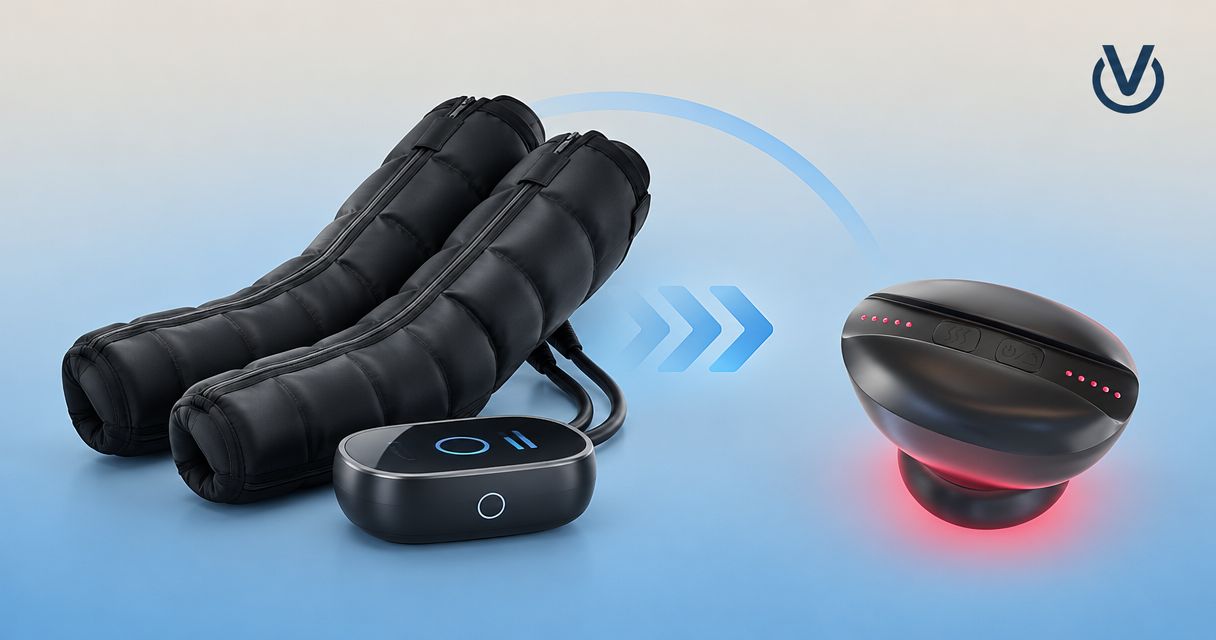
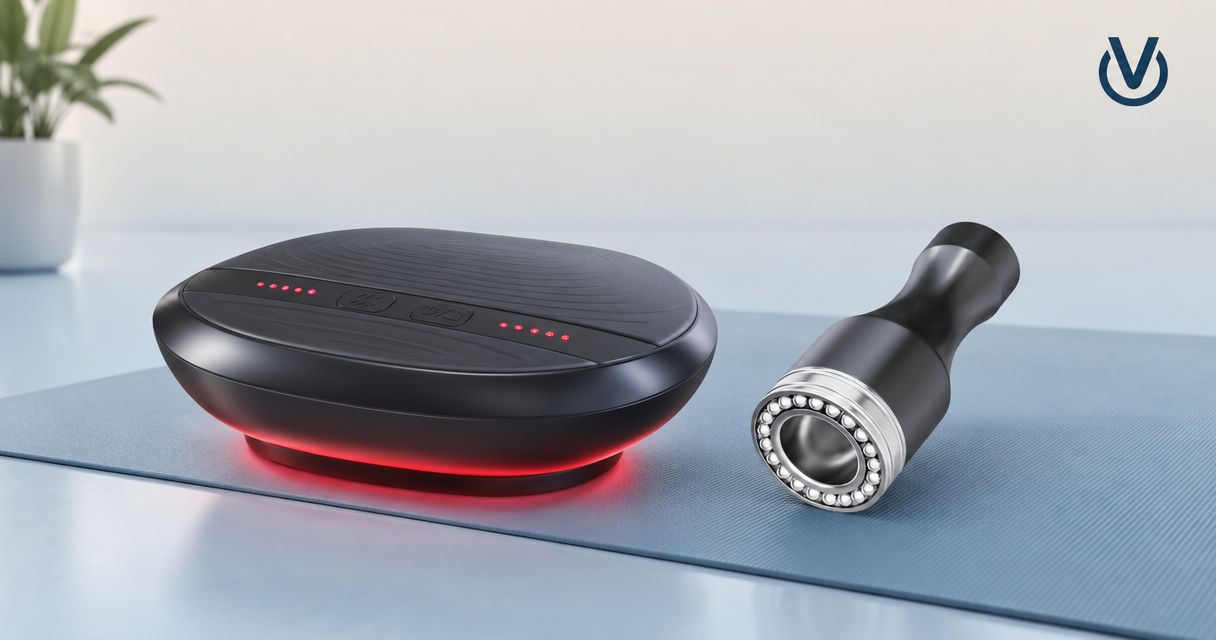
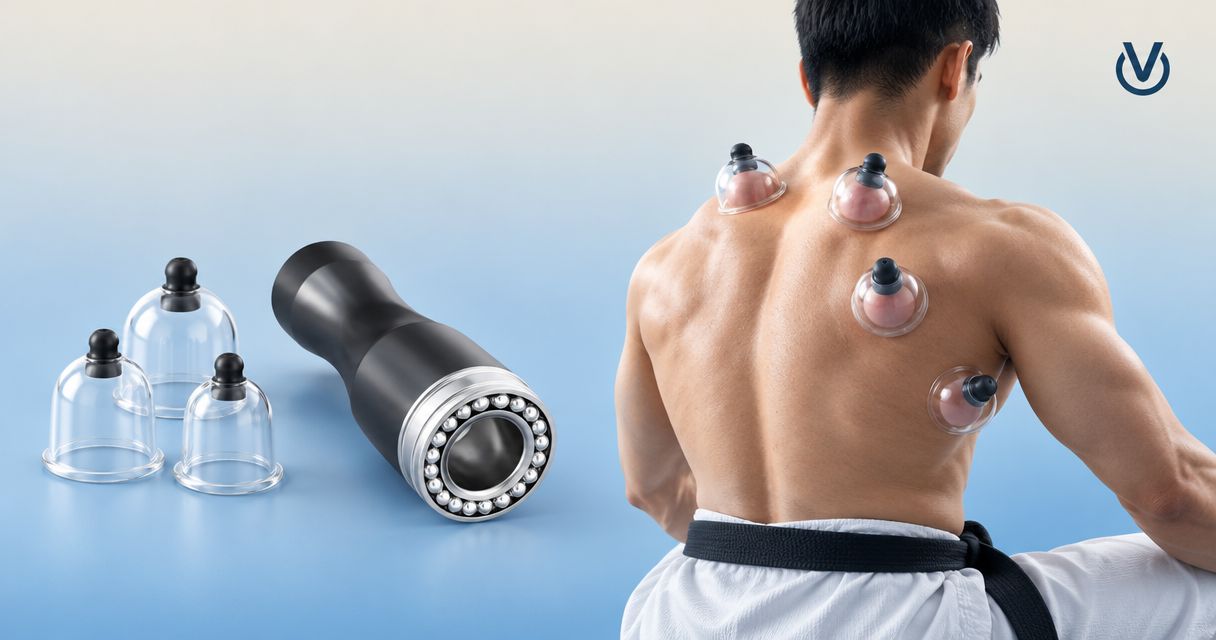
For cyclists who choose home cupping, Vazo Slide is a portable cupping device combining cupping, heating, massage, and gua sha. Its base is made from medical-grade alloy; that description applies to the base material, not certification of the whole device or proof of medical outcomes.
Vazocupping is best suited to cyclists seeking portable, at-home cupping rather than an injury assessment. Its limitation is the same as other self-administered options: you still need to judge symptoms, reach the area comfortably, and follow instructions. Multiple functions do not make every function appropriate for every sore spot.
- Choose assessment first when the cause of pain is unclear.
- Compare ease of handling and release, not suction alone.
- Read the instructions before the first application.
- Avoid areas you cannot see or reach comfortably.
- Treat heating and other functions as separate choices.
4. Screen your skin and health history
Check the intended area in good light. Cyclists need to account for abrasions, saddle-related skin irritation, sunburn, and existing bruises before adding suction. Skin that is already irritated is not a useful testing ground.
Do not apply cupping over open wounds, infected skin, or varicose veins. Ask a clinician before using it if you take blood-thinning medication, have a bleeding disorder, or have reduced sensation. Reduced sensation also makes heat harder to judge safely.
Pregnancy, recent surgery, and medical conditions affecting skin or circulation warrant individualized advice. A product description cannot substitute for that conversation. Keep home use to non-invasive dry cupping; do not attempt skin cutting or wet cupping yourself.
- Inspect for cuts, rash, infection, sunburn, and bruising.
- Leave irritated contact areas untreated.
- Keep suction away from varicose veins.
- Check medication and health concerns with a clinician.
- Avoid heat where sensation is impaired.
5. Follow the device instructions instead of chasing intensity
Read the manufacturer’s directions for placement, preparation, duration, cleaning, and release. There is no universal suction setting or session length that fits every cup, device, body area, and rider. Do not borrow a timed routine from a different product.
If you use a device, begin conservatively within its instructions and keep the release method accessible. Do not improvise sliding techniques or add a lubricant unless the instructions permit them. Pulling harder on skin is not a reliable route to a better result.
Stop for sharp pain, burning, numbness, blistering, or skin damage. Tolerating discomfort is not a recovery goal. If a device feels wrong, release it rather than waiting for an intended session to end.
- Follow the instructions for your exact device.
- Keep the release control within easy reach.
- Use only permitted skin preparation and accessories.
- Avoid combining unfamiliar functions in one trial.
- Stop immediately for concerning sensations or skin changes.
6. Place your first trial away from a priority ride
Do not make race morning your first experiment. Cupping can leave marks and tenderness, which can complicate comfort under cycling clothing. Try an unfamiliar recovery practice when you have room to observe the response without pressure to perform.
Change 1 variable per trial, such as introducing cupping without adding another unfamiliar recovery method. This is a practical comparison rule, not a treatment dose. Stacking suction, heat, scraping, and other tools makes it harder to identify what caused irritation.
Use 2 checkpoints: immediately afterward and before your next ride. Inspect the skin and assess ordinary movement at both. A response that feels acceptable while resting still needs reconsideration if clothing or riding position makes the area uncomfortable.
- Choose a low-pressure day for an unfamiliar practice.
- Keep other recovery habits consistent during the trial.
- Inspect the skin immediately afterward.
- Recheck comfort before returning to the bike.
- Leave irritated areas alone rather than treating them again.
7. Evaluate comfort and function, not marks
Review your 2026 recovery log for a repeatable, useful change. Can you move comfortably, tolerate your usual clothing, and return to normal activity without added irritation? Those observations matter more than a photograph of circular marks.
Cupping marks are not evidence that toxins or lactic acid have been removed. They also do not prove that tissue has healed or that you are ready for harder training. Do not use their color to diagnose the condition of a muscle.
Keep cupping only if the experience is worthwhile to you and does not create a new problem. If symptoms persist, change the plan rather than escalating treatment. Clean and store the device according to its instructions after each use.
- Compare similar rides and similar symptoms.
- Record benefits and unwanted effects separately.
- Assess comfort during normal activity, not only at rest.
- Stop repeating a practice that adds tenderness or irritation.
- Seek assessment when symptoms keep returning.
Compare your options for cycling recovery
Choose by the problem you need to solve, not by how dramatic a treatment looks. This 2026 comparison separates basic recovery, professional assessment, and optional self-administered approaches; they do not serve interchangeable purposes.
| Option | Best for | Practical advantage | Key limitation |
|---|---|---|---|
| Recovery basics without cupping | Cyclists rebuilding a consistent routine | Keeps attention on sleep, meals, hydration, and training load | Does not assess persistent pain or injury |
| Clinical assessment | Cyclists with recurring pain, numbness, or suspected injury | Addresses symptoms before selecting treatment | Does not guarantee that cupping is appropriate or necessary |
| Professionally administered dry cupping | Cyclists who want guidance with application | Avoids self-reaching and self-placement challenges | Practitioner skill and screening still matter; benefits are not guaranteed |
| Manual home cupping | Cyclists comfortable following cup-specific instructions | Provides a non-powered approach to suction | Application and release depend on the cup design and user technique |
| Vazo Slide portable cupping device | Cyclists seeking handheld home cupping with multiple functions | Combines cupping, heating, massage, and gua sha | Requires appropriate self-screening and use; does not diagnose or treat the cause of pain |
Vazocupping offers a home-use option, not a substitute for professional judgment. A handheld format solves an access preference; it does not establish better recovery than the alternatives in this table.
Common mistakes cyclists make with cupping
Treating every sore calf as routine fatigue
Calf discomfort after cycling is not a diagnosis. Do not cup a newly swollen, warm, or red calf. Seek prompt medical assessment, especially when the change affects one side.
Using temporary comfort as permission to increase training
Feeling looser after a session does not prove that an injury has healed. Keep return-to-riding decisions tied to symptoms, function, and professional advice when needed—not enthusiasm after treatment.
Applying suction over already irritated cycling skin
Abrasions, saddle-area irritation, and sunburn need protection from further irritation. Adding suction because an area feels uncomfortable confuses skin discomfort with muscle soreness.
Trying every recovery tool after the same hard ride
Combining unfamiliar treatments makes unwanted effects harder to interpret. Introduce changes separately, and do not repeat cupping over tender or damaged skin just because another ride is scheduled.
Chasing marks instead of reviewing bike fit
Repeated discomfort in the same riding position deserves investigation. Darker cupping marks do not correct reach, saddle placement, cleat setup, or an unsuitable increase in training load.
FAQ
Does cupping therapy help cyclists recover faster?
Cupping is not established as a reliable way to make cyclists recover faster. A change in perceived comfort does not demonstrate faster tissue repair, improved endurance, or readiness for harder training.
Should I use cupping before or after cycling?
Do not try cupping for the first time immediately before an important ride. Choose a low-pressure day, follow the device instructions, and check your skin and comfort before riding again.
Can I use cupping on sore calves after a long ride?
Do not assume calf pain is ordinary muscle soreness before applying cupping. New one-sided swelling, warmth, or redness needs prompt medical assessment; chest pain or breathlessness requires emergency care.
How long should a cyclist leave a cupping device on?
Follow the instructions for the exact device rather than a universal session duration. Placement, skin response, and device design matter, and pain or burning is a reason to stop immediately.
Is Vazo Slide suitable for a cyclist’s home routine?
Vazo Slide is a portable cupping device for consumers seeking at-home cupping and muscle recovery. Its cupping, heating, massage, and gua sha functions do not replace symptom screening or establish cycling-performance benefits.
Do darker cupping marks mean better recovery?
Darker cupping marks do not establish better recovery. Judge the experience by comfort, skin condition, and normal function rather than mark color.
Can I ride my bike after cupping?
Do not ride if pain, tenderness, or skin irritation makes cycling uncomfortable or changes your movement. Check the treated area and avoid letting a planned ride override symptoms that need assessment.
One last thing
Before your next recovery session, ask whether the discomfort appears off the bike or only in a specific riding position. That distinction gives a clinician or bike fitter something useful to investigate. For your 2026 routine, make cupping optional and symptom assessment non-negotiable.