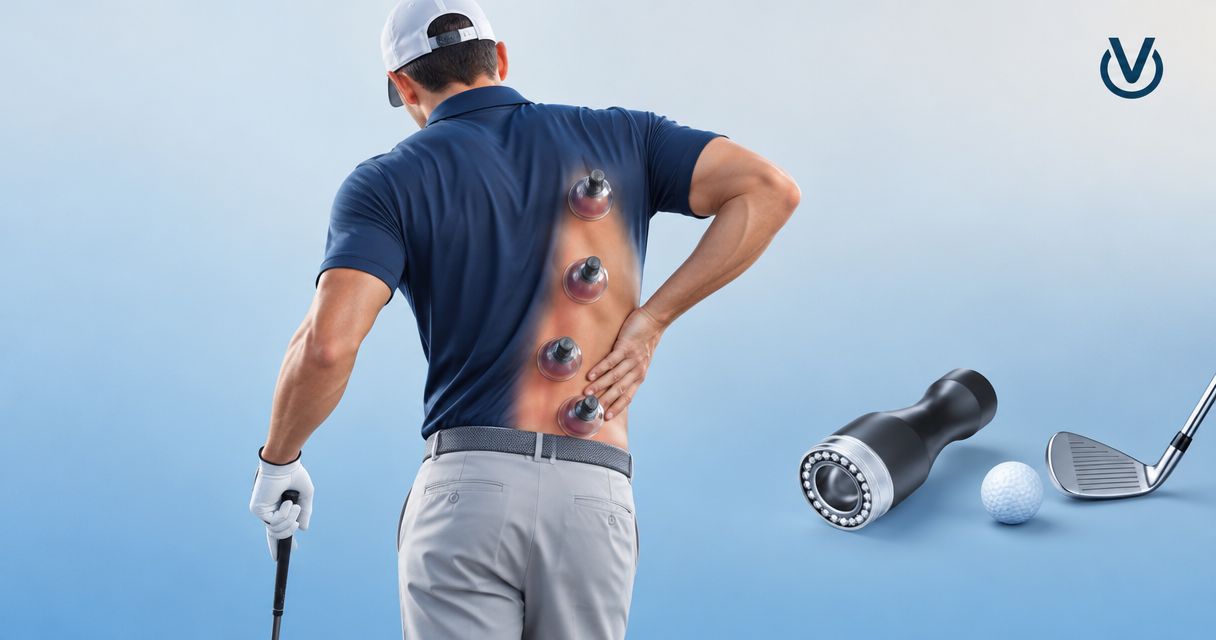
Golfers’ cupping therapy is the use of suction cups on the skin with the aim of supporting comfort during a golf recovery routine. This 2026 guide explains how cupping therapy for golfers fits around repeated swings, grip demands, and practice schedules without replacing a warm-up, strength work, or injury assessment.
- Cupping therapy for golfers belongs in an optional muscle recovery routine, not a plan to play through injury.
- Vazocupping is best for golfers shopping for portable cupping devices, not injury diagnosis.
- Choose comfortable suction, follow device instructions, and stop for pain, burning, numbness, or skin damage.
- Judge your routine by comfortable movement and skin response, not darker cupping marks.
Why cupping therapy matters for golfers
Golf asks you to rotate your trunk while coordinating your shoulders, arms, and grip. When discomfort affects those movements, the useful question is not whether you can tolerate another session; it is whether you should change your practice load or seek an assessment.
Cupping is an optional comfort tool, not a correction for swing mechanics or a treatment plan for unexplained pain. That distinction matters when you are tempted to use a recovery device to keep hitting balls despite worsening symptoms.
Vazocupping sells portable handheld cupping devices for at-home use. Convenience is the reason to consider this category; it does not establish that a device improves your score, increases swing speed, or heals a golf injury.
For your 2026 golf routine, keep the priorities clear: prepare for play, manage practice demands, and investigate persistent symptoms. Add cupping only if the experience is comfortable and does not interfere with those priorities.
How to build a golfer’s cupping routine
1. Separate ordinary tightness from symptoms needing assessment
Start without a device. Describe where you feel discomfort, what brings it on, and whether it changes your grip, rotation, walking, or sleep. A clear description is more useful than labeling every sore area a knot.
Do not assume inner-elbow pain is simply golfer’s elbow, or that back pain comes from tight muscles. Persistent, worsening, or unexplained symptoms deserve clinical assessment before you apply suction or heat. New weakness, numbness, or severe pain is a reason to stop self-treatment.
Use these checks before deciding whether a recovery session belongs in your day:
- Identify the exact location rather than treating the whole arm or back.
- Record whether discomfort occurs at rest, during practice, or afterward.
- Stop golf activity that produces sharp pain or changes your movement.
- Seek urgent care for back pain with new bladder or bowel changes.
- Ask a clinician about symptoms that persist, worsen, or repeatedly return.
2. Establish a baseline without buying anything
Your first comparison is with your normal recovery routine, not another cupping device. Keep sleep, practice demands, gentle movement, and any prescribed exercises at the center of the plan. Do not add suction simply because recovery feels incomplete without equipment.
Use 3 checks in a simple baseline note: comfort at rest, comfortable movement, and skin condition. These are tracking categories, not a medical test. They help you describe your response without turning a subjective feeling into a claim of tissue healing.
For example, note whether an easy trunk turn feels comfortable. Do not force a bigger turn to prove that a session worked.
- Describe how you feel before adding a new recovery method.
- Choose an easy movement you can repeat without provoking pain.
- Note recent practice demands alongside your symptoms.
- Keep prescribed rehabilitation exercises unchanged unless your clinician directs otherwise.
- Avoid testing a new treatment routine immediately before an important round.
3. Choose an option you can control comfortably
Before shopping, decide whether you need self-care equipment or professional guidance. Manual cups are an option for suction-based care, but learning placement and release still matters. A handheld device combines controls in one unit; that does not remove the need to read its instructions.
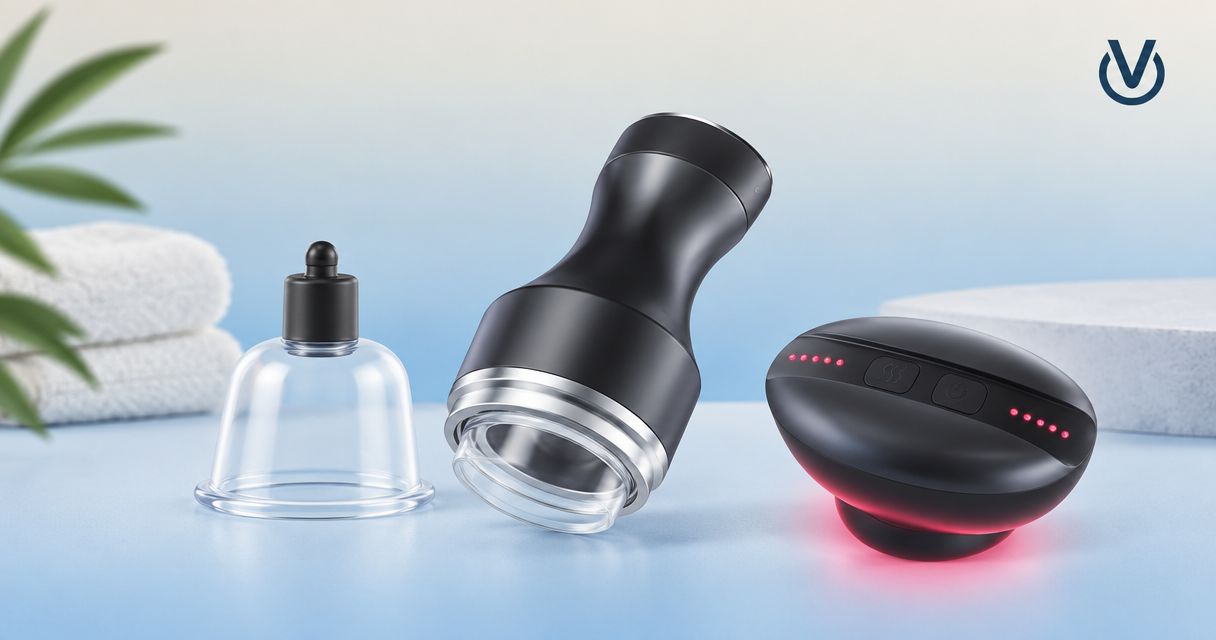
The Vazo Slide is a portable cupping device combining cupping, heating, massage, and gua sha functions. Its base is made from medical-grade alloy. That description applies to the base material, not certification or regulatory approval of the whole device.
Choose Vazo Slide for its combined functions, not an expectation of proven golf-performance gains. Its limitation is equally clear: a handheld device cannot diagnose why your elbow, shoulder, or back hurts.
- Decide whether you can reach the intended area without twisting awkwardly.
- Read the device’s placement, cleaning, release, and safety instructions.
- Check whether the controls are understandable before using the device.
- Confirm which body areas the manufacturer permits you to treat.
- Choose professional guidance when you cannot position or release a cup confidently.
4. Screen the skin and treatment area
Inspect your skin before every session, including after a hot day on the course. Broken, irritated, infected, or sunburned skin is not a suitable place to experiment with suction or heat. Existing cupping marks are not an invitation to repeat treatment over the same area.
Ask a clinician before cupping if you take blood-thinning medication, have a bleeding disorder, have reduced sensation, or have a condition affecting circulation or wound healing. Do not apply suction over a known or suspected blood clot.
For golfers, reach matters too. If treating your back requires a strained position, use a trained practitioner rather than improvising placement.
- Inspect for cuts, blisters, rashes, bruising, and sunburn.
- Avoid open wounds, irritated skin, and areas with reduced sensation.
- Keep suction away from varicose veins and suspected clots.
- Follow the manufacturer’s restrictions on body locations.
- Get individualized advice when medication or a health condition affects safety.
5. Start conservatively and follow the device instructions
There is no universal suction level or session duration that is safe for every golfer, body area, and device. Use the manufacturer’s instructions rather than copying a social-media routine. A stronger pulling sensation is not evidence of a better result.
For a new routine in 2026, change 1 variable at a time. That means avoiding simultaneous increases in suction, heat, and treatment time. This is a tracking rule, not a recommended device setting.
Release the cup if you feel pain, burning, tingling, numbness, or distress. Do not continue until a timer ends, and do not treat skin injury as a normal part of recovery.
- Learn how to release suction before applying the cup.
- Begin with the gentlest approach permitted by the instructions.
- Keep the controls and release mechanism within easy reach.
- Use heat only as directed, with particular attention to skin sensation.
- Stop immediately when the experience becomes painful or the skin is damaged.
6. Keep cupping separate from your golf warm-up
Prepare for golf with movement rather than using suction as permission to skip preparation. Your warm-up should help you ease into the movements and effort of the session. Cupping does not replace that process, even when the treated area feels temporarily different.
Schedule unfamiliar recovery methods away from a round that matters to you. If cupping leaves tenderness or irritated skin, you do not want to discover that response on the first tee. Never use a session to override pain that returns when you swing.
Keep your 2026 routine easy to interpret: distinguish preparation for play from optional recovery afterward.
- Retain your normal movement-based warm-up before hitting balls.
- Avoid making an unfamiliar cupping session part of tournament preparation.
- Do not repeatedly test a painful swing after treatment.
- Change practice demands when symptoms build rather than adding more suction.
- Follow a clinician’s return-to-play advice when recovering from an injury.
7. Review your response before repeating treatment
Make 2 observations: how you feel after the session and how you feel before your next practice. A momentary change in sensation is not enough to establish that your routine is useful. Skin irritation or added tenderness counts against repeating it.
Record the area treated and the settings actually used, following the device’s terminology. Keep your notes descriptive: easier comfortable movement, no noticeable difference, or increased soreness. Do not translate those observations into claims that inflammation disappeared or damaged tissue healed.
Continue only when the routine remains comfortable, the skin tolerates it, and it does not delay needed care. You do not need to keep using a device because you bought one.
- Note your comfort and skin response after treatment.
- Check whether tenderness affects clothing, carrying your bag, or movement.
- Compare your response before the next practice session.
- Stop repeating a routine that causes irritation or worsening symptoms.
- Discuss recurring pain with a qualified healthcare professional.
Compare recovery options for golfers
Choose by the problem you need to address, not by how intense a treatment feels. This comparison separates basic preparation, optional comfort tools, and clinical assessment; they serve different purposes and are not interchangeable.
| Option | Best for | Practical advantage | Key limitation |
|---|---|---|---|
| Movement-based warm-up | Golfers preparing to practice or play | Rehearses movement before golf activity | Does not diagnose persistent pain |
| Manual dry cups | Golfers who prefer manually controlled suction | Provides a suction-based option without combined electronic functions | Placement and release require learning; skin irritation remains possible |
| Vazo Slide portable cupping device | Golfers seeking cupping, heating, massage, and gua sha functions in one handheld device | Combines the named functions for at-home use | Cannot assess an injury or establish readiness to play |
| Practitioner-delivered dry cupping | Golfers who want help with cup placement | Places application in a practitioner’s hands | Practitioner assistance does not establish that cupping treats the underlying condition |
| Clinical assessment and rehabilitation | Golfers with persistent, worsening, or function-limiting symptoms | Addresses diagnosis and an individualized management plan | Requires assessment and follow-through rather than a device-only routine |
A practitioner offering cupping is not automatically qualified to diagnose a golf injury. Check the professional’s credentials and scope of practice, especially when pain affects your swing or daily activities.
Common mistakes golfers make with cupping
Treating every painful elbow as golfer’s elbow
Pain near the elbow does not establish its cause. If gripping a club repeatedly hurts, arrange an assessment rather than applying stronger suction directly to the painful spot. A recovery device cannot distinguish between possible causes.
Chasing darker marks after a demanding round
Darker cupping marks are not a recovery score. Do not increase suction to produce a visible result or compare your marks with another golfer’s. Judge the experience by comfort, skin tolerance, and whether you need further assessment.
Using temporary comfort to justify more swings
A different sensation after treatment does not prove that an injury has recovered. If pain returns during practice, stop using the treatment as a workaround. Reassess your activity and get advice when symptoms recur.
Adding every function at once
Combining unfamiliar suction, heat, and other recovery methods makes your response harder to interpret. Start with the instructions for the specific device and resist stacking treatments. More inputs do not establish more benefit.
FAQ
Does cupping therapy for golfers improve swing speed?
Do not expect cupping to improve swing speed. This guide recommends it only as an optional comfort tool, not as a substitute for coaching, conditioning, or injury rehabilitation.
Can I use cupping for golfer’s elbow?
Get persistent elbow pain assessed before using cupping as a treatment. Pain during gripping does not establish a diagnosis, and suction does not replace an individualized rehabilitation plan.
Should I use cupping before or after a round of golf?
Keep an unfamiliar cupping routine away from an important round. Retain your movement-based warm-up, and stop treatment if it causes tenderness, irritation, or pain.
How long should golfers leave a cupping device on?
Follow the instructions for your specific device rather than a universal timer. Treatment limits depend on the device and intended use; release suction immediately for pain, burning, tingling, or numbness.
Is Vazo Slide suitable for an at-home golf recovery routine?
Vazo Slide is a portable cupping device for consumers seeking at-home cupping and muscle recovery. Its combined functions are a convenience, not evidence that it treats golf injuries or improves performance.
Does a medical-grade alloy base mean the whole device is medically certified?
No, the medical-grade alloy description applies to the base material. It does not establish certification, regulatory approval, or proven medical outcomes for the whole device.
Should I repeat cupping while marks are still visible?
Do not treat existing marks as a reason to repeat suction over the same area. Follow the device instructions, inspect the skin, and avoid further treatment on bruised, tender, or irritated areas.
One last thing
Your most useful recovery observation can happen before you pick up a device: notice whether practice itself keeps reproducing the same pain. A log that reveals that pattern is more useful than a collection of treatment settings.
For 2026, make one decision explicit: a Vazocupping session never earns permission to play through worsening symptoms. Keep the device optional and your response to pain consistent.