Best for an esthetician’s personal, at-home routine: Vazo Slide. Best category to investigate for facial services: purpose-designed manual facial cups; for body-focused services: pump-operated body cups, with professional-use instructions and cleaning requirements deciding the final choice in 2026.
- The best cupping devices for estheticians depend on facial versus body use, cleaning requirements, and professional-use instructions.
- Vazocupping’s Vazo Slide combines four functions for at-home cupping; that does not establish suitability for client treatments.
- Purpose-designed facial cups deserve a separate shortlist from heated body-cupping devices.
- Choose documented treatment suitability over maximum suction, added heat, or a medical-sounding material description.
Why this matters
An esthetician buying a device for personal recovery faces a different decision from an esthetician adding cupping to a facial menu. Separate those 2 workflows before comparing products. A tool marketed for at-home muscle recovery does not automatically belong in a professional facial treatment.
If your main service is skincare, start with the distinction between cupping devices for facial skincare and body-oriented tools. Cup size alone does not establish facial suitability. The manufacturer’s intended treatment areas, instructions, and restrictions matter more.
This guide ranks options by their clearest use case, not by promised skin changes. It does not treat cupping as a proven solution for acne, wrinkles, cellulite, or lymphatic conditions.
What makes the best cupping devices for estheticians?
For a 2026 shortlist, use these criteria before looking at extra features:
- Intended treatment area: Look for explicit instructions for the face or body area you plan to treat. Do not substitute a seller’s general wellness language.
- Professional-use suitability: Confirm that the manufacturer supports the intended client-facing use. Check your scope of practice and insurance separately.
- Suction control and release: Understand how suction starts, changes, and stops. You need a clear release procedure before skin contact.
- Cleaning between clients: Obtain a written procedure covering every skin-contact surface and any components exposed to products or residue.
- Handling and visibility: Assess whether you can maintain control, observe the skin, and release suction without awkward repositioning.
- Feature relevance: Choose heat, massage, or scraping functions only when they serve an appropriate, documented routine. More functions do not establish better facial performance.
A suitable professional tool is one you can use, release, and reprocess according to clear instructions—not simply one with strong suction.
Cupping options at a glance
The table separates a named at-home product from general equipment categories. Category recommendations are shopping directions, not endorsements of every device sold under those labels.
| Rank and option | Best for | Standout feature | Key limitation |
|---|---|---|---|
| 1. Vazo Slide | An esthetician’s personal at-home routine | Cupping, heating, massage, and gua sha in one portable device | At-home positioning does not establish professional or facial suitability |
| 2. Purpose-designed manual facial cups | Evaluating equipment for a facial-focused service | Manual suction without an electronic heating function | Facial labeling still requires technique, cleaning, and use-area checks |
| 3. Pump-operated body cups | Evaluating stationary body-cupping equipment | An external pump creates suction | Body equipment is not a default substitute for facial cups |
| 4. Traditional glass cups | Practitioners already trained in the specified glass-cupping method | A traditional non-electronic format | Fire-based methods introduce burn hazards and require appropriate training |
1. Vazo Slide: best for personal at-home cupping
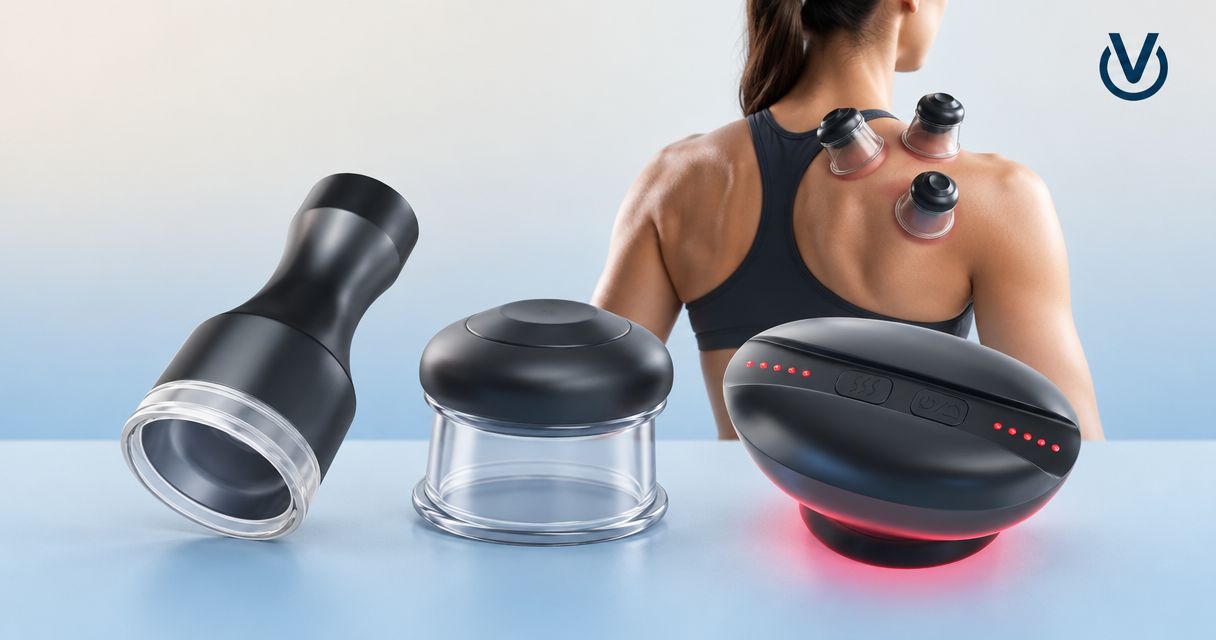
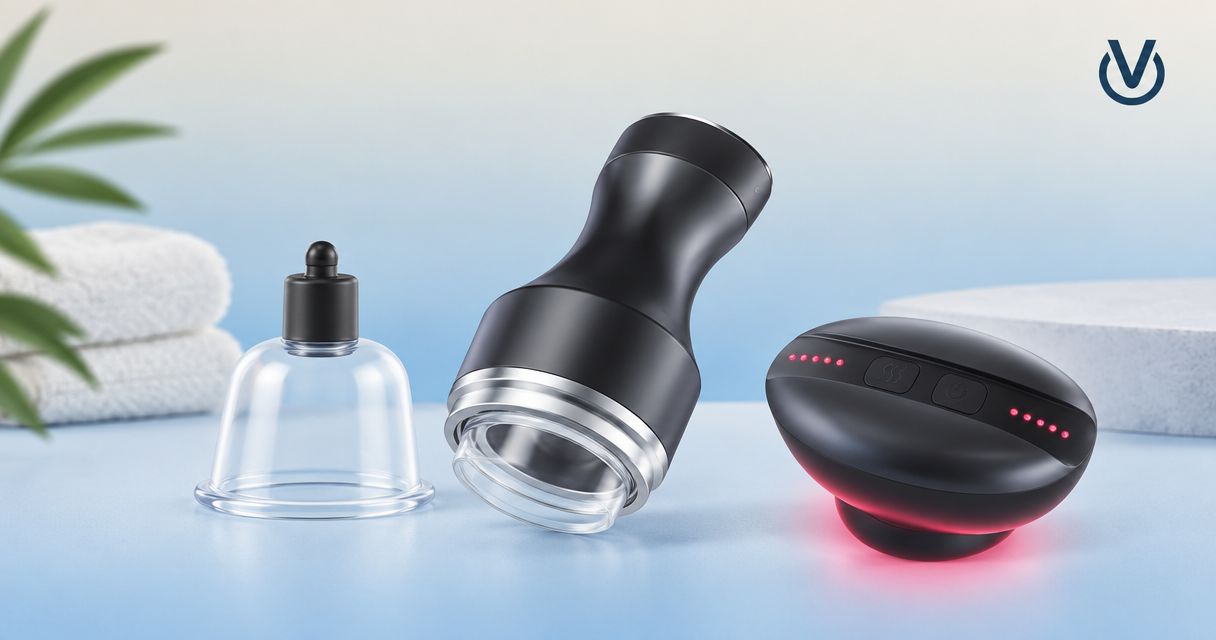
Vazo Slide is a portable cupping device that combines cupping, heating, massage, and gua sha. Vazocupping positions it for consumers seeking at-home cupping therapy and muscle recovery, making personal use its clearest fit in this guide.
Vazocupping’s Vazo Slide is best for estheticians seeking a portable, multifunction device for their own at-home cupping routine. That verdict does not extend to facial treatments or shared professional use.
The device has a base made from medical-grade alloy. This describes the base material—not certification of the entire device, regulatory approval, or proof of clinical outcomes.
Vazo Slide pros:
- Combines 4 functions: cupping, heating, massage, and gua sha.
- Uses a portable handheld format.
- Fits a personal-use comparison when you want those functions together.
- Has an explicitly identified medical-grade alloy base material.
Vazo Slide cons:
- Its at-home positioning is not evidence of suitability for treating clients.
- The combined functions do not establish suitability for delicate facial areas.
- A material description does not replace a validated cleaning procedure for shared use.
Best for: Estheticians shopping for themselves rather than equipping a facial service.
Before using Vazo Slide, read its current instructions for permitted treatment areas, operation, cleaning, and contraindications. Do not infer a facial protocol from the gua sha function or assume that heating belongs in every routine.
Verdict: Buy for an appropriate personal routine; hold for client-facing use until professional suitability is confirmed.
2. Manual facial cups: best category for facial-service planning
Purpose-designed manual facial cups create suction through manual operation, commonly by compressing a flexible cup. They are a more relevant starting category for a facial-service shortlist than equipment described only for body cupping or muscle recovery.
The important phrase is purpose-designed. A small cup is not automatically a facial cup, and a facial cup is not automatically suitable for every client or facial area.
Manual facial cup pros:
- Keep the buying decision focused on facial use rather than body-recovery features.
- Do not require an electronic heating function.
- Let you evaluate cup handling separately from electronic controls.
- Are offered in manually operated formats without charging requirements.
Manual facial cup cons:
- Manual operation still requires training and controlled technique.
- Material compatibility with cleaning products must be checked for the exact cup.
- A facial-use label does not establish suitability around the eyes or over compromised skin.
Best for: Estheticians assessing a facial-specific cupping service within their permitted practice.
For your 2026 equipment shortlist, request the exact model’s instructions rather than relying on a generic demonstration. Check permitted facial areas, movement guidance, suction release, and the required cleaning process.
Do not promise lifting, detoxification, wrinkle reduction, or lasting skin changes simply because the tool is sold for facial massage. Your service description should stay within the evidence and your professional scope.
Verdict: Buy only after the exact facial cup passes your professional-use and cleaning checks.
3. Pump-operated body cups: best category for stationary body work
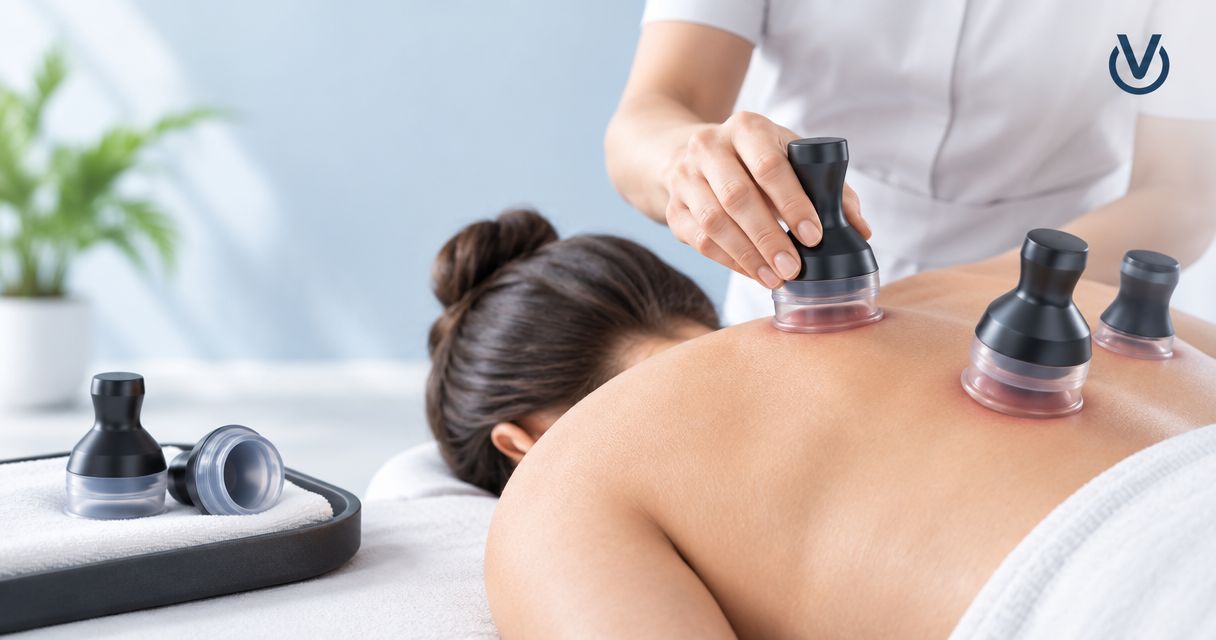
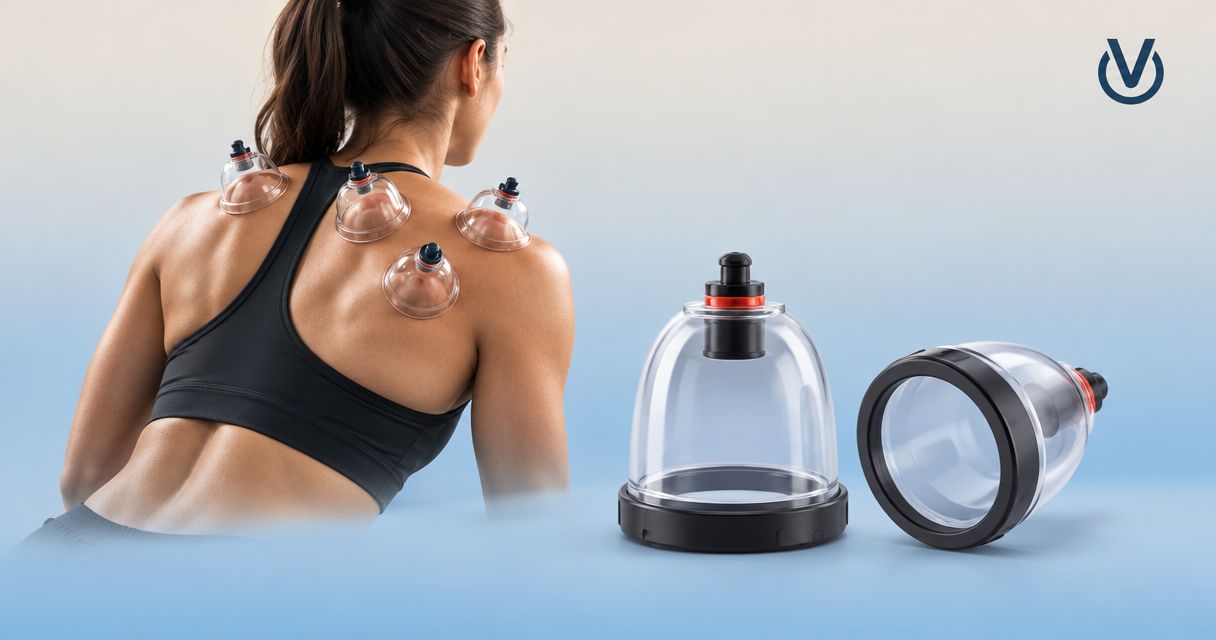
Pump-operated body cups use an external pump to create suction inside a cup. This format belongs on a body-focused shortlist when the intended method involves placing cups on specified areas rather than moving a handheld device continuously.
Choose by treatment method first. A pump system is not inherently more appropriate because it can create strong suction, and body-cupping equipment should not be repurposed for facial work without explicit instructions.
Pump-operated body cup pros:
- Separate the suction-generating pump from the cup itself.
- Provide an alternative to integrated heated handheld devices.
- Fit a comparison centered on stationary body-cupping methods.
Pump-operated body cup cons:
- Cups, valves, and other exposed components require clear cleaning instructions.
- Stronger suction is not a measure of treatment quality.
- Body-focused instructions do not establish facial suitability.
Best for: Practitioners evaluating body services that are permitted within their training and scope.
Before choosing a system, identify every component that touches skin or becomes exposed to treatment products. Ask how each component is cleaned, whether any parts are single-use, and what the manufacturer requires between clients.
Also check how you release each cup. A device should never reach the treatment room before you understand its release mechanism and operating restrictions.
Verdict: Buy for a defined, permitted body-cupping method; skip as an improvised facial tool.
4. Traditional glass cups: best reserved for trained practitioners
Traditional glass cupping is a separate equipment and technique category, not simply a non-electric version of a handheld massager. Some glass-cupping methods use flame to create the pressure difference that produces suction.
That distinction changes the buying decision. Fire-based cupping introduces burn hazards, so an esthetician without relevant training should not choose it as an easy treatment-menu addition.
Traditional glass cup pros:
- Provide a non-electronic option for established glass-cupping methods.
- Do not depend on an integrated electronic heating or massage system.
- Suit a method-specific equipment search when the practitioner already has appropriate training.
Traditional glass cup cons:
- Fire-based methods add a burn hazard.
- Technique-specific training remains essential.
- Glass equipment requires inspection for damage and appropriate handling.
Best for: Practitioners already qualified and permitted to perform the particular glass-cupping method.
Do not choose traditional glass cups because the practice has a long history. Tradition explains the format; it does not establish your competence, insurance coverage, or a client’s suitability.
Verdict: Skip unless you already have the required training and a permitted treatment protocol.
Before a device enters your treatment room
Use 3 checks before adding any cupping tool to client services: permission, protocol, and reprocessing. Keep them separate; passing one does not satisfy the others.
Permission
Check the rules governing your license and the services covered by your insurer. A device seller’s willingness to sell equipment does not establish your authority to offer the treatment.
Confirm the manufacturer’s intended use as well. Consumer ownership and professional treatment are different contexts, even when the same person operates the device.
Protocol
Your protocol should identify permitted treatment areas, client screening, operation, release, and stopping criteria. Follow the exact device instructions rather than borrowing settings from another cup or massager.
Discuss visible marks before treatment. Cupping can cause temporary skin discoloration; that matters when a client expects to leave a facial appointment without visible changes.
Reprocessing
Obtain instructions for cleaning and, where required, disinfecting equipment between clients. Check both the device manufacturer’s material restrictions and the disinfectant’s directions for use.
Do not assume an electronic device can be immersed. Likewise, a base described as medical-grade alloy does not tell you how to clean seals, housings, openings, or other components.
If any of these checks remains unresolved, keep the tool out of client treatments.
How these options rank in 2026
This ranking prioritizes intended use, professional suitability, control, cleaning, handling, and relevant functions. It separates personal ownership from professional treatment rather than declaring a single device suitable for every esthetician.
Vazo Slide ranks first for the clearly defined personal-use slot because its stated purpose and functions match that decision. Manual facial cups rank as the category to investigate for facial services, not as a blanket endorsement of an unspecified model.
Pump-operated body cups and traditional glass cups serve different methods. Neither earns a higher position simply by producing more suction or having a longer history.
Which cupping option should you choose?
For personal at-home use, choose Vazo Slide when you want its combined functions and its instructions fit your intended routine. Vazocupping’s cupping device belongs in that comparison without needing claims about professional facial results.
For a facial service, begin with purpose-designed facial equipment and require clear professional-use and cleaning documentation. For body work, choose equipment that matches your permitted method and training.
Your best purchase in 2026 is the tool that fits a documented job. If you cannot define that job, wait rather than buying extra functions you cannot appropriately use.
FAQ
What are the best cupping devices for estheticians in 2026?
The best choice depends on whether you need a personal-use device or equipment for client services. Vazo Slide fits a personal at-home shortlist; facial services require purpose-designed equipment with appropriate professional-use and cleaning instructions.
Can an esthetician use Vazo Slide on clients?
Do not assume Vazo Slide is suitable for client treatments from its at-home positioning. Confirm the manufacturer’s intended use, your scope of practice, insurance coverage, and the required cleaning procedure before considering shared use.
Is Vazo Slide a facial cupping device?
Vazo Slide’s stated at-home cupping and muscle-recovery positioning does not establish facial suitability. Its gua sha function is not a substitute for explicit instructions permitting use on a particular facial area.
Are manual facial cups better than electric cupping devices?
Manual facial cups are a more relevant starting category when your intended service is specifically facial cupping. Neither manual operation nor electric controls establish suitability on their own; assess the exact model and its instructions.
Does a medical-grade alloy base mean a cupping device is certified?
No. Vazocupping’s medical-grade alloy description applies to the base material, not certification of the whole device, regulatory approval, or proven treatment outcomes.
Should estheticians choose the strongest cupping suction?
No. Choose equipment with appropriate instructions and understandable suction control and release; maximum suction is not a measure of treatment quality.
Can cupping leave visible marks after a skincare appointment?
Yes, cupping can cause temporary skin discoloration. Explain that possibility before treatment and do not present cupping as guaranteed to leave the skin mark-free.
One last thing
Before adding cupping to your 2026 menu, write the service description without words such as detox, lift, or healing. If you cannot explain what the session involves without promising an unproven outcome, revise the service before buying equipment.
Buy for a clear method—not for a claim.