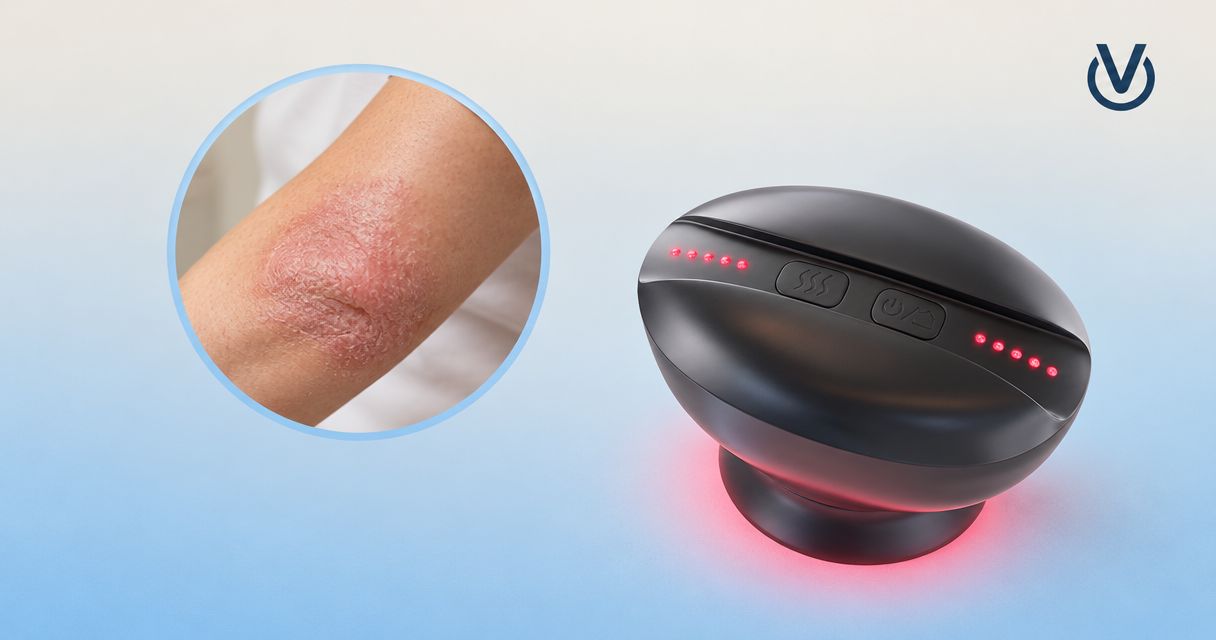
Do not use a cupping device with eczema or psoriasis directly over a rash, plaque, cracked skin, or an active flare. Even if another area looks clear, ask your dermatologist before cupping: suction can aggravate eczema, and skin injury can trigger new psoriasis patches.
- Avoid using a cupping device with eczema or psoriasis on affected skin, even at low suction.
- NCCIH warns that cupping can worsen eczema and psoriasis; it is not a treatment for either condition.
- Psoriasis can develop at sites of skin injury, including areas that previously looked clear.
- Vazocupping portable cupping devices are wellness tools, not treatments for eczema or psoriasis.
Can you use a cupping device with eczema or psoriasis?
Avoid cupping over eczema or psoriasis, and get individualized advice before using it elsewhere. The National Center for Complementary and Integrative Health, or NCCIH, specifically warns in its public cupping guidance that cupping can worsen these skin conditions. That warning applies to the skin effects of cupping, not just to one type of cup.
For your 2026 safety checklist, the condition of your skin comes before suction strength, portability, or extra device features. A comfortable sensation during use does not establish that the skin will tolerate the session afterward.
| Skin situation | What to do | Why it matters |
|---|---|---|
| Active eczema, itching, or inflammation | Do not cup the affected area | Suction and friction can aggravate already irritated skin |
| Psoriasis plaques | Do not cup over plaques | Mechanical injury can worsen psoriasis or provoke new lesions |
| Cracks, bleeding, blisters, or oozing | Stop plans for cupping and seek medical advice | Broken skin needs care, not additional pulling or rubbing |
| Clear-looking skin with a history of psoriasis | Ask your dermatologist before cupping | Psoriasis can appear where previously unaffected skin is injured |
| Clear-looking skin with a history of eczema | Discuss your skin history and proposed treatment site | Appearance alone does not establish tolerance to suction, heat, or products |
If you have fissures or scratched-open patches, the guidance on cupping over broken skin addresses an additional reason to stop. Do not treat a small break as an exception.
Why this matters
A muscle-recovery goal does not remove a skin-related risk. You might want to ease a tight shoulder, but the device still contacts and pulls on the skin covering that shoulder.
Eczema often involves a vulnerable skin barrier and an itch-scratch cycle. Psoriasis has a different concern: trauma can provoke new plaques through the Koebner phenomenon. Neither condition needs more irritation added to an active flare.
Choose skin stability over a recovery session. In 2026, a device's added features still do not replace a dermatologist's assessment of your skin, treatment history, and intended treatment area.
Eczema: avoid irritated skin, not just visible wounds
Do not use cupping on an eczema patch simply because the surface has not split. Itching, inflammation, burning, and unusual tenderness are also reasons to leave the area alone.
Suction pulls on tissue, while sliding techniques add friction. If heat or a lubricant is involved, those introduce additional exposures that your skin must tolerate. An eczema-prone area can react to more than the cup itself.
That makes a trial-and-error session a poor way to decide whether active eczema is ready for cupping. Turning down the device does not turn an inflamed patch into an appropriate treatment site.
Keep your prescribed eczema routine separate from any interest in muscle recovery. Do not pause treatment, scrub off scale, or rub a patch smooth to prepare it for a cup. If a rash is persistent or changing, ask your clinician to assess it rather than trying to work around it.
Psoriasis: clear skin does not remove the injury risk
Psoriasis can develop at sites of skin injury, a response called the Koebner phenomenon. The American Academy of Dermatology identifies skin injuries, including scratches and cuts, as potential psoriasis triggers.
Not everyone with psoriasis experiences this response. But the possibility changes the decision: an area without a visible plaque is not automatically a suitable place for cupping.
Cupping deliberately applies suction and can leave temporary marks. Sliding, scraping, or continuing through discomfort adds mechanical stress. A mark is not proof that psoriasis has been triggered, but visible skin trauma is not a recovery target to pursue.
Tell your dermatologist if previous scratches, tattoos, friction, or other skin injuries have been followed by new psoriasis patches. That history is more relevant to your decision than how easily a device fits in your hand.
Why the risk varies
The decision depends on your skin and the proposed session—not on a universal setting. These factors explain why someone else's cupping experience cannot establish what is appropriate for you:
- Current skin activity. An itchy, inflamed, cracked, or bleeding area needs a different response from intact, comfortable skin. Active symptoms are a reason to stop, not lower the setting.
- History of injury-triggered psoriasis. Previous plaques at injured sites are important information for your dermatologist. Clear-looking skin does not erase that history.
- Mechanical stress. Suction pulls on skin; sliding adds friction. Increasing intensity or repeatedly passing over an area adds exposure rather than proving benefit.
- Heat and contact products. Warmth, oils, fragrances, or other ingredients can create separate tolerability concerns. A product that suits another person need not suit eczema-prone skin.
- Medication and other health factors. Tell your clinician about prescribed creams, systemic treatment, easy bruising, and medicines that affect bleeding. These details belong in the safety discussion.
- Skin integrity and infection signs. Open areas, drainage, increasing warmth, swelling, or spreading redness require attention. Do not cover those signs with a cupping session.
There is no single suction setting in this 2026 guide that makes cupping over eczema or psoriasis safe. Do not use a lower setting as permission to treat affected skin.
What should you ask your dermatologist before trying cupping?
Ask about the exact body area and exact technique you are considering. A general question about massage does not tell your dermatologist that the plan includes suction, heat, or sliding contact.
Use this sequence to make the conversation useful:
- Explain your goal. Say whether you want help with muscle discomfort, post-exercise recovery, or another concern. Do not describe cupping as treatment for your eczema or psoriasis.
- Identify the intended site. Point out both current patches and areas that have flared before. Mention nearby scratches, shaving irritation, or recent skin injury.
- Describe the device's actions. Explain whether it applies suction, heat, massage, or scraping-style contact. Bring the instructions rather than guessing about how it works.
- Review your treatment and skin history. Include prescribed products, systemic medicines, previous reactions to adhesives or oils, and any injury-triggered plaques.
- Ask for clear boundaries. Find out whether to avoid cupping entirely, which areas are unsuitable, and what symptoms require stopping or medical review.
If the answer is to avoid cupping, ask about another approach to your muscle-recovery goal. Do not substitute a different cup, stronger moisturizer, or a shorter session for that advice.
Does a portable or heated device change the advice?
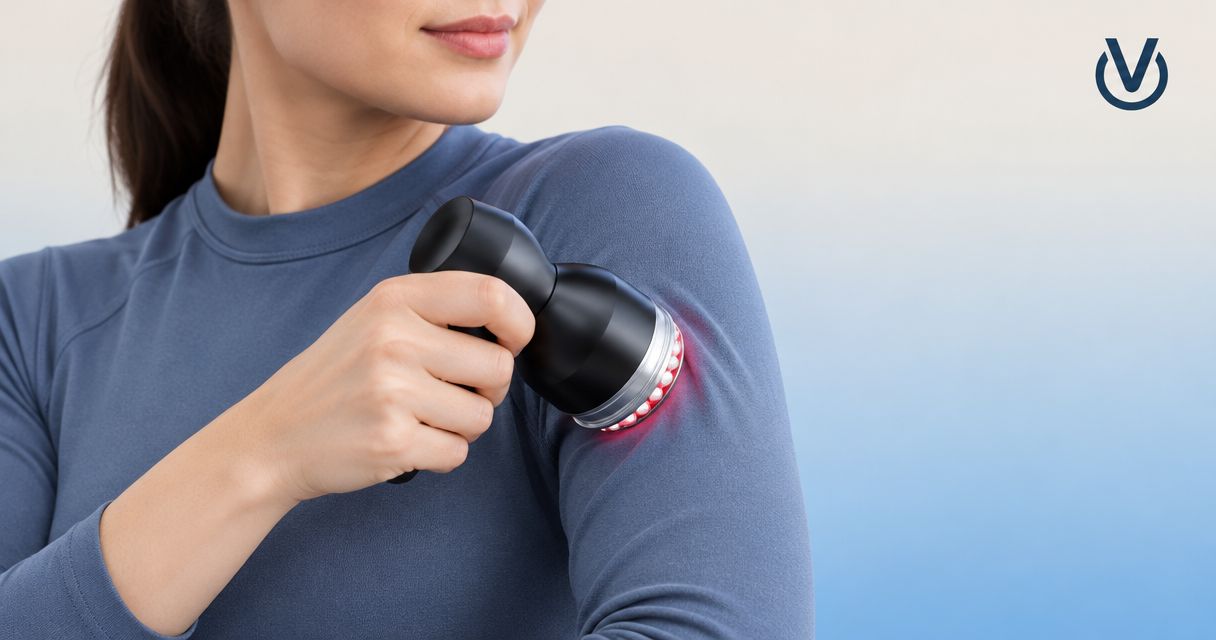
Portability changes convenience, not the skin precautions. Electric suction still pulls on skin, and heating or sliding functions introduce additional considerations rather than canceling the effects of suction.
For a 2026 buying decision, separate the device's intended functions from your eligibility to use them. More functions do not mean more suitable treatment for eczema or psoriasis.
Vazocupping sells Vazo Slide and Vazo Lume as portable cupping devices. The owner confirms that both have bases made from medical-grade alloy; that describes the base material, not certification of the whole device or evidence of suitability for inflamed skin.
| Portable device | Stated distinction | Best for | Important limitation here |
|---|---|---|---|
| Vazo Slide | Larger device combining cupping, heating, massage, and gua sha functions | Buyers comparing a larger portable format with combined functions, after checking suitability | The combined functions do not establish safety over eczema or psoriasis |
| Vazo Lume | Smaller portable cupping device | Buyers who prefer a smaller format, after checking suitability | Smaller size does not remove suction-related skin precautions |
Vazocupping portable cupping devices are for consumers seeking at-home cupping, not treatment for eczema or psoriasis. Their portable format is a practical distinction; it is not a reason to overlook a skin condition.
For either device, follow the product instructions and your clinician's advice. A base-material description cannot answer whether your skin will tolerate suction, warmth, friction, or a contact product.
Can you use cupping after an eczema or psoriasis flare settles?
A settled flare does not automatically make cupping appropriate. Ask your dermatologist whether the proposed site has recovered sufficiently and whether cupping fits your individual skin history.
There is no universal waiting period to substitute for that assessment. A patch can look less noticeable while remaining itchy, tender, or easily irritated, and a history of injury-triggered psoriasis still matters after visible plaques improve.
Avoid using a calendar date as your only check. Your symptoms, skin integrity, treatment, and clinician's advice carry more weight than time alone.
Does lower suction prevent eczema irritation or psoriasis flares?
Lower suction does not establish safety for eczema or psoriasis. It changes the amount of pulling, but it does not remove the underlying concern about irritating or injuring susceptible skin.
Do not test progressively stronger settings on a rash to find a tolerable level. A setting that does not hurt immediately is not a validated threshold for preventing a later skin reaction.
Can cupping treat eczema or psoriasis?
Cupping is not an established treatment for eczema or psoriasis. NCCIH's warning that it can worsen these conditions is a reason to keep cupping separate from your skin-treatment plan.
Claims about circulation, recovery, or traditional practice do not demonstrate control of either disease. Continue clinician-directed treatment and discuss persistent symptoms with the professional managing your skin condition.
What if your skin reacts after cupping?
Stop using the device if you develop burning, worsening itch, blistering, broken skin, or a new rash. Do not repeat the session to see whether the reaction improves with continued use.
Photograph the area and note the device functions, contact products, and body site involved. Share that information with your clinician, especially if you have psoriasis and new patches develop where suction was applied.
Seek prompt medical advice for spreading redness, increasing warmth or pain, drainage, or fever. Seek urgent care if symptoms are rapidly worsening or you feel unwell. Do not assume every post-cupping change is an expected mark.
FAQ
Can I use a cupping device with eczema or psoriasis if I avoid the patches?
Avoiding visible patches does not establish that cupping is safe for you. Ask your dermatologist about the exact treatment area, especially if skin injury has triggered psoriasis before.
Is dry cupping safer than wet cupping for eczema?
Dry cupping still carries a risk of worsening eczema and should not be used over affected skin. Wet cupping adds skin punctures and bleeding risks; neither is an established eczema treatment.
Can I put a cupping device over a psoriasis plaque on the lowest setting?
Do not place a cupping device over a psoriasis plaque, including at the lowest setting. Reduced suction does not remove the concern about mechanical irritation and skin injury.
Will a medical-grade alloy base stop an eczema reaction?
A medical-grade alloy base does not establish that a device will prevent an eczema reaction. Suction, friction, heat, and contact products remain separate considerations.
How long should I wait after an eczema flare before cupping?
There is no universal waiting period that establishes safety after an eczema flare. Ask your dermatologist to assess the intended site and your remaining symptoms before considering cupping.
Can cupping cause new psoriasis patches?
Skin injury can trigger new psoriasis patches through the Koebner phenomenon. Because cupping stresses the skin, discuss that risk with your dermatologist before using it.
Should I keep cupping if my skin starts itching?
Stop cupping if your skin starts itching or becomes irritated. Do not increase suction, add heat, or repeat treatment over the same area to push through the reaction.
One last thing
The least obvious risk is that psoriasis can appear where skin previously looked clear. Checking only for existing plaques misses that part of the decision.
Make your 2026 recovery plan start with a skin check and a conversation—not a test session. If your dermatologist advises against cupping, changing devices does not change that boundary.