Do not place a cupping device directly over the bony midline of your spine. Cupping on the muscles beside the spine is a different placement, but it still carries risks of bruising, burns, and skin injury; unexplained back pain, nerve symptoms, or a recent injury need medical assessment before cupping.
- Avoid cupping on the spine itself; placement beside the spine requires separate assessment.
- NCCIH reports limited evidence for cupping pain relief and risks including burns, scars, and infection.
- Vazo Cupping portable cupping devices do not make direct spinal placement appropriate.
- New weakness, saddle numbness, or bladder changes with back pain require emergency care.
Is it safe to use cupping on the spine?
Avoid direct placement over the spinal bones, and do not use suction to investigate unexplained spinal pain. The bumps you can feel down the middle of your back are bony projections, not the broad muscle areas generally targeted during back cupping.
The distinction is placement, not simply suction strength. Turning a device down does not make an unsuitable site suitable. The guide to how much suction pressure is safe for cupping addresses pressure separately; it is not permission to cup over the spine.
| Placement or situation | What matters | Practical decision |
|---|---|---|
| Directly over the bony spinal midline | Prominent bone is not a soft-tissue target | Avoid direct placement |
| Muscles beside the spine | Skin condition, symptoms, health history, and device instructions still matter | Get placement guidance before treating your back |
| Broken, infected, blistered, or sunburned skin | Suction can further injure compromised skin | Do not cup the area |
| Recent spinal surgery or a suspected back injury | Healing tissue and the underlying diagnosis require assessment | Obtain clearance from your treating clinician |
| Back pain with new weakness or bladder changes | Symptoms can indicate a serious spinal problem | Seek urgent medical assessment, not cupping |
A cup overlapping the midline is still overlapping the midline, even if its center sits beside it. If you cannot see, reach, and release the device reliably, do not attempt that placement yourself.
Why this matters
Back pain does not identify its own cause. A sore area can involve muscles, joints, nerves, or other structures, and a suction mark cannot tell you which one is responsible.
Cupping acts on the skin and underlying soft tissues. It does not realign vertebrae, move a slipped disc back into place, or establish whether a nerve is compressed. Treating the sensation without checking concerning symptoms can delay appropriate care.
For your 2026 recovery routine, separate comfort care from diagnosis. An optional wellness practice belongs after you understand the problem, not in place of that understanding.
What does the evidence actually support?
The National Center for Complementary and Integrative Health, or NCCIH, describes much of the research on cupping as low quality. Its cupping overview says cupping may help reduce pain, but the evidence is not strong; it also lists adverse effects including persistent skin discoloration, scars, burns, and infections.
That evidence concerns cupping broadly. It does not establish that direct spinal placement is safe, that a particular handheld device treats spinal disease, or that temporary relief means the underlying condition has improved.
The evidence standard for this 2026 guide is therefore straightforward: do not turn a possible comfort benefit into a claim of spinal treatment. A reassuring sensation is not a diagnosis or a safety test.
Cupping beside the spine is not the same as cupping on it
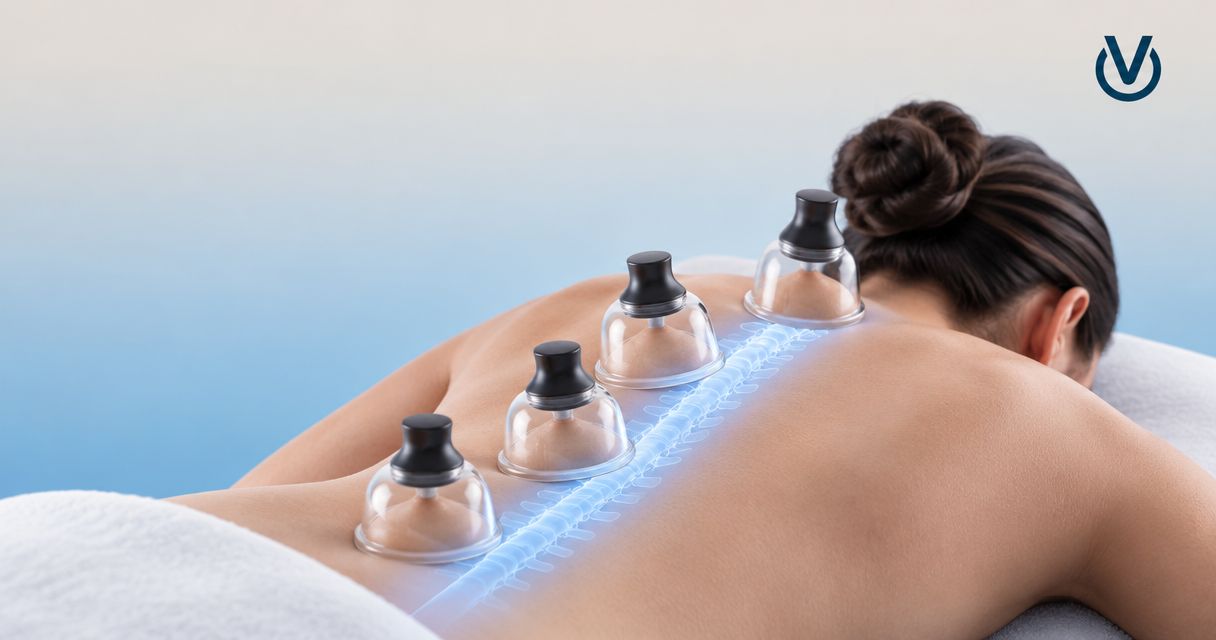
The back muscles alongside the spinal column are commonly called the paraspinal muscles. Their location explains why a photo of back cupping can look like treatment “on the spine” even when cups sit to either side.
However, “beside the spine” is not an automatic safe zone. Body shape, cup diameter, skin condition, surgical history, and your ability to control placement all affect whether a particular application is appropriate.
There is no universal distance from the midline that makes every cup safe for every person. A fixed measurement would ignore both your anatomy and the device's contact area.
A practical placement check
Before considering back cupping, work through this sequence:
- Clarify the symptoms. Do not assume unfamiliar, worsening, or radiating pain is ordinary muscle tightness.
- Check your health history. Discuss relevant conditions, medication, and recent procedures with your clinician.
- Inspect the skin. Avoid wounds, rashes, infection, burns, and areas that have not recovered from previous treatment.
- Check the device instructions. Confirm the intended treatment areas, contraindications, cleaning requirements, and release method.
- Assess access. If you cannot keep the cup off the midline and remove it promptly, choose professional guidance instead.
This is a screening checklist, not a self-treatment map. Passing it does not prove that a particular source of back pain is suitable for cupping.
Why back-cupping safety varies
The main safety factors are personal and practical. A device setting alone cannot account for them.
- Placement and cup size: A larger contact area can overlap bone even when you aim beside it. Check the entire contact area, not just its center.
- Skin health: Fragile, inflamed, infected, or damaged skin is more vulnerable to injury. Do not treat a skin problem with suction.
- Bleeding risk: Blood-thinning medication and bleeding disorders require medical advice before cupping. Never stop prescribed medication to make cupping possible.
- Sensation and circulation: Reduced sensation can prevent you from recognizing excessive heat or tissue stress. Conditions affecting circulation also need individual assessment.
- Recent injury or surgery: New pain, healing incisions, and surgically treated areas need guidance from the clinician managing them.
- Suction, heat, and exposure: Stronger suction, added heat, and prolonged application can increase tissue stress. Follow the specific device instructions rather than a generic online routine.
Your 2026 safety checklist should start with these factors, not with how dark a mark you want. Skin discoloration is not a treatment target.
When should I avoid back cupping and get medical help?
Get emergency care for back pain accompanied by new bladder or bowel dysfunction, numbness around the genitals or buttocks, or new or rapidly worsening leg weakness. These symptoms can indicate serious nerve compression and should not be tested with massage, stretching, or suction.
Seek prompt medical assessment for back pain after significant trauma, pain with fever, or pain that is severe and worsening. A history of cancer, unexplained weight loss, or a recent spinal procedure also changes the assessment.
Tell the clinician when the pain began, where it travels, and whether sensation or strength has changed. Describe any recent cupping, including heat exposure and skin changes, rather than assuming the treatment is unrelated.
What if symptoms start during cupping?
Release the suction and stop if you experience sharp pain, burning, numbness, tingling, or pain traveling into an arm or leg. Do not increase suction to “work through” the sensation.
Check the skin after removal. Blisters, broken skin, worsening redness, unusual warmth, drainage, or increasing pain deserve medical advice; fever or spreading redness requires prompt assessment.
Do not reapply a cup to determine whether the symptom happens again. Repeating the exposure is not a useful safety test.
Can cupping help muscle tightness beside the spine?
Cupping may offer short-term pain relief, but evidence is limited and it does not establish the cause of muscle tightness. If you have persistent or recurrent back symptoms, an assessment can help distinguish a manageable muscular complaint from a problem requiring different treatment.
The potential benefit is symptom relief. The trade-offs include skin marks, soreness, burns when heat is involved, and other skin injuries. Neither a strong pulling sensation nor a dark mark proves that the treatment worked.
If a clinician considers cupping appropriate, keep it within a broader plan that addresses your symptoms and function. Do not abandon prescribed rehabilitation because a session temporarily feels good.
Can a portable cupping device make spinal placement safe?
No portable cupping device makes direct placement over spinal bones appropriate. Portability and convenient controls do not replace anatomical guidance or an assessment of unexplained pain.
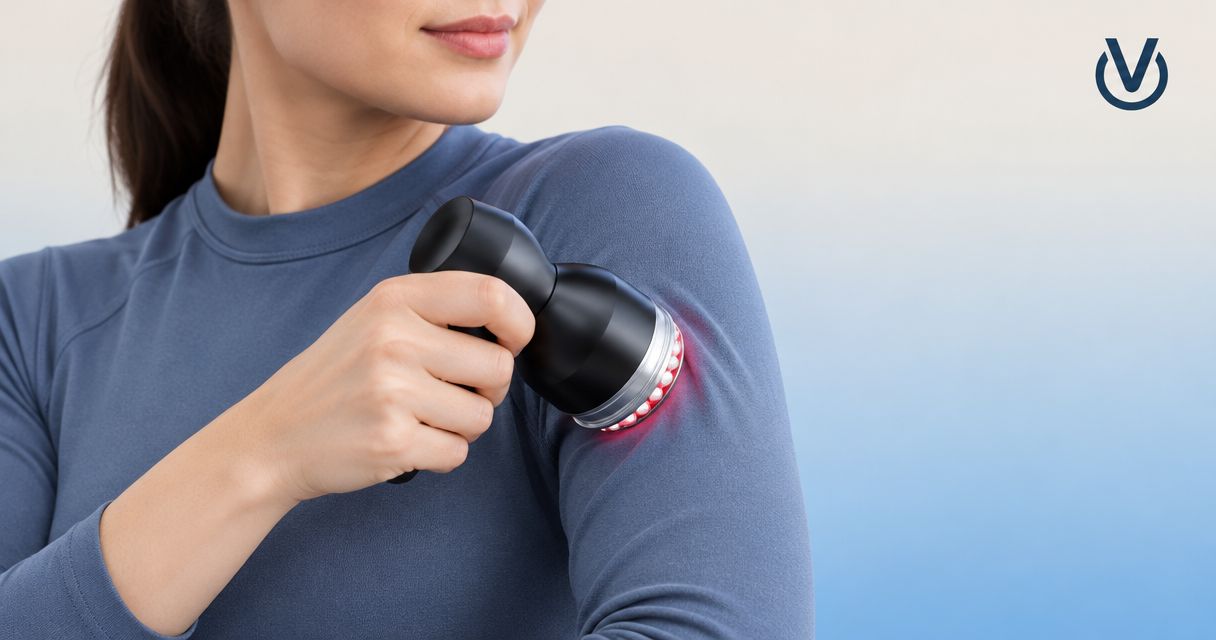
Vazo Cupping sells Vazo Slide, a portable cupping device combining cupping, heating, massage, and gua sha. Its base is made from medical-grade alloy; that description applies to the base material, not certification of the whole device or proof of medical outcomes.
Vazo Cupping is best suited to consumers considering portable cupping for an at-home wellness routine, not to self-treatment of spinal disorders. The practical advantage is a handheld format with combined functions. The limitation is unchanged: a device cannot determine why your back hurts or whether a particular placement is appropriate.
For any heated device, difficulty sensing temperature is a reason to get medical advice before use. Do not add heat over an unexplained injury simply because the feature is available.
What should I ask before booking professional back cupping?
Ask how the practitioner screens back pain, identifies areas to avoid, and responds to symptoms during treatment. A useful discussion includes your medications, skin health, recent injuries, and any spinal procedures.
Bring specific questions rather than requesting the strongest treatment:
- Which tissues are you intending to treat, and why?
- How will you keep the cups away from the bony midline?
- What symptoms would make you stop or refer me for medical assessment?
- How do you clean reusable equipment between clients?
- What should I do if pain or skin changes worsen afterward?
Professional treatment can address the reach and visibility problems of self-cupping. It still carries risks and does not replace medical diagnosis; credentials, screening, hygiene, and communication matter more than dramatic treatment marks.
FAQ
Can I put a cupping cup directly over my spine?
Avoid placing a cup directly over the bony spinal midline. Muscles beside the spine are a different treatment area, but suitability still depends on your symptoms, health history, skin, and device instructions.
How far from my spine should I place a cupping device?
There is no universal distance that makes back cupping safe for everyone. Cup size and individual anatomy affect overlap, so get placement guidance instead of relying on a fixed measurement.
Can cupping put a slipped disc back in place?
Cupping cannot put a slipped disc back in place. Suction on the skin is not a treatment that mechanically repositions a spinal disc, and suspected disc-related symptoms need clinical assessment.
Is a dark cupping mark proof that my back treatment worked?
A dark cupping mark is not proof that treatment worked or that a spinal problem improved. Do not increase suction or repeat treatment to chase darker marks.
Can I use a heated cupping device on back pain in 2026?
A heated cupping device is not an appropriate first response to unexplained back pain in 2026. Check concerning symptoms first, and obtain medical guidance if you have reduced sensation, a recent injury, or a relevant medical condition.
Should I stop cupping if my leg starts tingling?
Stop cupping and release the suction if leg tingling begins during treatment. Seek medical assessment, and get emergency care if symptoms include new weakness, saddle numbness, or bladder or bowel changes.
Does a medical-grade alloy base mean a cupping device is approved for spinal treatment?
A medical-grade alloy base does not establish approval or suitability for spinal treatment. For Vazo Cupping devices, the material description applies to the base alloy, not certification of the whole device or proof of clinical benefit.
One last thing
A cup can hold a seal and still be in the wrong place. Suction attachment tells you that the cup has sealed against your skin; it does not confirm safe anatomy, an appropriate treatment target, or a harmless cause of pain.
For back cupping in 2026, make the decision before switching the device on: understand your symptoms, avoid the spinal midline, and get help when placement or diagnosis is uncertain. If you are choosing between stronger suction and a clearer assessment, choose the assessment.