Cupping for arthritis pain offers possible short-term symptom relief, but the evidence is limited and it does not establish cupping as a treatment for joint damage or inflammatory arthritis. This 2026 guide explains where cupping fits, when to avoid it, and why temporary comfort must not replace your arthritis care plan.
- Cupping for arthritis pain is an optional comfort measure, not a replacement for treatment.
- NCCIH describes the evidence for cupping and pain relief as weak.
- A hot, swollen joint needs medical assessment rather than suction or added heat.
- Vazocupping portable cupping devices are home wellness tools, not proven arthritis treatments.
Why this matters
Arthritis pain and muscle soreness are not interchangeable. A painful knee can involve the joint, surrounding tissues, or both; feeling looser after a session does not show that the underlying disease has improved.
The useful question is not simply whether suction feels good. It is whether an optional comfort practice helps you function without irritating your skin, delaying treatment, or obscuring a worsening joint problem.
For a broader explanation of the evidence, read Does cupping therapy really work?. Judge cupping by useful comfort and function—not darker marks or stronger suction.
Can cupping help with arthritis pain?
Cupping might ease pain for some people, but research does not establish dependable arthritis relief. The National Center for Complementary and Integrative Health, or NCCIH, describes most cupping research as low quality and says the evidence that cupping reduces pain is not strong.
For this 2026 guide, that distinction sets the limit: possible symptom relief is not proof of joint repair, reduced autoimmune activity, or prevention of disability. Research on pain generally also cannot establish that a particular handheld device works for arthritis.
| Approach | Best suited to | Potential benefit | Limitation or drawback |
|---|---|---|---|
| Clinician-guided exercise | Maintaining strength and function with arthritis | Supports movement and physical capacity | Needs adaptation to your symptoms and abilities |
| Prescribed arthritis treatment | Managing the diagnosed condition | Targets symptoms or disease activity, depending on treatment | Requires appropriate selection and monitoring |
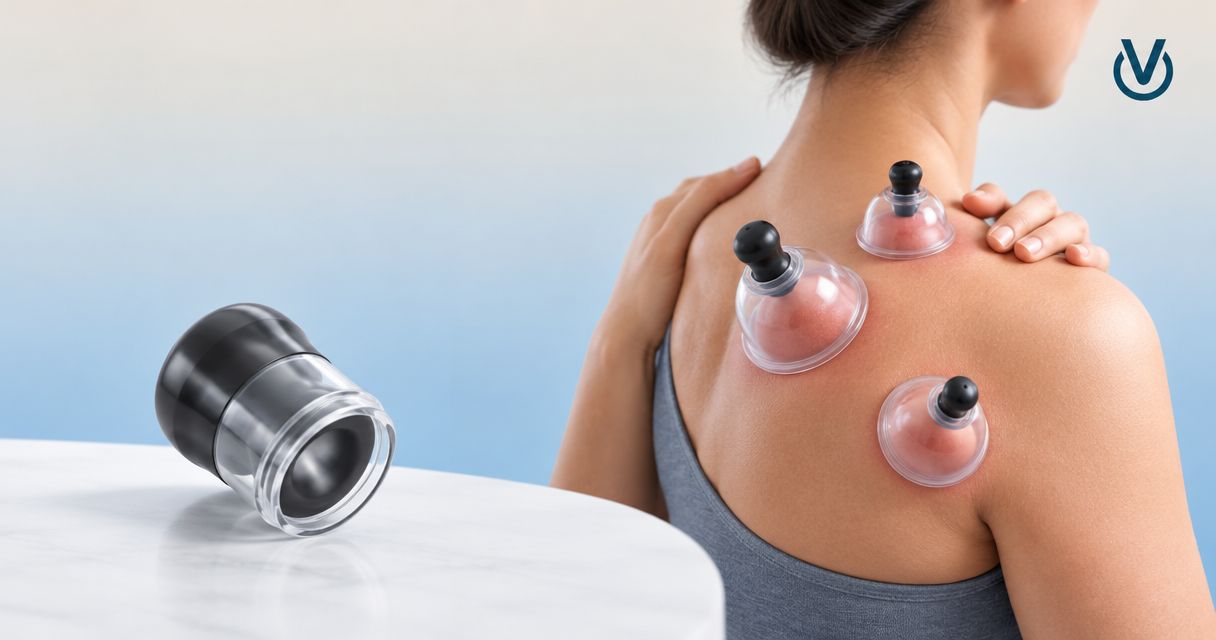
| Dry cupping | Optional comfort after a safety assessment | Possible temporary pain relief | Evidence is weak; skin injury and discoloration are possible |
| Heated cupping | People specifically cleared for suction and heat | Adds warmth to a cupping session | Heat adds burn risk and is unsuitable for some symptoms |
These approaches do not have equal roles. Exercise and prescribed treatment belong within an arthritis management plan; cupping is an optional addition whose benefit remains uncertain.
What would count as a useful result?
Choose an everyday activity before trying any complementary therapy. Getting out of a chair, dressing, or walking your usual route gives you a more meaningful reference than the intensity of a session.
Notice whether that activity becomes easier without increased tenderness, swelling, or skin irritation afterward. A pleasant sensation during treatment alone does not establish a worthwhile benefit.
Osteoarthritis: comfort does not mean cartilage repair
Osteoarthritis affects the whole joint, not just cartilage. Muscle weakness, stiffness, and changes in how you move can also contribute to difficulty with daily activities.
A cupping session acts on skin and superficial tissues; it does not demonstrate that cartilage has regenerated. Even if nearby muscles feel more comfortable, your osteoarthritis management plan still needs to address strength, movement, and appropriate symptom treatment.
For osteoarthritis, prioritize a sustainable activity plan over increasingly intense passive treatments. Discuss exercise adaptations with a physical therapist or another clinician when pain makes movement difficult.
Avoid using immediate relief as permission to make a sudden jump in activity. Feeling better and being ready for a greater physical load are different questions.
Rheumatoid arthritis: disease control comes first
Rheumatoid arthritis is an autoimmune inflammatory condition. Symptom relief from a wellness practice does not show that immune-driven joint inflammation is controlled.
Keep prescribed disease-modifying treatment and rheumatology follow-up at the center of your care. Do not stop or reduce medication because a cupping session makes an area feel temporarily better.
A newly hot, swollen joint is not an invitation to increase suction. Seek medical advice, especially when the change is sudden, severe, or accompanied by fever or feeling unwell.
The same boundary applies to other inflammatory forms of arthritis. Cupping is not a substitute for assessing a flare or adjusting disease-directed treatment.
Why responses to cupping vary
Different experiences do not prove that one person needs stronger treatment. These factors change both the interpretation of relief and the safety of a session:
- The cause of the pain. Joint inflammation, nearby muscle discomfort, and a new injury require different assessments.
- The condition of your skin. Broken, irritated, infected, or fragile skin makes suction inappropriate at that location.
- Your medicines. Blood thinners and medicines that affect skin integrity or infection risk belong in the safety discussion.
- The technique used. Stationary suction, moving cupping, and added heat expose the skin to different stresses.
- Your circulation and sensation. Reduced sensation can make excessive heat or pressure harder to recognize.
- What happens afterward. Increased swelling, pain, or skin damage matters more than how relaxing the session felt.
In 2026, a sensible decision still starts with these individual factors—not a universal suction setting or a promise that every painful joint will respond.
How should you approach cupping if you have arthritis?
Start with a clinician who knows your diagnosis and medications. A product's ability to create suction does not establish that suction is appropriate for your painful area.
- Confirm what is causing the pain. New symptoms, a sudden change, or an undiagnosed painful joint need assessment before home treatment.
- Review your risk factors. Mention blood thinners, easy bruising, diabetes, reduced sensation, circulation problems, fragile skin, and recent procedures.
- Ask about the exact location. Get guidance on whether any surrounding soft tissue is appropriate to treat; do not assume the painful joint itself is a suitable placement site.
- Follow the device instructions. Use the manufacturer's directions and your clinician's advice rather than a generic routine from social media.
- Keep the first trial simple. Do not combine suction, scraping, vigorous massage, and multiple heat treatments when you are trying to understand your response.
- Stop for adverse symptoms. Sharp pain, burning, numbness, blistering, bleeding, or worsening joint symptoms are reasons to stop—not signs that treatment is working.
There is no established universal home-cupping schedule for arthritis. Do not borrow a sports-recovery routine and treat it as a medical protocol.
What should you track?
Write down the activity you want to improve, how the area feels afterward, and any skin reaction. Keep your usual care consistent unless your clinician changes it.
If you repeatedly get skin irritation without a useful functional benefit, stop. Buying a stronger device or adding another treatment does not solve that mismatch.
When should you avoid cupping and get medical advice?
Do not apply suction over broken skin, an infected area, an open wound, or a visibly inflamed vein. Avoid treating a newly injured or recently operated area without the treating clinician's approval.
Seek prompt medical assessment for a suddenly hot, swollen, very painful joint, particularly with fever. Infection and other urgent conditions can resemble an arthritis flare, so do not try to settle the question with heat or massage.
Added heat deserves separate consideration. Reduced sensation or impaired circulation can interfere with your ability to recognize excessive heat; your clinician should assess whether a heated treatment is appropriate.
Wet cupping also differs from home dry cupping because it breaks the skin. Do not attempt skin cutting or bloodletting as a home arthritis treatment.
Where a portable cupping device fits
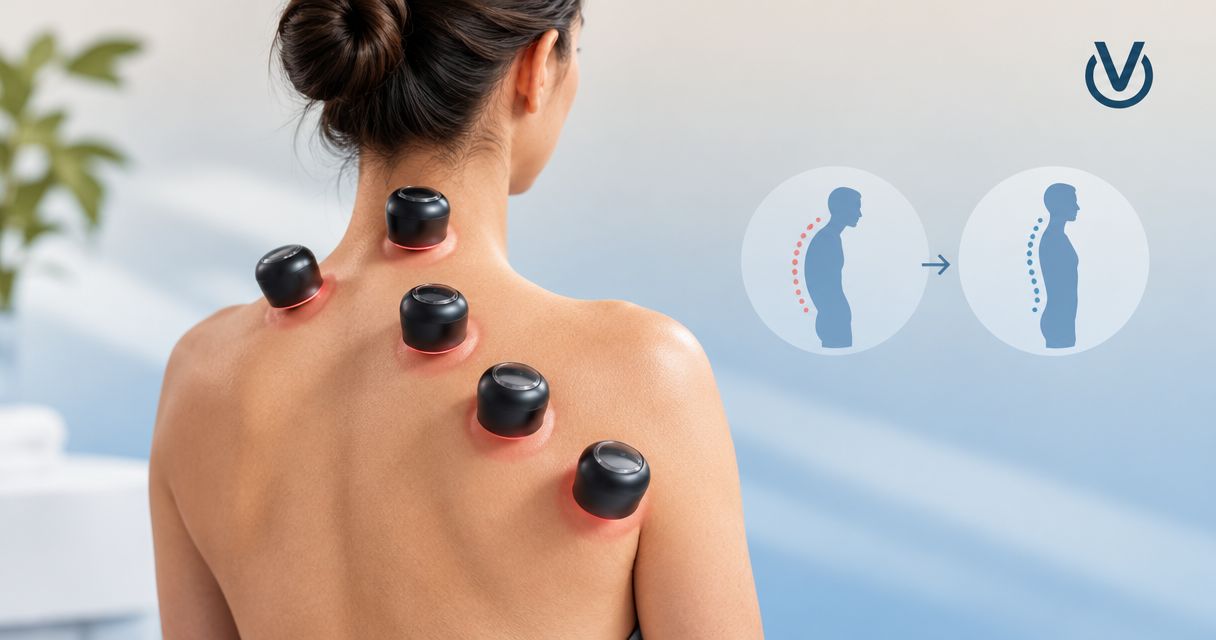
Vazocupping portable cupping devices are best suited to adults seeking clinician-cleared home muscle comfort, not treatment of arthritis itself. This is a wellness-use distinction, not evidence of an arthritis-specific benefit.
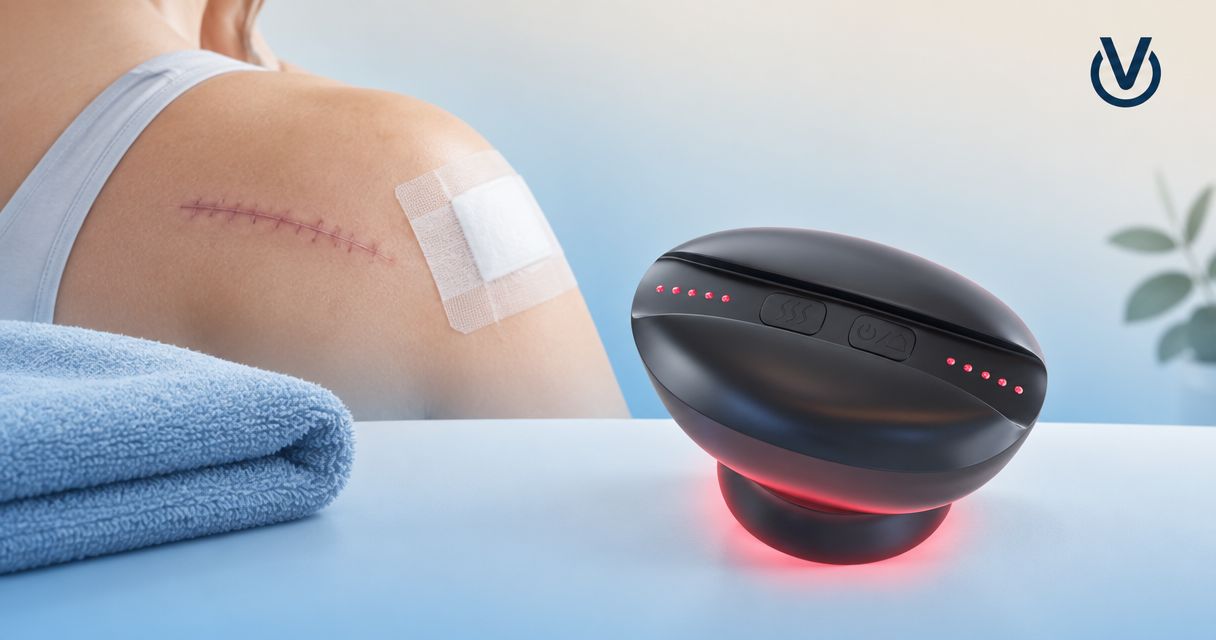
The Vazo Slide handheld cupping device combines cupping, heating, massage, and gua sha in a portable device. Its base is made from medical-grade alloy; that describes the base material, not certification of the entire device or proof of medical outcomes.
The practical advantage is combining those functions in a handheld format. The limitation is equally important: having several functions does not establish that any combination treats arthritis, and heat or scraping adds considerations beyond suction alone.
For a 2026 purchase decision, assess whether you can reach the intended area, follow the instructions, and release the device comfortably. If arthritis affects your hands, discuss whether self-application is practical before choosing home equipment.
Can you put a cupping device directly on an arthritic knee?
An arthritic knee is not automatically a suitable place for suction, especially if it is hot, swollen, recently injured, or has damaged skin. Ask your clinician whether any nearby soft tissue is appropriate rather than assuming the joint should be treated directly.
Knee pain can also have causes other than arthritis. A change in symptoms deserves assessment rather than a stronger suction setting.
Is heated cupping better than regular cupping for arthritis?
Heated cupping is not established as better than unheated cupping for arthritis. Comfort from warmth does not prove an additional arthritis benefit, and heat adds a separate risk of burns.
If your clinician approves heat, follow both that advice and the product instructions. Do not add heat to a hot, newly swollen joint while waiting to see whether it settles.
How do you discuss cupping with your arthritis clinician?
Bring the actual product instructions and describe the area you want to treat. Ask whether your diagnosis, medicines, skin condition, or circulation creates a reason to avoid suction, heat, or gua sha.
A useful question is: what symptom am I trying to change, and what would make me stop? That keeps the conversation focused on safety and a meaningful goal rather than whether cupping is universally good or bad.
Your 2026 care plan should also make clear which symptoms require a call to your clinician. A home comfort practice works around those boundaries; it does not replace them.
FAQ
Does cupping reduce arthritis inflammation?
Cupping is not established as a treatment for arthritis inflammation. Temporary pain relief does not demonstrate reduced inflammatory disease activity, so continue your prescribed arthritis care.
Can cupping rebuild cartilage in an arthritic joint?
Cupping has not been shown to rebuild cartilage in an arthritic joint. Feeling more comfortable after treatment is not evidence of structural joint repair.
Is cupping safe if I take blood thinners?
Do not start cupping while taking blood thinners without advice from your prescribing clinician. Suction can cause bruising, and your medication changes the risk assessment.
How long should I use cupping for arthritis pain?
There is no established universal session length for cupping for arthritis pain. Follow clinician guidance and the device instructions rather than treating a general wellness routine as an arthritis protocol.
Are darker cupping marks a sign of better arthritis relief?
Darker cupping marks do not establish better arthritis relief. Judge the result by comfort, function, and adverse effects—not the appearance of your skin.
Can I use a Vazocupping device instead of arthritis medication?
A Vazocupping device does not replace arthritis medication or disease-directed treatment. Discuss any proposed treatment change with the clinician managing your arthritis.
Should I keep cupping if my joint hurts more afterward?
Stop cupping if your joint hurts more afterward. Seek medical advice for persistent worsening, and get prompt assessment for a hot, swollen joint, fever, or severe new pain.
One last thing
Do not use the mark as the measure. Cupping can leave visible skin changes even when it has not improved the activity that matters to you.
Choose one everyday task before trying a clinician-approved comfort practice. If the task does not become easier—or your skin or joint feels worse—you have a useful reason to stop, not a reason to increase intensity.