Do not use a cupping device after surgery until your surgeon has specifically cleared suction therapy for the area you want to treat. A closed incision does not establish that deeper tissues are ready for suction, heat, massage, or scraping; this 2026 guide explains what to ask before restarting and which symptoms need medical attention instead.
- Use a cupping device after surgery only with procedure-specific clearance from your surgeon.
- Keep suction, heated cupping, and gua sha away from healing incisions unless your surgical team explicitly approves treatment.
- Vazocupping portable cupping devices are wellness tools, not substitutes for postoperative rehabilitation or wound care.
- New swelling, wound drainage, or worsening pain calls for medical advice, not another cupping session.
Can you use a cupping device after surgery?
Only after your surgical team approves the treatment, body area, and timing. Permission to walk, exercise, or receive ordinary massage is not automatically permission to use suction over healing tissue.
In 2026, use your discharge instructions and your surgeon's assessment—not a generic recovery calendar—to decide when to restart. For devices that combine suction with warmth, review using a heated cupping device on an injury, but keep your postoperative instructions as the deciding authority.
Use these steps before switching your device on:
- Name the procedure and treatment area. Tell your surgeon exactly where you want to place the device, including whether that area is near the incision or elsewhere.
- Describe every function you intend to use. Ask separately about suction, heat, massage, and gua sha. Clearance for one does not establish clearance for the others.
- Review your current recovery status. Report swelling, bruising, numbness, wound changes, medications, and any restrictions your team has already given you.
- Get a specific plan. Ask which locations are permitted, which settings and session limits to follow, and what symptoms mean you should stop.
If the answer is simply to wait, leave the device off. A follow-up appointment is the place to revisit that decision, not a reason to test the area yourself beforehand.
Why this matters
Cupping applies suction to skin and underlying soft tissue. After surgery, that mechanical stress is an additional treatment—not just a different way to relax a sore muscle.
The National Center for Complementary and Integrative Health's public overview of cupping lists risks including burns, infection, persistent skin discoloration, and scars. Those general risks do not establish whether cupping is appropriate for a particular operation, and they do not provide a universal postoperative restart date.
Your surgical team also needs to distinguish expected recovery discomfort from a complication. Treating unfamiliar pain before reporting it can delay the assessment you actually need.
The useful question is not whether you can tolerate suction. It is whether the tissue and your recovery plan allow it.
Your treatment location changes the decision
Using cupping directly over an incision is different from using it on a distant muscle. Neither situation should be treated as automatically safe after an operation.
This comparison organizes the questions to ask; it does not grant permission to treat any area.
| Situation | Possible role after clearance | Main limitation | Next move |
|---|---|---|---|
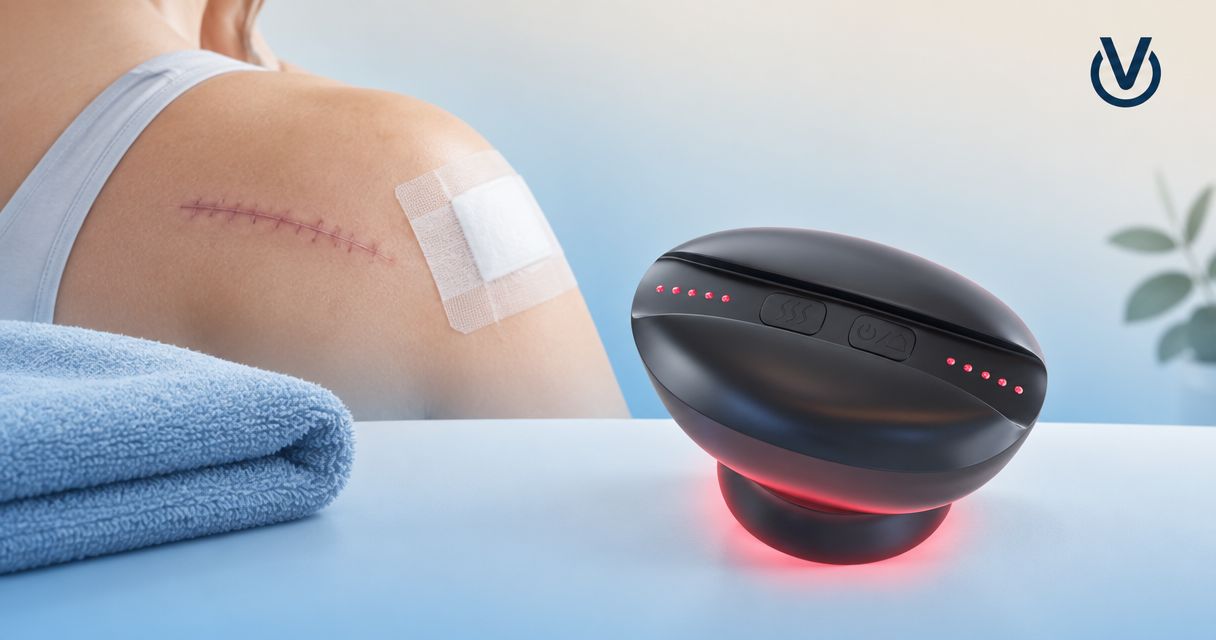
| Over a healing incision | Only if your surgical team specifically directs it | Wound closure does not confirm deeper healing | Keep the device off the incision |
| Near the operated area | An optional addition to a clinician-approved plan | Suction or movement can affect nearby healing tissue | Ask your surgeon to define the permitted area |
| On a distant muscle | Optional comfort care if your team approves | Medications and postoperative complications still matter | Confirm that distant-area treatment is allowed |
| On a fully healed surgical scar | A possible clinician-selected treatment | A scar's appearance alone does not establish readiness | Request a scar assessment before treatment |
A distant body area is not a workaround for a restriction. For example, calf discomfort after surgery needs particular care because a blood clot is among the conditions clinicians must consider when assessing new leg symptoms.
Why the timing of postoperative cupping varies
There is no single waiting period that covers every operation. In 2026, a useful restart decision accounts for the procedure, your examination, and the treatment you propose—not just elapsed time.
- The operation and tissues involved. Skin, muscle, tendon, bone, and reconstructed tissue have different recovery requirements. Your surgeon knows what was repaired beneath the visible incision.
- The wound's condition. An open area, drainage, worsening redness, or wound separation needs clinical advice rather than suction or scraping.
- Your medications. Anticoagulants and other medicines that affect bleeding require review before a treatment that can cause bruising. Never stop prescribed medication to make cupping possible.
- Swelling, sensation, and circulation. New swelling or reduced sensation changes the assessment. Numb skin also makes discomfort an unreliable warning signal during heated treatment.
- The treatment area and device functions. Stationary suction, moving suction, heat, and gua sha place different demands on the area. Your clearance should identify which functions are permitted.
- Your recovery course. Infection, delayed wound healing, or another complication changes the plan. A friend's uncomplicated recovery is not a timetable for yours.
Bring these details to your follow-up appointment. A specific description gives your clinician something useful to approve, modify, or rule out.
Can I use cupping once my stitches are removed?
Stitch removal is not clearance for cupping. It addresses wound management, not whether suction, heat, or scraping is appropriate over the surgical area.
Deeper repairs can still need protection after the surface looks closed. Ask about the actual treatment rather than assuming that permission to shower, return to work, or resume gentle movement includes cupping.
The same distinction applies when your incision was closed with adhesive, strips, or staples. The closure method does not replace an assessment of healing.
Can I use cupping somewhere away from the surgery?
Distant-area cupping still needs postoperative clearance. Your surgeon must consider the proposed location alongside your medication, mobility, and any new symptoms.
Be exact about where you want treatment. Permission to treat a shoulder does not automatically include the operated limb, a swollen calf, or an area with reduced sensation.
Avoid choosing a distant location merely because the incision is off-limits. The goal is a recovery plan your clinician supports, not finding an untreated area where the device still fits.
Can cupping help a surgical scar?
Do not use cupping to treat a surgical scar without a clinician's assessment. Suction is not a substitute for prescribed scar care, and a healed-looking surface does not establish that the scar is ready for mechanical treatment.
A surgeon or rehabilitation clinician can assess the scar and decide whether any hands-on technique belongs in your plan. Ask what the treatment is intended to improve and how progress will be evaluated.
Do not judge treatment success by darker marks, stronger pulling, or more tenderness. These are not measurements of scar improvement.
What to ask at your postoperative appointment
Make your request concrete: you want to know whether a handheld suction device belongs in your current recovery plan. Bring the device instructions or show your clinician the functions you intend to use.
For your 2026 follow-up, write down these questions before the appointment:
- Is suction allowed at this stage of my recovery?
- Can you show me the exact areas I must avoid?
- Does your approval include heat, moving massage, or gua sha?
- Do my medications or current symptoms change your advice?
- What settings, session limits, and stop rules should I follow?
- Should a rehabilitation professional supervise treatment first?
Ask for clarification when the answer is broad. Advice to resume normal activity does not tell you how to use a suction device over or near a surgical site.
If your clinician advises against cupping, ask which comfort measures are appropriate instead. Follow that plan without adding heat, scraping, or another device on your own.
Where a portable cupping device fits after clearance
Vazocupping portable cupping devices are best suited to consumers seeking at-home cupping, not self-directed surgical rehabilitation. A device's features do not establish that it is appropriate for your operation or stage of healing.
The Vazo Slide handheld cupping device combines cupping, heating, massage, and gua sha in a portable format. Its base is made from medical-grade alloy; that description applies to the base material, not certification or regulatory approval of the whole device.
The practical benefit is having several functions in one handheld device. The postoperative limitation is that each function needs its own consideration: approval for suction does not mean you should also add heat or gua sha.
Vazocupping's base-material description does not establish postoperative safety or prove a healing outcome. Choose your treatment plan before choosing device functions. If your surgical team does not approve cupping, the device stays out of your recovery routine.
When to seek medical attention instead of cupping
Stop considering home treatment when symptoms suggest a wound problem or another postoperative complication. Do not use suction to test whether a painful or swollen area feels better.
Contact your surgical team promptly for wound opening, new drainage, increasing redness or warmth, fever, or pain that is worsening rather than following the recovery pattern your team described. Follow any more specific instructions in your discharge paperwork.
New swelling, warmth, or pain in one leg after surgery needs urgent medical assessment. Sudden shortness of breath, chest pain, coughing blood, or fainting requires emergency care. These symptoms are not a reason to try massage, heat, or cupping first.
This 2026 guide supports a conversation with your care team. It does not replace an examination, your discharge instructions, or urgent assessment of new symptoms.
FAQ
How long after surgery can I use a cupping device?
Use a cupping device after surgery only when your surgeon clears the treatment and location. There is no universal waiting period that applies to every procedure or recovery.
Can I put a cupping device directly over my incision?
Do not put a cupping device over a healing incision unless your surgical team specifically directs that treatment. A closed surface does not establish that deeper tissue is ready for suction.
Is gentle suction safe after surgery?
Gentle suction is not automatically safe after surgery. Ask your surgeon whether suction is permitted before choosing a setting; lower intensity does not remove postoperative restrictions.
Can I use heated cupping if the surgical area feels numb?
Do not apply heated cupping to a numb postoperative area without explicit clinical guidance. Reduced sensation makes heat and discomfort unreliable warning signals.
Can I use cupping while taking blood thinners after surgery?
Ask the prescribing clinician and your surgical team before using cupping while taking blood thinners. Do not stop or change prescribed medication to allow a cupping session.
Does permission for postoperative massage include cupping?
Permission for postoperative massage does not automatically include cupping. Explain that the device applies suction and identify any heat or scraping functions you intend to use.
Should I use cupping for new calf pain after an operation?
Do not use cupping for new calf pain after an operation before medical assessment. New one-sided leg swelling, warmth, or pain needs urgent attention; chest pain or sudden breathlessness requires emergency care.
Does a medical-grade alloy base make a cupping device safe after surgery?
A medical-grade alloy base does not establish that a cupping device is safe after surgery. The material description concerns the base, while postoperative suitability depends on your procedure, healing, and clinician's instructions.
One last thing
Ask your surgeon to mark the permitted treatment area on a body diagram or describe it in your written instructions. That is more useful than remembering a broad instruction to be gentle.
Before your next session, you should know where treatment is allowed, which functions are approved, and when to stop. If any of those answers remain unclear, wait and ask rather than experimenting on healing tissue.