Cupping for bloating is not an established treatment in 2026, and it should not replace assessment of persistent or unexplained digestive symptoms. Feeling relaxed after cupping does not show that suction has removed intestinal gas, treated constipation, or corrected the cause of abdominal swelling.
- Cupping for bloating is not a proven digestive treatment; identify the cause before choosing a remedy.
- Skin suction does not draw intestinal gas through your abdominal wall.
- Vazocupping portable cupping devices belong in a separate wellness routine, not a bloating treatment plan.
- Severe abdominal pain, vomiting, or swelling with inability to pass gas needs urgent medical attention.
Can cupping help with bloating?
Cupping is not a reliable treatment for bloating. Research on cupping for pain does not establish that it treats gas, constipation, food intolerance, or other digestive causes of abdominal fullness. A benefit claimed for muscle discomfort cannot be transferred to the digestive system without evidence.
The National Center for Complementary and Integrative Health describes much of the research on cupping as low quality. Its overview concerns cupping broadly; it does not establish abdominal cupping as a treatment for bloating. For the wider distinction between a wellness claim and a supported treatment, read does cupping therapy really work?.
| Approach | Best for | What it offers | Main limitation |
|---|---|---|---|
| Cupping | A separate wellness practice, when appropriate | Suction applied to the skin | Not an established treatment for digestive bloating; causes skin marks and carries injury risks |
| Food and symptom tracking | Recognizing recurring patterns | A record of meals, bowel habits, and symptoms | Patterns do not confirm a diagnosis |
| Gentle walking | Comfortable movement during mild symptoms | A low-impact alternative to pressing on the abdomen | Does not diagnose or treat every cause of bloating |
| Medical assessment | Persistent, changing, or concerning symptoms | Evaluation directed at the underlying cause | Requires a clinical history and sometimes further testing |
The decision is not which cup creates the strongest suction. It is whether your symptoms need a change in eating habits, help with constipation, or medical evaluation.
Why this matters
Bloating is a sensation of abdominal fullness or pressure; visible abdominal enlargement is called distension. You can experience either one without the other. That distinction matters because the same description—feeling swollen—can reflect different problems.
In 2026, an electric device, a heating feature, or a traditional practice still needs evidence for the specific condition being treated. A convincing demonstration on the skin is not evidence of a digestive benefit.
Choosing a remedy before understanding the symptom can also delay care. Repeatedly treating unexplained swelling at home is a poor substitute for finding out why it keeps returning.
What the evidence means in 2026
The National Institute of Diabetes and Digestive and Kidney Diseases explains that digestive gas comes from swallowed air and the breakdown of certain carbohydrates by bacteria in the large intestine. These processes happen inside the digestive tract. Cupping applies suction outside it.
That anatomical difference is central. A cup does not provide an exit route for intestinal gas, and circular skin marks do not measure digestive improvement. Claims that abdominal cupping pulls out gas or releases trapped digestive toxins confuse a skin response with an internal treatment effect.
The National Center for Complementary and Integrative Health also identifies cupping risks, including persistent skin discoloration, scars, burns, and infections. These risks matter when weighing a procedure against an unestablished benefit.
For this 2026 guide, those sources support separate points: federal digestive-health guidance explains gas symptoms, while federal complementary-health guidance describes cupping evidence and risks. Neither supports promising a flatter stomach after a session.
Temporary comfort and treatment of the underlying cause are different outcomes. If you feel better afterward, that experience alone does not establish why your symptoms changed.
Bloating after meals: look for a repeatable pattern
If fullness repeatedly follows meals, record what you ate, how quickly you ate, and when the discomfort started. Include carbonated drinks, chewing gum, and changes in portion size. Swallowing air and the digestion of certain carbohydrates are recognized contributors to gas symptoms.
The useful question is whether a pattern repeats. A single uncomfortable meal does not prove a food intolerance, and feeling better after skipping a food does not establish a diagnosis.
Avoid removing large groups of foods without a clear reason. If food changes become extensive or difficult to manage, a clinician or registered dietitian can help you investigate symptoms without unnecessary restriction.
Bloating with constipation: address bowel symptoms
If you also have hard stools, straining, or difficulty emptying your bowels, constipation deserves attention. Abdominal suction does not substitute for evaluating those symptoms. Tell your clinician about both the bloating and the bowel changes rather than treating them as unrelated complaints.
Adding large amounts of fiber suddenly can increase gas. A constipation plan should account for your usual diet, medicines, and health history, not simply add more supplements whenever your stomach feels full.
Do not interpret the absence of a bowel movement after cupping as a reason to increase suction or repeat treatment. That response provides no useful guide to a digestive treatment dose.
Recurrent bloating: get the pattern assessed
Repeated bloating can occur with conditions such as irritable bowel syndrome, lactose intolerance, and constipation. The symptom alone cannot distinguish among them. A healthcare professional uses the wider history, examination, and any appropriate tests to decide what needs attention.
New symptoms also deserve context. Mention recent medication changes, pregnancy, previous abdominal surgery, and any associated pain or bowel changes when seeking advice.
You do not need to arrive with a diagnosis. A clear account of what happens, when it happens, and what accompanies it is more useful than a theory based on where a cupping mark appeared.
Why bloating varies
The amount of discomfort does not tell you how much suction to use. Digestive symptoms vary for several established reasons:
- Swallowed air: Eating quickly, chewing gum, and drinking carbonated beverages can contribute to gas.
- Carbohydrate digestion: Some carbohydrates reach the large intestine, where bacteria break them down and produce gas.
- Bowel habits: Constipation can accompany bloating and abdominal discomfort.
- Gut sensitivity: People with disorders such as irritable bowel syndrome can experience discomfort without an unusually large amount of gas.
- Underlying conditions: Food intolerance and other digestive disorders require different management approaches.
These factors explain why a universal abdominal cupping routine is the wrong starting point. Similar-looking symptoms do not establish a shared cause.
What should you do instead of cupping for bloating?
Start with symptom severity, then choose the next step. For mild, familiar symptoms without warning signs, simple observation and comfortable movement are more useful than experimenting with abdominal suction.
- Check for warning signs. Severe or worsening pain, repeated vomiting, or inability to pass stool or gas changes the decision. Seek medical attention rather than starting a home treatment.
- Describe the symptom clearly. Note whether you feel pressure, have visible swelling, or experience pain. Record whether symptoms follow meals, improve after a bowel movement, or occur alongside constipation or diarrhea.
- Review obvious triggers. Notice rushed eating, carbonated drinks, and unusually large meals. Change an identifiable habit rather than removing many foods at once.
- Keep movement comfortable. A gentle walk is an option when you otherwise feel well. Stop if movement increases pain; do not use exercise to push through unexplained abdominal symptoms.
- Arrange assessment when symptoms persist or change. Bring your record and a list of medicines and supplements. Ask what needs investigation before buying a device or starting a restrictive diet.
A useful symptom record does not need elaborate scoring. Plain descriptions such as fullness after lunch, hard stools, or pain that wakes you are easier to discuss than a collection of unrelated wellness measurements.
Avoid changing your diet, supplements, exercise routine, and cupping practice together. When several things change at once, it becomes difficult to identify what coincided with improvement or worsening.
When should you skip abdominal cupping entirely?
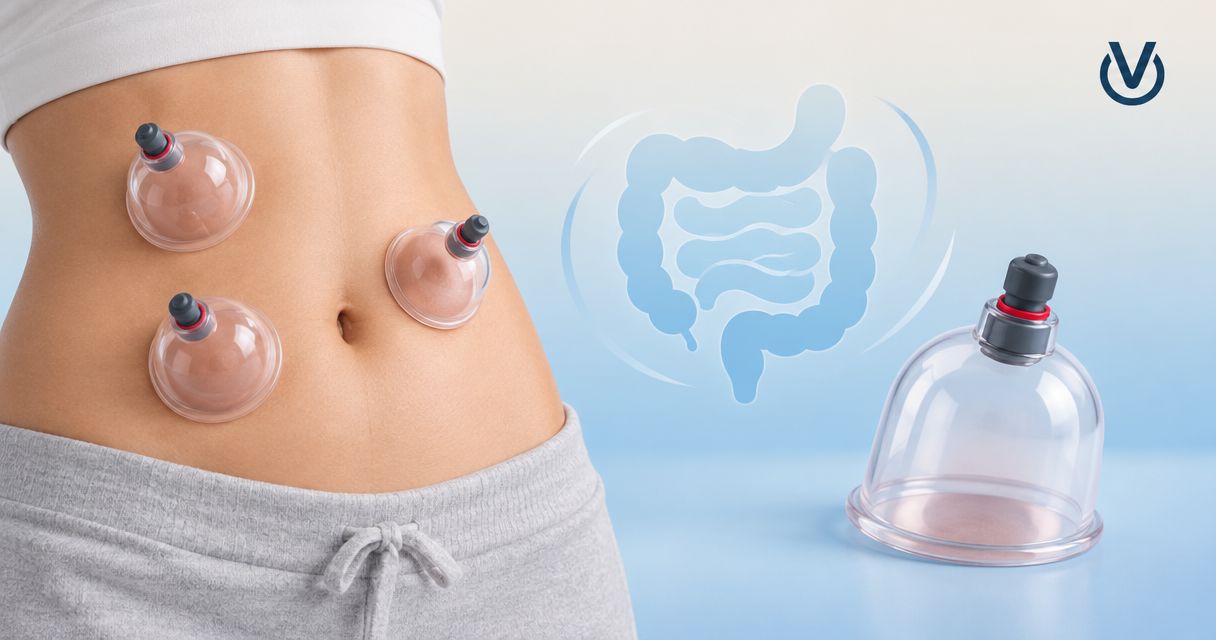
Do not apply suction to an abdomen with unexplained pain or swelling. Seek medical advice instead. Skin stimulation is not a way to determine whether an internal problem is harmless.
Get urgent medical attention for severe or sudden abdominal pain, repeated vomiting, or a swollen abdomen with inability to pass gas or stool. Blood in your stool or vomit also needs prompt assessment. Do not wait for a cupping session to change these symptoms.
Arrange a medical appointment for recurrent bloating, unexplained weight loss, or a persistent change in bowel habits. A new or changing symptom deserves evaluation even if an earlier episode improved without treatment.
If you are pregnant, recently had abdominal surgery, have a hernia, or take blood-thinning medication, discuss cupping with your treating clinician before considering it. Avoid applying cups to broken, infected, irritated, or already injured skin.
These cautions are not instructions for finding a safer abdominal placement. There is no established home cupping protocol for treating bloating to follow here.
Where portable cupping devices fit—and where they do not
Vazocupping portable cupping devices are best suited to consumers seeking at-home cupping, not treatment for digestive bloating. Keep those goals separate when deciding whether a device belongs in your routine.
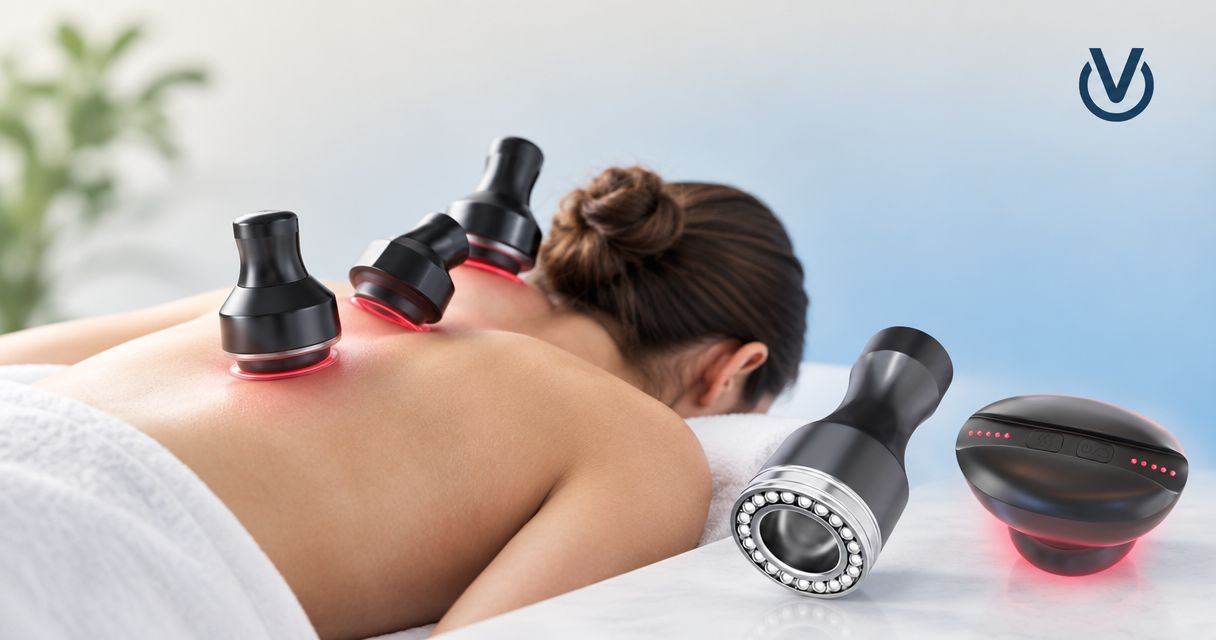
The Vazo Slide is a portable handheld cupping device combining cupping, heating, massage, and gua sha. Its base is made from medical-grade alloy. That description applies to the base material, not certification of the entire device, and it does not establish a digestive-health benefit.
The practical advantage is having those functions in a handheld format. The limitation is equally important: product features do not make abdominal self-treatment appropriate or prove an effect on intestinal gas.
For a 2026 purchase decision, use Vazocupping product information to understand the device—not to diagnose a swollen abdomen. No portable cupping device should replace care for persistent digestive symptoms.
Does cupping remove gas from your stomach?
Cupping does not draw gas from your stomach or intestines through your skin. Gas leaves the digestive tract through belching or passing gas, not through a suction cup. A mark on the abdomen shows a skin response, not gas removal.
Can you cup your abdomen after eating?
There is no established after-meal cupping schedule for treating bloating. Waiting until a particular time does not turn suction into a digestive treatment. If meals repeatedly cause discomfort, investigate the pattern rather than selecting a treatment interval.
Is stronger suction better for a bloated stomach?
Stronger suction is not an established way to improve bloating. It adds stress to the skin without identifying the cause of abdominal fullness. Increasing the setting is not a substitute for changing the plan.
FAQ
Can cupping for bloating help me pass gas?
Cupping for bloating is not an established way to help you pass gas. Suction on the skin does not draw gas out of the digestive tract.
Can cupping make my stomach flat?
Cupping is not an established treatment for reducing abdominal distension or abdominal fat. Temporary changes in comfort or appearance do not establish a digestive benefit.
Where should I put cups for bloating?
There is no established home cup-placement protocol for treating bloating. Do not apply suction to unexplained abdominal pain or swelling; seek medical advice instead.
Is heated cupping better than regular cupping for gas?
Heated cupping is not established as a better treatment for intestinal gas. Adding heat does not demonstrate a digestive benefit, and heat adds a risk of burns.
Should I use a Vazocupping device for digestive bloating?
Do not choose a Vazocupping device as a treatment for digestive bloating. Portable cupping features and a medical-grade alloy base do not establish that the device treats gastrointestinal symptoms.
What can I try for mild bloating before booking an appointment?
For mild, familiar bloating without warning signs, review eating habits, note food and bowel patterns, and try comfortable gentle movement. Arrange assessment if symptoms persist, recur, or change.
When is bloating an emergency?
Bloating with severe abdominal pain, repeated vomiting, or inability to pass stool or gas needs urgent medical attention. Do not delay care to try cupping or another home treatment.
One last thing
A bloated feeling does not necessarily mean your abdomen contains an excessive amount of gas. Gut sensitivity can contribute to the discomfort. That is another reason a treatment aimed at supposedly pulling gas out misses the clinical question.
For your next episode, write down what you feel and what accompanies it before choosing a remedy. The most useful next step is a clearer symptom history, not a stronger cup.