Cupping for fibromyalgia has limited evidence of benefit: some people report pain relief, but research has not established a reliable benefit beyond placebo. In 2026, treat cupping as an optional addition to clinician-guided care—not a cure or a replacement for medication, movement, or sleep support. Suction can also cause bruising and discomfort, which matters when light touch already hurts.
- Cupping for fibromyalgia is an optional comfort measure, not a proven treatment for widespread pain.
- A 2016 trial involving 141 adults found no significant pain advantage over sham cupping.
- Avoid pushing through pain, chasing dark marks, or replacing your established fibromyalgia care.
- Vazocupping portable cupping devices are wellness tools, not established fibromyalgia treatments.
Why this matters
Fibromyalgia can make ordinary pressure painful. A treatment that feels relaxing to someone with post-workout soreness can feel overwhelming when you have widespread pain and increased sensitivity.
That changes the decision. Before choosing suction strength or a device, establish whether your skin and nervous system tolerate touch comfortably. The guide to whether cupping hurts explains the distinction between a pulling sensation and pain that signals you should stop.
Your goal is better daily function without a symptom flare—not a stronger treatment sensation. For a 2026 self-care plan, that means judging cupping by what happens afterward, including sleep, clothing sensitivity, and your ability to move comfortably.
Can cupping help with fibromyalgia pain?
Cupping has not demonstrated a dependable fibromyalgia-specific benefit beyond sham treatment. The clearest distinction is between feeling better after a session and showing that suction itself caused the improvement.
A randomized, sham-controlled trial published in Scientific Reports in 2016 studied 141 adults with fibromyalgia. Cupping reduced pain compared with usual care, but it did not significantly outperform sham cupping. That result limits claims that cupping has a specific therapeutic effect on fibromyalgia.
| Comparison in the fibromyalgia trial | Main finding | What it means for you |
|---|---|---|
| Cupping versus usual care | Pain improved more with cupping | The overall treatment experience offered some benefit |
| Cupping versus sham cupping | No significant pain advantage | The study did not establish a specific benefit from cupping itself |
| Research treatment versus a consumer device | The trial was not a test of every handheld device | Do not transfer the result to a particular product or feature |
The source is Lauche and colleagues, Efficacy of cupping therapy in patients with the fibromyalgia syndrome—a randomised placebo controlled trial, published in 2016. Its scope was fibromyalgia treatment under a study protocol, not proof that home devices treat the condition.
A lack of superiority over sham does not mean your relief is imaginary. It means expectations, attention, relaxation, and other parts of the treatment encounter cannot be separated confidently from the effect of suction.
Use personal comfort as a reason to discuss cupping—not as evidence that it treats the underlying condition.
Why fibromyalgia changes how you judge cupping
Fibromyalgia involves altered pain processing. It is not simply a collection of tight muscles that need stronger pressure, and it is not evidence that your tissues contain toxins that suction must remove.
Allodynia means a normally nonpainful stimulus feels painful. Hyperalgesia means a painful stimulus produces an amplified response. Both concepts help explain why an ordinary massage or suction session can be difficult to tolerate.
This also explains why copying an athlete's routine is a poor starting point. Exercise-related soreness and fibromyalgia are different clinical situations; a sports recovery routine does not establish an appropriate approach for widespread chronic pain.
For your 2026 decision, separate these questions:
- Does gentle touch feel comfortable today?
- Is there a specific symptom you want to address?
- Can you stop the treatment immediately if it hurts?
- Will you evaluate your response afterward rather than during the session alone?
If your answer to the first question is no, adding suction is not a sensible next experiment. Ask your clinician about alternatives that do not place pressure on sensitive skin.
Dry, heated, and wet cupping: different trade-offs
Different cupping methods do not share identical risks. More features, more suction, or a more invasive technique do not establish greater benefit for fibromyalgia.
| Approach | Best fit, if considered | Potential advantage | Limitation or risk |
|---|---|---|---|
| Dry cupping | Someone discussing a noninvasive trial with a trained clinician | Does not intentionally break the skin | Can cause tenderness, bruising, and skin injury; specific fibromyalgia benefit remains uncertain |
| Heated handheld cupping | Someone already cleared for home use who tolerates both suction and warmth | Combines warmth and suction in a handheld format | Adds heat exposure; comfort does not establish better fibromyalgia outcomes |
| Wet cupping | Not recommended as a home experiment | No established fibromyalgia advantage justifies choosing it here | Breaks the skin and adds bleeding and infection risks |
Dry cupping avoids the skin punctures used in wet cupping, but “noninvasive” does not mean risk-free. The National Center for Complementary and Integrative Health identifies adverse effects including persistent discoloration, scars, burns, and infections; cupping can also worsen eczema or psoriasis.
Do not choose wet cupping as a stronger version of home self-care. If someone recommends an invasive procedure, discuss its purpose, evidence, infection controls, and bleeding risks with your healthcare professional first.
Why your response to cupping varies
A pleasant session does not guarantee a useful result. These factors affect whether cupping is tolerable and whether you can interpret your response:
- Touch sensitivity: Suction adds mechanical stimulation to skin that already feels painful during a flare.
- Skin condition: Broken, inflamed, infected, or irritated skin is not a suitable treatment surface.
- Treatment intensity: Suction, heat, and sliding movement create different sensations. Combining them makes it harder to identify what caused discomfort.
- Medication and medical history: Blood thinners, bleeding disorders, impaired sensation, and fragile skin require individualized advice.
- Your baseline symptoms: Pain, fatigue, and sleep fluctuate, so one better afternoon does not establish lasting improvement.
- Other treatments: A medication change, exercise session, or massage can complicate your interpretation of what helped or hurt.
Avoid turning these factors into a search for the perfect setting. There is no established home-device pressure, temperature, or session schedule that reliably treats fibromyalgia.
How should you approach a first cupping session?
Discuss cupping with the clinician managing your fibromyalgia before trying it, especially if light touch hurts or you bruise easily. A professional assessment helps separate ordinary muscle discomfort from symptoms that need a different approach.
Use this sequence to organize that conversation and any clinician-approved trial:
- Define a practical goal. Choose something meaningful, such as wearing a shirt more comfortably or moving your shoulders with less discomfort. “Deeper treatment” is not a useful goal.
- Review your risks. Mention medications, easy bruising, skin conditions, reduced sensation, pregnancy, and any unexplained new pain.
- Agree on boundaries. Ask which areas to avoid, whether heat is appropriate, and what symptoms mean you should stop. Follow the device instructions as well.
- Keep the experiment simple. Avoid combining cupping with aggressive massage, scraping, or other unfamiliar treatments. Otherwise, you lose the ability to identify the cause of a reaction.
- Check the aftermath. Record comfort during treatment and symptoms later, including the following day. Note function and fatigue as well as pain.
- Decide whether to stop. Increased pain or reduced function is a reason to pause and reassess, not to increase suction or repeat the session sooner.
A familiar 0–10 pain scale can help you describe your experience to your clinician. Use it consistently, but do not let a single score outweigh a clear change in sleep, skin comfort, or daily activity.
Where do portable cupping devices fit?
Vazocupping is best suited to adults exploring portable cupping for general wellness, not people seeking a proven fibromyalgia treatment. That distinction keeps a product decision separate from a medical treatment decision.
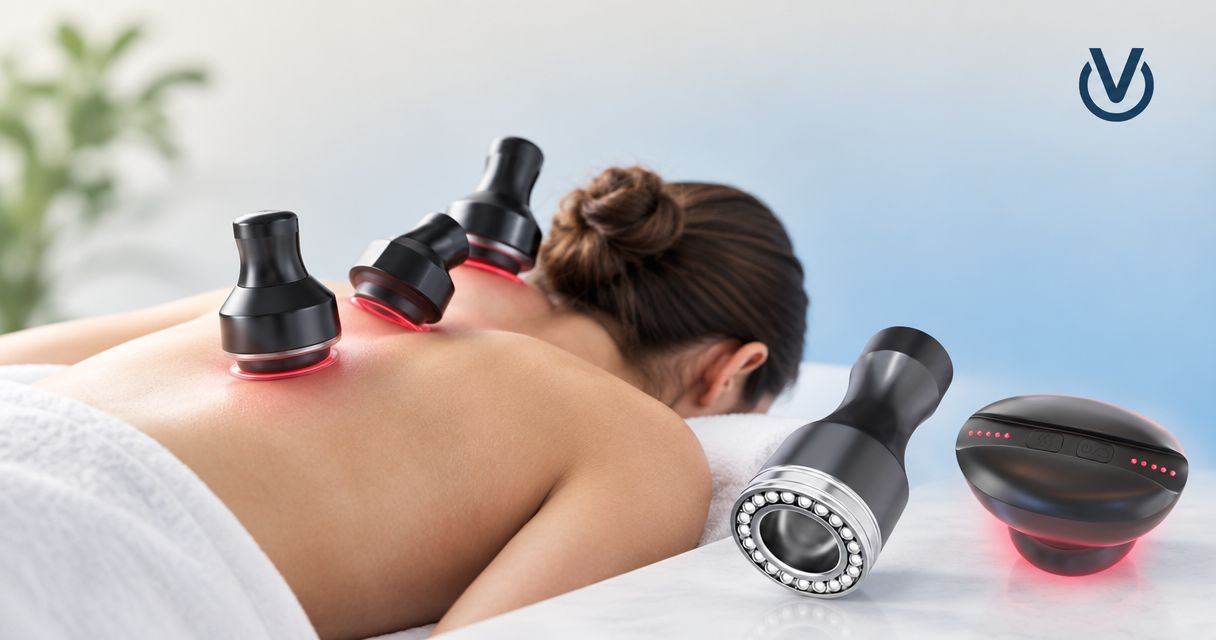
The Vazo Slide handheld cupping device is a portable 4-in-1 device combining cupping, heating, massage, and gua sha. Its base is made from medical-grade alloy. That description applies to the base material—not certification of the whole device, regulatory approval, or proof of fibromyalgia pain relief.
Vazocupping's portable format is relevant if you and your clinician have already decided that home cupping is appropriate. The trade-off is that home use puts the responsibility for positioning, tolerance checks, and stopping the session on you.
Do not treat the available functions as a checklist to complete. Having heating, massage, and gua sha features does not mean you should combine them on sensitive tissue, and none of those features establishes a fibromyalgia-specific benefit.
When considering Vazocupping in 2026, ask whether you can comfortably reach the intended area, read the instructions, and stop without difficulty. If not, a supervised discussion is more useful than buying a device first.
Should you use cupping during a fibromyalgia flare?
A fibromyalgia flare is not a reason to increase suction. If your skin is unusually tender or ordinary touch hurts, postpone cupping and follow your established flare-management plan.
Do not use cupping to investigate new, unexplained pain. A new symptom deserves assessment rather than an assumption that it is “just fibromyalgia,” particularly when it comes with swelling, redness, fever, weakness, or numbness.
Are dark cupping marks a sign that it worked?
Dark cupping marks are not proof of pain relief, toxin removal, or successful treatment. They reflect effects on the skin and small blood vessels, not a measurement of how well fibromyalgia is controlled.
Do not increase suction to produce a darker mark. Comfort, intact skin, and your ability to function afterward matter more than the appearance of the treatment area.
Can cupping replace your fibromyalgia treatment?
Cupping cannot replace an individualized fibromyalgia treatment plan. Evidence-based care includes education, appropriately paced physical activity, sleep support, psychological approaches, and medication when indicated.
These approaches address different parts of the condition. Keep your prescribed care in place unless your treating clinician recommends a change; temporary relief after cupping is not a reason to stop medication or abandon movement that helps you.
FAQ
Does cupping actually work for fibromyalgia pain?
Cupping has not shown a reliable fibromyalgia-specific benefit beyond sham treatment. A 2016 randomized trial involving 141 adults found improvement compared with usual care but no significant pain advantage over sham cupping.
Can cupping make a fibromyalgia flare worse?
Cupping can add pain and tenderness when you are sensitive to touch. Stop if suction hurts, and postpone treatment when ordinary contact already feels painful.
What suction setting should I use for fibromyalgia?
There is no established suction setting that treats fibromyalgia. Ask your clinician whether cupping is appropriate, follow the device instructions, and never increase pressure to chase pain relief or darker marks.
Is heated cupping better for fibromyalgia than regular cupping?
Heated cupping has not been established as better than unheated cupping for fibromyalgia. Heat adds another exposure to assess, especially if you have reduced sensation or difficulty judging temperature.
How long should I leave a cupping device on for fibromyalgia?
There is no established fibromyalgia-specific home cupping duration. Follow individualized clinical advice and the device instructions, and stop immediately if the treatment becomes painful.
Should I keep cupping if I feel worse afterward?
Stop cupping and reassess if you feel worse afterward. Increasing pain, tenderness, or difficulty with daily activities is not proof that treatment is working; seek medical advice for persistent or concerning symptoms.
Who should ask a clinician before trying cupping?
Anyone with fibromyalgia should discuss cupping with their treating clinician before starting, particularly with marked touch sensitivity. Blood thinners, bleeding disorders, damaged skin, impaired sensation, and easy bruising make individualized advice especially important.
One last thing
The most useful result is not necessarily less pain during the session—it is better function afterward. Before trying anything new, write down the activity you want to make easier, then check whether that activity actually improves without a trade-off in fatigue or tenderness.
For your 2026 routine, keep that standard simple. A treatment that leaves you less able to sleep, dress, or move comfortably has not met your goal, even if the session initially felt relaxing.