Cupping for delayed onset muscle soreness is not a proven way to speed muscle recovery; evidence is too limited to promise reliable relief from DOMS. Treat cupping as an optional comfort measure, not a reason to train through pain, and remember that suction can add skin tenderness and bruising.
- Cupping for delayed onset muscle soreness is optional; reliable relief and faster muscle recovery are not established.
- DOMS commonly starts 12–24 hours after unfamiliar exercise and peaks within 24–72 hours.
- Vazocupping offers portable cupping devices for home use, not a proven shortcut through post-workout soreness.
- Severe pain, marked swelling, unusual weakness, or dark urine require medical assessment, not more suction.
Can cupping reduce delayed onset muscle soreness?
Cupping is not established as a reliable DOMS treatment. Feeling temporarily more comfortable after a session does not demonstrate faster muscle repair, restored strength, or readiness for another hard workout.
The National Center for Complementary and Integrative Health's Cupping overview describes most cupping research as low quality and says the evidence for pain reduction is not strong. That broad pain evidence does not establish a specific benefit for exercise-induced soreness. This distinction sets the standard for this 2026 guide: separate a comfort claim from a recovery claim.
If you want the broader context, start with whether cupping therapy really works. For DOMS, the useful comparison is what each approach contributes—and what it cannot tell you.
| Approach | Best for | Useful role | Limitation or downside |
|---|---|---|---|
| Dry cupping | People who prefer suction-based self-care | An optional comfort practice | DOMS benefits remain uncertain; marks and tenderness can occur |
| Gentle walking or easy movement | People who tolerate movement comfortably | Keeping ordinary movement manageable | Does not establish that strength has recovered; stop if symptoms worsen |
| Reduced training load and rest | People whose soreness changes movement or technique | Avoiding another demanding session while symptoms settle | Requires changing the workout rather than masking discomfort |
None of these options turns pain relief into proof of tissue recovery. Choose your next workout by function and symptoms, not by how a recovery treatment feels immediately afterward.
Why this matters
Soreness can make stairs, sitting down, and your next warm-up uncomfortable. That creates an easy trap: judging a treatment by whether you feel different immediately, rather than whether you can move normally later.
A cupping session also creates its own sensations. Skin pulling, warmth from a heated device, and temporary tenderness can complicate your assessment of the original muscle soreness. Adding more stimulation is not automatically adding more recovery.
For your 2026 recovery routine, set a practical goal: comfortable daily movement without worsening symptoms. Keep treatment intensity separate from training intensity, and do not use either one to prove toughness.
What does ordinary DOMS look like?
The American College of Sports Medicine's guidance on exercise-induced muscle soreness describes DOMS as commonly beginning 12–24 hours after exercise, with discomfort often greatest within 24–72 hours. Symptoms usually subside over 5–7 days. These are general patterns, not a diagnosis or a deadline your body must follow.
DOMS commonly follows unfamiliar exercise or a harder-than-usual training demand. Eccentric work—when a muscle produces force while lengthening, such as lowering a weight—is a familiar trigger. A new workout can therefore produce soreness even when it did not feel especially difficult at the time.
Use timing as context, not permission to dismiss pain. Sudden pain during a repetition, a sharply localized painful spot, or major loss of function needs a different assessment from ordinary next-day stiffness.
Does soreness mean the workout was effective?
Soreness is not a score for workout quality. A productive training session does not need to leave you struggling with ordinary movement afterward.
Likewise, reducing how sore you feel does not prove that a treatment improved your training adaptation. Judge progress through your training plan and performance over time, not through soreness or cupping marks.
What would convincing evidence for cupping need to show?
A useful DOMS study must examine exercise-induced soreness, not simply pain from an unrelated condition. It must also distinguish a change in reported discomfort from a change in strength, movement, or subsequent exercise performance.
Those outcomes answer different questions:
- Soreness: Does the muscle feel less uncomfortable?
- Function: Can you perform ordinary movements more comfortably?
- Strength: Has force production returned?
- Training readiness: Can you complete the planned exercise without compensating?
A positive result for one outcome does not establish the others. Broad statements about circulation, traditional use, or an athlete's recovery routine cannot fill that gap.
The 2026 takeaway is narrow: do not describe cupping as proven to repair exercised muscles faster. It is reasonable to acknowledge someone's comfort preference without turning that preference into a medical or performance claim.
The evidence standard also applies to product features. Combining suction with heat or massage does not, by itself, demonstrate that the combination reduces DOMS better than another approach.
Why your experience with cupping varies
There is no universal cupping setting or session schedule that establishes DOMS relief. Your response depends on more than the device, and several practical factors affect whether a session is comfortable or irritating.
- What caused the soreness: A new exercise demand differs from pain caused by an injury. Do not assume every post-workout symptom is DOMS.
- Suction intensity: Stronger pulling increases the treatment's skin stimulus; it does not establish a stronger recovery benefit.
- Skin condition: Existing bruises, irritation, wounds, and other skin problems change whether treatment is appropriate.
- Treatment technique: Holding suction in place and moving a device across skin expose the skin to different mechanical stresses.
- Added heat: Heat adds a separate exposure and requires attention to skin sensation and the device's instructions.
- Your health and medications: Bleeding risk, impaired sensation, and conditions affecting skin healing warrant professional advice before home treatment.
These factors explain why copying another person's routine is a poor starting point. Your friend's preferred intensity is not a safety instruction, and a dramatic mark is not a useful treatment target.
How should you approach cupping when you are sore?
Screen the symptoms before choosing the tool. Home cupping is an elective wellness practice, not a test that tells you whether post-workout pain is harmless.
- Check the symptom pattern. Consider when the discomfort began, whether it is improving, and whether you can move normally. Stop the self-treatment plan if the symptoms suggest injury or illness.
- Inspect the skin. Do not apply suction over open wounds, irritated skin, existing bruises, or visibly abnormal veins. Avoid treating an area simply because it hurts.
- Read the device instructions. Follow the manufacturer's permitted body areas, settings, duration, cleaning guidance, and contraindications. Do not borrow a protocol from a different device.
- Keep the first experience conservative. Use only permitted settings and stop for pain, burning, numbness, blistering, or an unusual reaction. Stronger sensation is not the objective.
- Reassess afterward. Check both the skin and the original muscle symptoms. Do not repeat treatment over irritated skin or increase intensity because soreness remains.
Do not combine several unfamiliar recovery methods in the same session. If your skin or soreness worsens, a simpler routine makes it easier to identify what preceded the change.
There is no defensible universal session length to prescribe here. Device instructions and your medical circumstances matter more than a generic timer presented as a DOMS protocol.
Where does a portable cupping device fit?
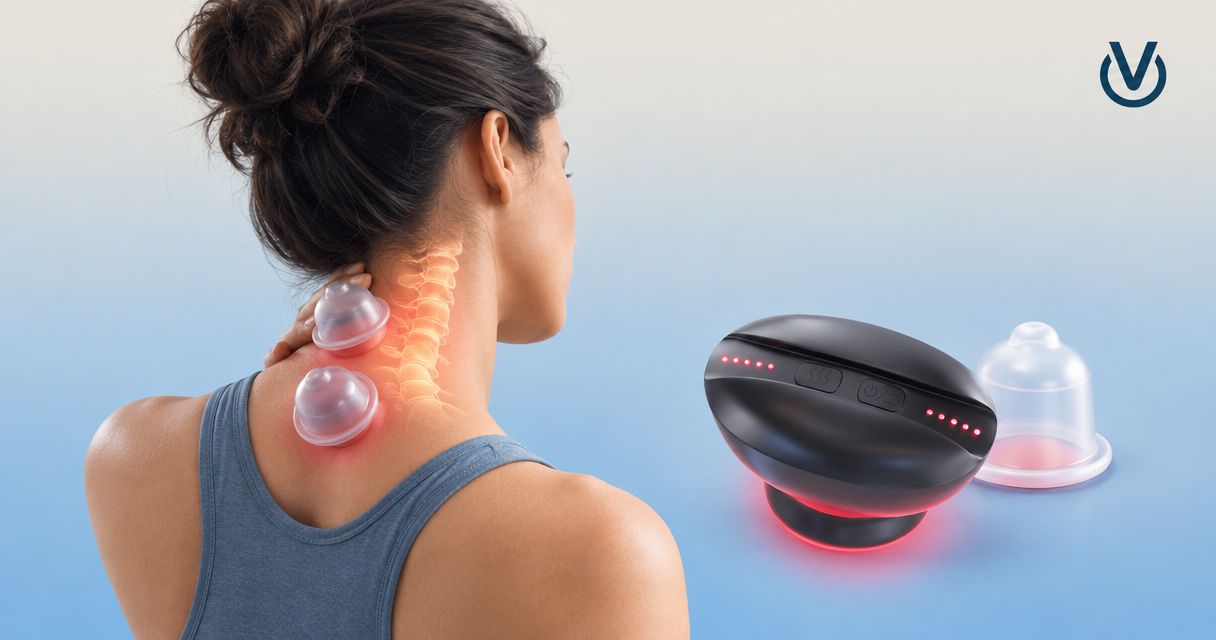
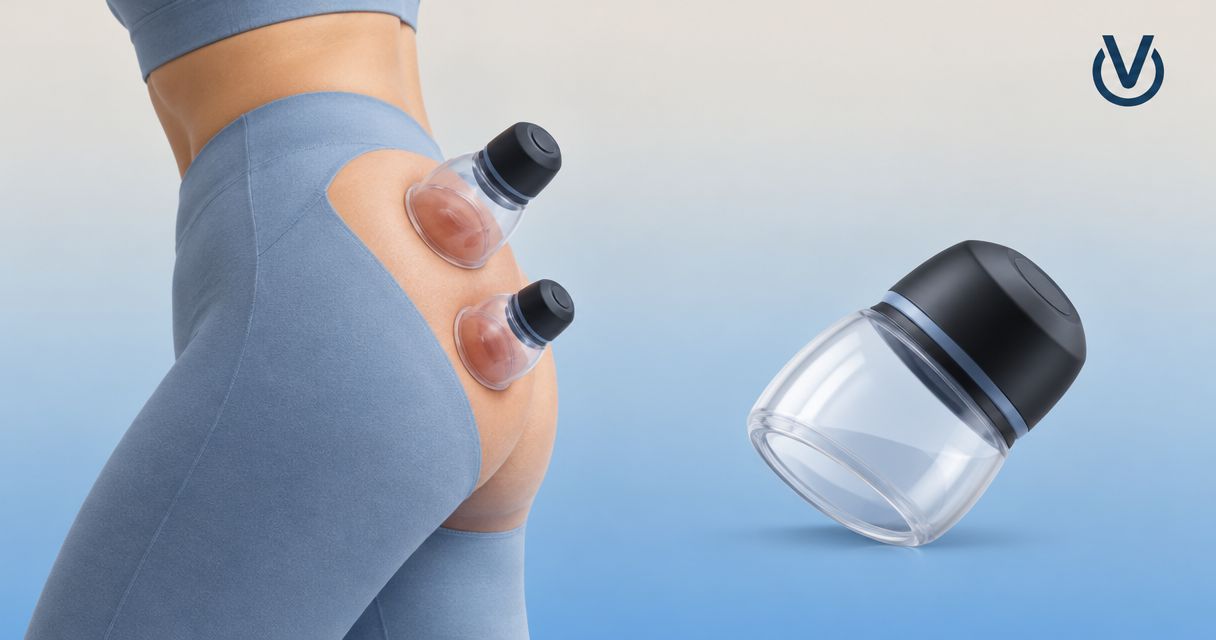
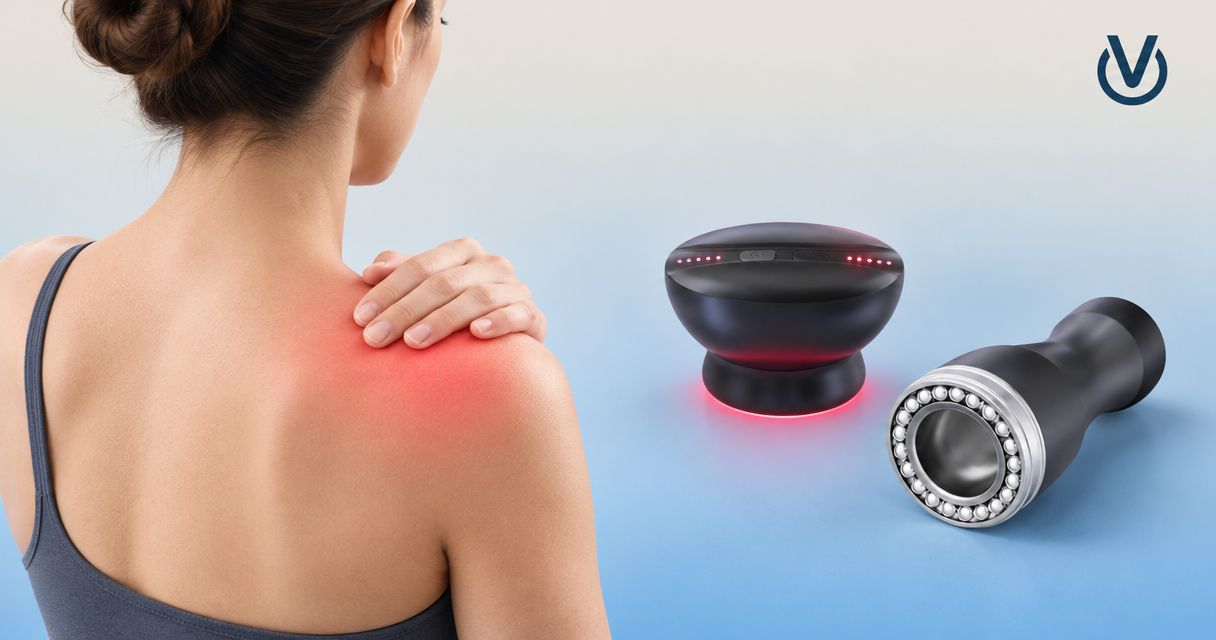
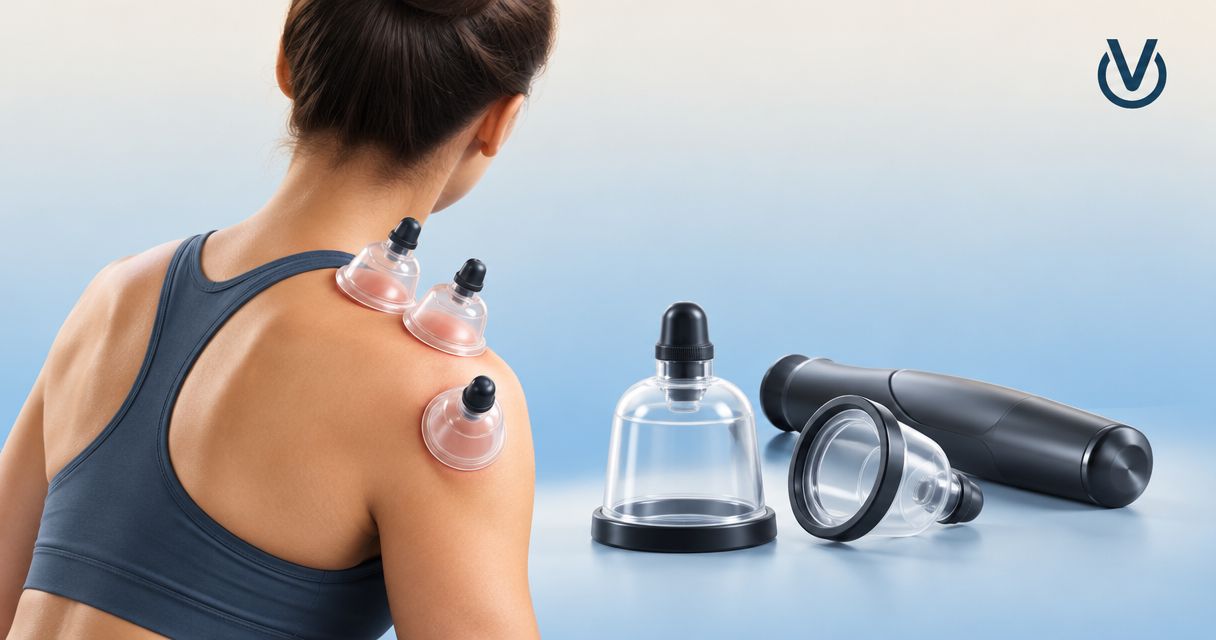
Vazocupping is best for consumers seeking portable home cupping, not a proven DOMS treatment. The Vazo Slide is a portable cupping device combining cupping, heating, massage, and gua sha functions.
The base is made from medical-grade alloy. That description applies to the base material only; it does not establish certification of the whole device, regulatory approval, or a proven effect on muscle soreness.
For a 2026 home-care routine, the relevant benefit is access to those functions in a handheld device. The trade-off is that you must manage placement, skin response, cleaning, and the manufacturer's operating limits yourself.
Vazocupping's device belongs in the optional self-care category. Do not interpret the number of functions, the material description, or the sensation of suction as evidence that sore muscles have recovered.
Can I use cupping immediately after a workout to prevent DOMS?
Cupping is not established as a reliable way to prevent DOMS. Applying suction before soreness develops does not demonstrate that the later soreness will be milder or shorter.
Do not treat a freshly painful area automatically. If pain began suddenly during exercise, assess that symptom rather than assuming you are getting ahead of next-day soreness.
Should I train again if cupping makes my muscles feel better?
Feeling better after cupping is not clearance for hard training. Check whether your planned movements feel normal and whether soreness changes your technique or range of motion.
Reduce or postpone demanding work when symptoms interfere with form. Persistent weakness, worsening pain, or uncertainty about an injury is a reason to seek qualified guidance rather than add another treatment.
When should I skip cupping and get medical help?
Skip cupping when post-workout symptoms are severe, unusual, or worsening. Severe muscle pain, marked swelling, substantial weakness, or dark urine can signal a serious problem, including exertional rhabdomyolysis, and require urgent medical assessment.
Seek advice for pain that does not follow the expected improving pattern, or for redness, warmth, drainage, or blistering after a treatment. Do not explain these symptoms away as detoxification or evidence that suction is working.
Ask a clinician before cupping if you take anticoagulants, have a bleeding disorder, have reduced skin sensation, or have a condition that affects healing. A home device cannot assess those risks for you.
FAQ
Does cupping for delayed onset muscle soreness actually work?
Cupping is not established as a reliable treatment for delayed onset muscle soreness. Evidence about pain relief does not prove faster muscle repair, restored strength, or readiness for hard training.
When does delayed onset muscle soreness usually peak?
DOMS commonly peaks within 24–72 hours after exercise. The American College of Sports Medicine describes onset around 12–24 hours and symptoms usually subsiding over 5–7 days, although individual experiences differ.
Is stronger suction better for sore muscles?
Stronger suction is not proven to provide better DOMS relief. Follow the device instructions and stop if treatment causes pain, burning, numbness, or skin injury.
Do dark cupping marks mean my muscles are recovering?
Dark cupping marks do not demonstrate muscle recovery. Skin discoloration is a response to suction, not a measurement of muscle repair, toxin removal, or workout readiness.
Can I use a heated cupping device on a possible muscle injury?
Do not use heated cupping to self-treat a possible muscle injury before assessment. Sudden pain, significant swelling, weakness, or loss of function needs attention rather than stronger heat or suction.
Can Vazocupping guarantee less soreness after exercise?
Vazocupping should not be treated as a guarantee of reduced DOMS. A portable cupping device is an optional self-care tool, not proof of faster recovery or permission to train through pain.
How long should I cup a sore muscle?
Follow your specific device's instructions rather than a universal DOMS timer. Do not extend treatment or increase suction to chase relief, and stop if the skin or underlying discomfort worsens.
One last thing
The most useful recovery check happens away from the device. Before adding cupping, notice how an ordinary task—walking, sitting down, or reaching overhead—feels. Revisit the same task later without forcing the movement.
Keep that standard in your 2026 routine: comfortable function matters more than dramatic treatment sensations. If a session leaves your skin more tender while the original movement remains difficult, do not respond by turning up the suction.