Cupping for carpal tunnel has limited evidence for short-term symptom relief, but it is not proven to reverse the nerve compression that causes the condition. Treat cupping as an optional addition to clinician-guided care, not a replacement for assessment, wrist splinting, or treatment of persistent numbness and weakness.
- Cupping for carpal tunnel has limited short-term evidence; lasting nerve recovery is not established.
- Persistent numbness, thumb weakness, or dropping objects needs medical assessment, not stronger suction.
- Wrist splinting and cupping serve different purposes; suction does not replace treatment for median nerve compression.
- Vazo Cupping portable cupping devices belong in a muscle-recovery discussion, not a carpal tunnel cure claim.
Can cupping help with carpal tunnel pain?
Cupping has shown short-term symptom improvement in a small study, but that does not establish a reliable treatment for carpal tunnel syndrome. The distinction matters: feeling less pain is not the same as restoring normal nerve function.
A randomized trial published in The Journal of Pain in 2009 enrolled 52 participants with carpal tunnel syndrome. It compared 1 session of wet cupping around the shoulder region with a local heat treatment and assessed outcomes after 7 days. The cupping group reported greater short-term improvement in symptoms.
That study has important limits. It tested wet cupping, which involves breaking the skin, rather than a heated handheld dry-cupping device applied at home. Its short follow-up cannot establish lasting relief, prevention of nerve damage, or a reason to postpone other treatment.
Before trying suction, understand whether cupping should hurt. Pain, burning, or increasing tingling is a reason to stop—not evidence that treatment is working.
For a 2026 treatment decision, separate these questions:
- Does cupping change how symptoms feel?
- Does it improve hand function?
- Does it address the underlying nerve compression?
Evidence for the first question does not automatically answer the other two.
Why this matters
Carpal tunnel syndrome involves pressure on the median nerve as it passes through the wrist. Symptoms commonly include tingling, numbness, and pain affecting the thumb, index finger, middle finger, and part of the ring finger.
Numbness deserves a different response from ordinary muscle soreness. A tight forearm after activity does not establish carpal tunnel syndrome, and wrist discomfort can have other causes.
If you assume every painful wrist needs muscle recovery, you risk treating the wrong problem. A clinician can assess the symptom pattern, examine strength and sensation, and decide whether nerve testing is appropriate.
Your goal is not simply to tolerate the next workday. It is to preserve comfortable, useful hand function without overlooking a worsening nerve problem.
What does cupping evidence actually tell you?
The 2009 trial provides a reason to investigate cupping further, not permission to treat every cupping method as equivalent. The study's location, technique, comparison treatment, and follow-up all limit what you can conclude.
Wet cupping and dry cupping are different interventions. Adding heat, moving a device across the skin, or changing suction also changes the treatment; a result from one method cannot establish the effectiveness of another.
The National Center for Complementary and Integrative Health describes much of the research on cupping as low quality and identifies uncertainty about its effects on pain. That broader evidence does not establish a proven carpal tunnel protocol.
For your 2026 decision, the useful conclusion is narrow: short-term symptom relief is possible, but durable benefit from at-home cupping remains unestablished. Do not turn that uncertainty into a stronger device setting or a longer session.
The same caution applies to testimonials. A report of better sleep or less aching does not tell you whether numbness, sensation, or thumb strength improved.
How does cupping compare with other carpal tunnel options?
These options do not perform the same job. A clinician selects treatment according to your symptoms, examination, severity, and response to previous care.
| Option | Best for | Potential benefit | Main limitation |
|---|---|---|---|
| Cupping | People discussing optional symptom relief alongside established care | Limited evidence of short-term symptom improvement | Does not establish relief of nerve compression; can injure skin |
| Neutral-position wrist splint | People with night symptoms for whom a clinician recommends conservative care | Keeps the wrist from bending during sleep | Fit and tolerance matter; persistent symptoms need reassessment |
| Corticosteroid injection | Selected patients seeking clinician-directed temporary relief | Can reduce symptoms temporarily | Does not provide reliable long-term improvement |
| Carpal tunnel release | Patients whose severity or persistent symptoms warrant surgical assessment | Relieves pressure by releasing the carpal tunnel ligament | Requires a procedure, recovery, and discussion of surgical risks |
Choose treatment by the problem it addresses, not by how intense it feels. Suction marks do not measure nerve recovery, and stronger treatment sensations do not establish better outcomes.
A neutral-position splint is also not interchangeable with a tight compression wrap. Ask a clinician or qualified hand therapist about appropriate positioning and fit rather than tightening something around an already symptomatic wrist.
Why relief from cupping varies
There is no established at-home suction setting or session schedule that reliably treats carpal tunnel syndrome. A generic muscle-recovery routine cannot account for the condition's cause and severity.
These factors change how you should interpret any relief:
- The diagnosis: Forearm muscle discomfort and median nerve compression are not interchangeable, even when both occur near the wrist.
- Symptom severity: Occasional tingling and persistent sensory loss require different levels of assessment.
- The technique: Wet cupping, stationary dry cupping, and moving heated cupping devices are not equivalent treatments.
- The treatment location: Shoulder-region cupping research does not validate suction directly over the palm-side wrist.
- Other treatment: Splinting, changes to aggravating activities, or an injection can affect symptoms independently of cupping.
- The outcome measured: Less aching immediately afterward does not establish improved sensation, strength, or lasting function.
In 2026, those distinctions matter more than a device's feature list. Before adding any treatment, decide what improvement you are looking for and how a clinician will judge whether the plan is working.
What should you do before trying cupping?
Start with the symptom pattern, not the equipment. If you have recurring tingling, nighttime numbness, or reduced hand function, seek an assessment rather than assuming you need deeper muscle work.
- Describe the symptoms clearly. Identify which fingers are affected, whether symptoms wake you, and which activities bring them on. Mention neck symptoms and any recent injury.
- Report changes in function. Tell the clinician about dropping objects, difficulty handling small items, or reduced thumb strength. These details matter even when pain is mild.
- Discuss established care first. Ask whether a neutral wrist splint, changes to aggravating activities, or another treatment fits your situation.
- Ask specifically about cupping. Bring the device instructions and explain whether it uses heat, suction, or movement. Ask whether it is appropriate at all and which areas to avoid.
- Agree on a reassessment plan. Know which symptoms mean stop and which changes require another appointment. Do not continue an ineffective routine indefinitely.
This is a decision sequence, not a cupping protocol. It deliberately avoids a universal pressure, duration, or placement because those instructions are not established for carpal tunnel syndrome.
If you already have a diagnosis, tell your treating clinician before adding another intervention. New symptom relief should not interrupt a plan intended to protect nerve function.
When should you skip cupping and seek care?
Persistent numbness, worsening weakness, or visible loss of muscle at the thumb base needs prompt medical assessment. Do not wait for pain to become severe before reporting these changes.
Cupping also adds avoidable risk when skin or sensation is compromised. Do not apply suction over broken, infected, blistered, or already injured skin; reduced sensation makes it harder to recognize excessive heat or tissue injury.
Get individual advice before cupping if you take blood-thinning medication, have a bleeding disorder, or have a condition affecting skin healing. Do not attempt wet cupping at home: breaking the skin introduces bleeding and infection risks.
Stop a session immediately if it causes burning, sharp pain, new numbness, or increased tingling. Do not interpret worsening nerve symptoms as a normal recovery response.
Sudden hand weakness after an injury, severe swelling, or a hand that becomes unusually pale or cold warrants urgent evaluation. A wellness device is not a way to investigate those symptoms.
Where does a portable cupping device fit?
Vazo Cupping is best suited to consumers seeking portable cupping devices for a muscle-recovery routine, not a proven carpal tunnel treatment. That boundary keeps the product discussion separate from medical claims.
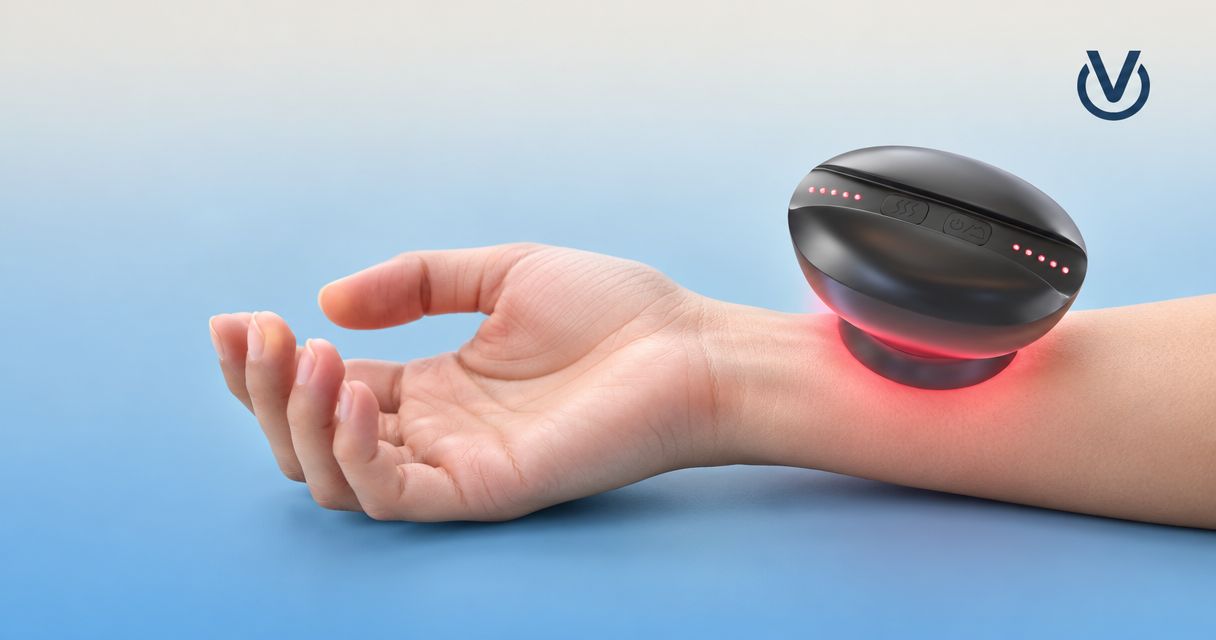
The Vazo Slide is a portable handheld device combining cupping, heating, massage, and gua sha. Its base is made from medical-grade alloy; that description applies to the base material, not certification of the whole device or proof of a medical outcome.
The benefit of those combined functions is access to several wellness techniques in one device. The limitation is equally important: combining techniques does not establish effectiveness for median nerve compression, and heat or suction requires particular caution around altered sensation.
If your clinician approves a separate muscle-recovery routine, follow the device instructions and the clinician's restrictions. Do not assume approval for forearm muscle care means approval to place suction over the carpal tunnel.
Can I put a cupping device directly on my wrist?
Do not self-prescribe suction directly over a symptomatic carpal tunnel. The palm-side wrist contains closely packed structures, and direct placement is not validated by the shoulder-region trial described above.
Ask a clinician familiar with your symptoms before treating nearby areas. Do not use a small attachment, lower heat setting, or shorter session as a substitute for that assessment.
Is cupping better than a wrist splint?
Cupping has not been established as better than a neutral-position wrist splint for carpal tunnel syndrome. The two approaches also have different purposes: a splint limits wrist bending, while cupping applies suction to tissue.
If a splint is uncomfortable or symptoms continue, ask about fit and reassessment. Replacing the splint with cupping does not resolve those questions.
How many cupping sessions should I try?
There is no established number of at-home cupping sessions that treats carpal tunnel syndrome. The small trial's single treatment and short follow-up do not define a repeat-use schedule for a handheld device.
In 2026, a useful plan still needs clear stopping rules. Persistent symptoms deserve reassessment, not an automatic increase in session frequency.
FAQ
Does cupping for carpal tunnel actually work?
Cupping for carpal tunnel has limited evidence for short-term symptom relief, not proof of lasting nerve recovery. It should not replace assessment or established treatment for median nerve compression.
Can cupping make carpal tunnel symptoms worse?
Cupping can cause skin injury and discomfort, and any increase in tingling or numbness is a reason to stop. Seek assessment rather than treating worsening symptoms with stronger suction.
Where should I put cups for carpal tunnel pain?
There is no established at-home cup placement that reliably treats carpal tunnel syndrome. Ask your clinician before applying suction around a symptomatic wrist, hand, or forearm.
Is heated cupping safe if my fingers are numb?
Reduced sensation makes it harder to judge excessive heat, so numbness requires particular caution. Do not apply a heated cupping device over an area with altered sensation without individual medical guidance.
Can I use Vazo Cupping instead of a wrist splint?
Vazo Cupping portable cupping devices are not substitutes for a clinician-recommended wrist splint. They are not established treatments for relieving median nerve compression.
What symptoms mean I should see a doctor instead of trying cupping?
Persistent numbness, worsening thumb weakness, dropping objects, or visible muscle loss at the thumb base needs prompt assessment. Sudden weakness after injury or a cold, pale hand warrants urgent evaluation.
Does less pain after cupping mean my carpal tunnel is healing?
Less pain after cupping does not establish that median nerve compression has improved. Sensation, strength, hand function, and the clinical examination also matter.
One last thing
A quieter symptom is not always a healthier nerve. If aching improves but numbness persists or you are dropping objects more often, report the change rather than calling the treatment successful.
For your 2026 care plan, judge progress by comfortable hand function and the findings your clinician is monitoring—not the darkness of cupping marks. Relief matters, but protecting nerve function matters more.