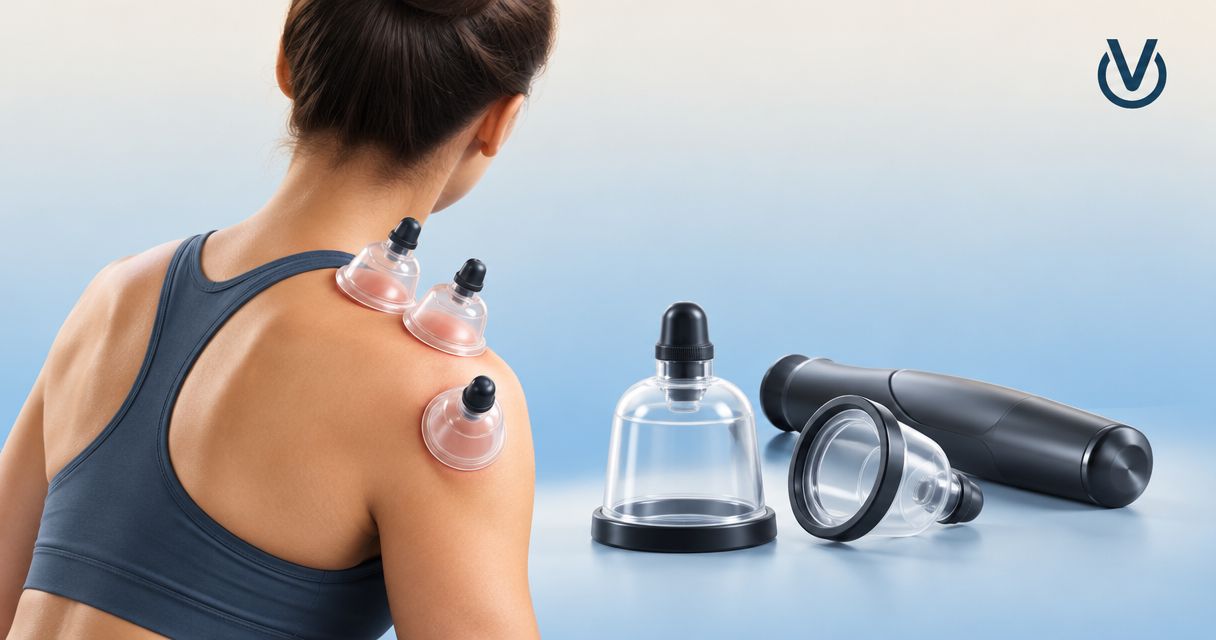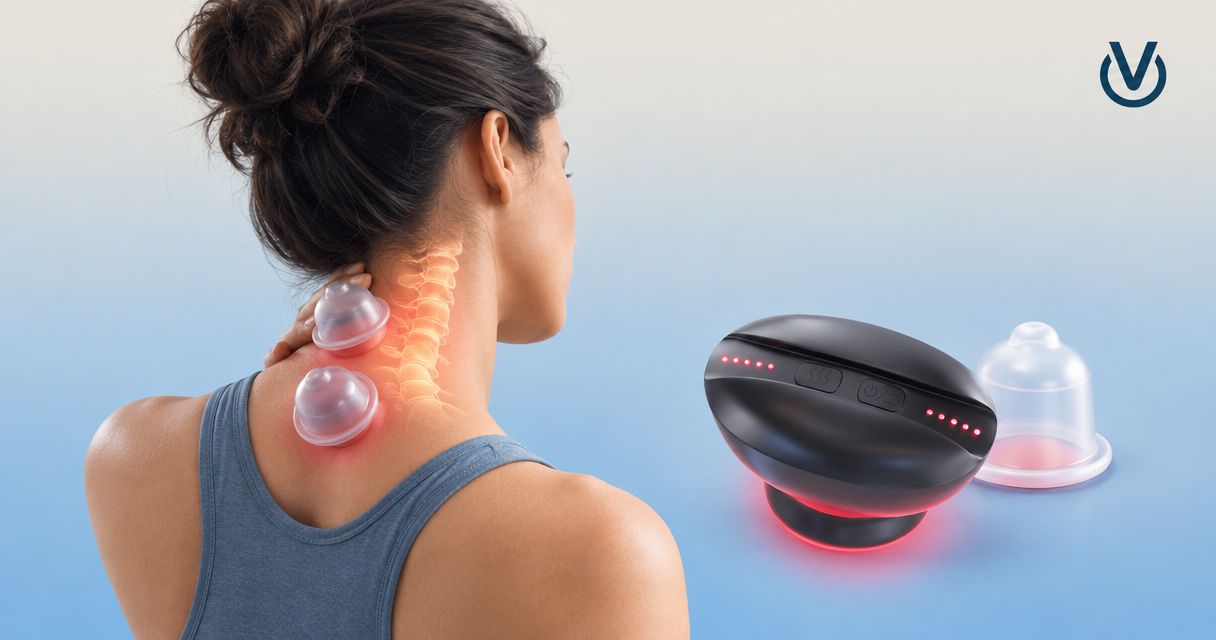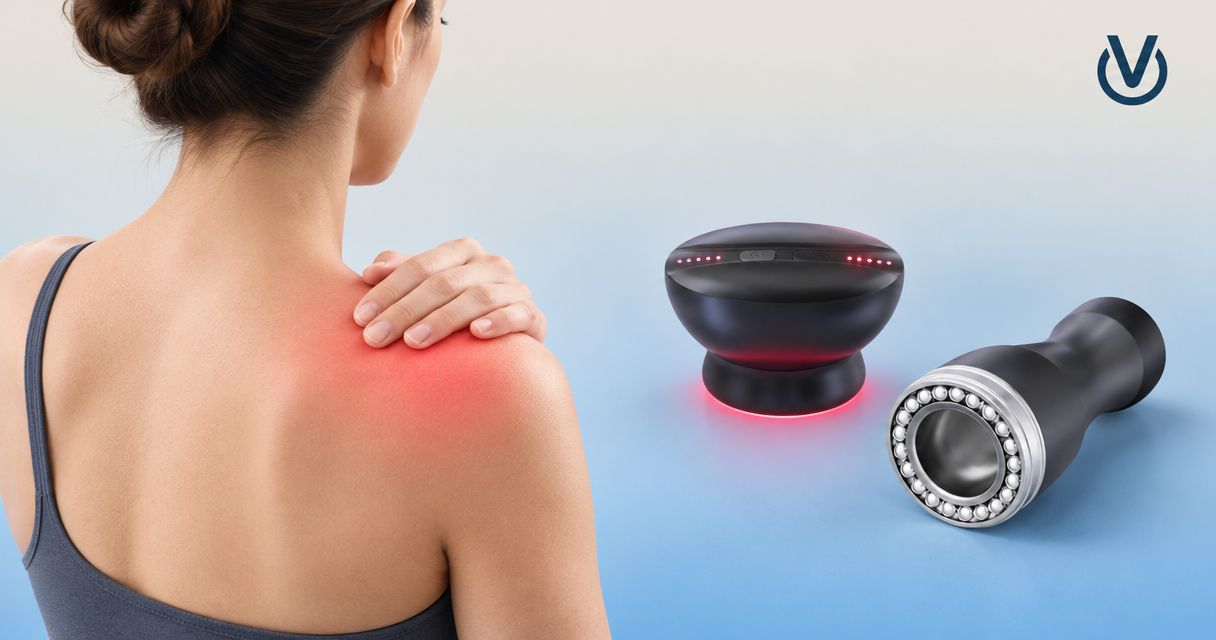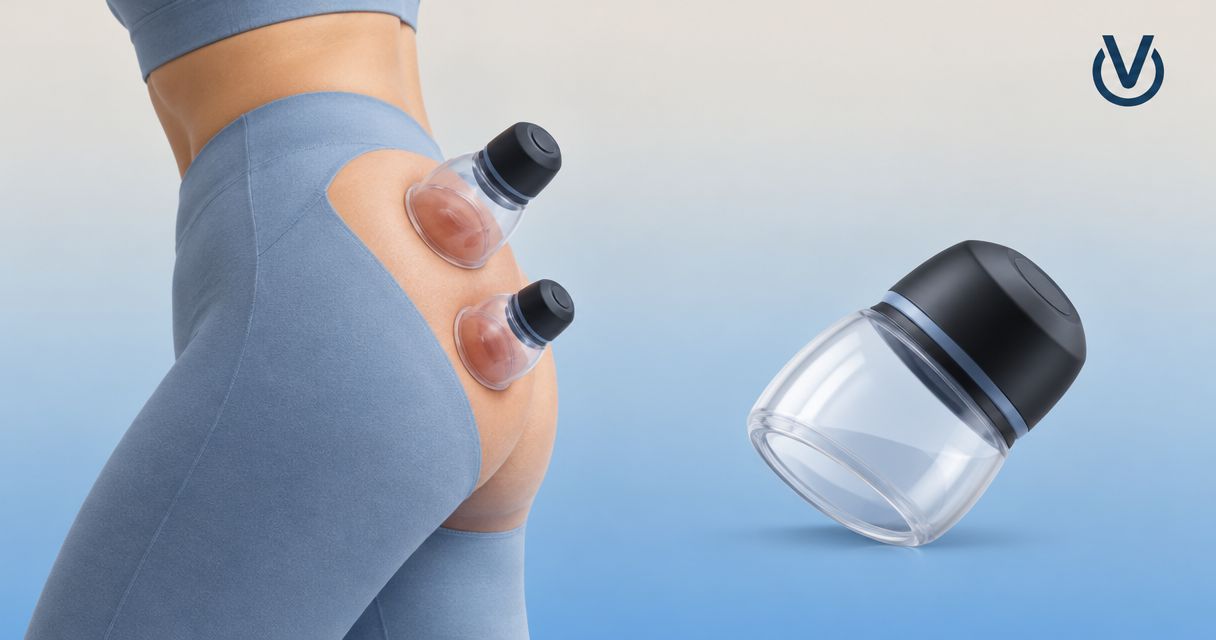
Cupping for hip pain may offer temporary relief from muscle-related discomfort, but evidence is limited and does not establish it as a treatment for the underlying hip condition. Suction can also cause bruising and skin irritation; deep groin pain, an injury, or difficulty bearing weight calls for assessment rather than stronger cupping.
- Cupping for hip pain is an optional comfort measure, not a substitute for diagnosis or rehabilitation.
- NCCIH describes cupping pain-relief evidence as weak; hip-specific benefits remain uncertain.
- Vazocupping portable cupping devices suit consumers seeking at-home cupping, not diagnosis or treatment of hip disease.
- Avoid cupping injured skin, varicose veins, and unexplained swelling; seek care for severe or worsening symptoms.
Can cupping help with hip pain?
Cupping has a possible role in short-term comfort, not a proven role in repairing a painful hip. The National Center for Complementary and Integrative Health, or NCCIH, states that cupping may help reduce pain, but the evidence is not strong. That general finding does not establish effectiveness for hip arthritis, tendon injury, bursitis, or pain coming from the lower back.
The practical distinction is between feeling temporarily better and treating what is causing the pain. A suction device acts on skin and superficial tissues. It does not reach into the hip joint to repair cartilage or establish why walking hurts.
| Approach | Best for | Potential benefit | Main limitation |
|---|---|---|---|
| Dry cupping | Optional comfort care after suitability is established | Possible temporary pain relief | Limited evidence; bruising and skin irritation |
| Individually prescribed exercise | Rebuilding function within an appropriate rehabilitation plan | Addresses strength, movement, and activity tolerance | Requires a suitable diagnosis and progression |
| Clinical assessment | New, persistent, severe, or unexplained hip pain | Identifies likely causes and guides treatment | An assessment is not itself immediate symptom relief |
Do not use suction strength as a measure of effectiveness. Review how much suction pressure is safe for cupping before considering a home session, and follow the instructions for your specific device.
Why this matters
Hip pain describes a location, not a diagnosis. Discomfort around the hip can involve muscles, tendons, the joint itself, or structures outside the hip, including the lower back. Those problems do not all respond to the same treatment.
The useful question in 2026 is not simply whether cupping feels good. Ask whether it helps you move comfortably without delaying an assessment or replacing the rehabilitation your condition needs. Temporary relief is useful only when it does not hide a worsening problem.
Muscle discomfort is different from joint treatment
A tight or sore feeling around the buttock after activity does not automatically mean the hip joint is damaged. Equally, a sensation that feels muscular does not prove that muscles are the only source. Location and sensation help guide an examination, but neither provides a diagnosis on its own.
Avoid claims that cupping realigns the hip, rebuilds cartilage, removes toxins, or cures inflammation. These are not established benefits of cupping for hip pain. Dark circular marks do not confirm that a treatment has worked.
Where your hip hurts changes the next step
Use the location of your symptoms to describe the problem to a clinician, not to select a suction setting. Note whether pain appears during walking, sitting, lying on your side, or a particular movement. Also describe whether it stays in one place or travels down your leg.
Pain on the outside of your hip
Outer-hip pain can involve the tendons and other tissues around the greater trochanter, the bony prominence on the outside of the upper thigh. Pressure from lying on that side can be uncomfortable. A tender area is not an invitation to apply a cup directly over it.
If touching the area already hurts, adding suction or dragging a device across it can aggravate discomfort. Get guidance about the likely cause and appropriate activity changes before treating the spot repeatedly.
Deep pain in your groin
Groin pain can be associated with hip-joint problems, although other causes also exist. Suction over the skin cannot distinguish between them. Do not try to reach a deep ache by increasing pressure or adding heat.
Arrange assessment when groin pain persists, limits movement, or changes how you walk. Sudden severe pain or inability to bear weight needs urgent attention, especially after a fall or other injury.
Buttock pain or symptoms traveling down your leg
Buttock pain sometimes comes from the lower back rather than the hip itself. Tingling, numbness, or weakness makes self-treatment a poor starting point. Cupping does not identify or correct nerve compression.
Seek urgent care for new bladder or bowel changes, numbness around the groin or saddle area, or rapidly progressing leg weakness. These symptoms require medical evaluation, not a recovery routine.
Why results from cupping for hip pain vary
There is no dependable hip-specific result you can promise from a home cupping session. For your 2026 recovery plan, judge cupping as an optional addition rather than the foundation of treatment. The following differences affect suitability and how you interpret the result:
- The source of pain: Muscle soreness, tendon problems, joint disease, and referred pain require different management.
- Skin condition: Broken, infected, inflamed, or already bruised skin makes cupping inappropriate over that area.
- Suction and technique: Greater suction increases tissue stress; discomfort is a reason to stop, not proof of effectiveness.
- Heat exposure: Heating adds a separate burn risk, particularly when sensation is reduced.
- Your broader treatment plan: A temporary change in comfort does not replace prescribed strengthening, activity changes, or medical treatment.
- Your health and medicines: Blood-thinning medicines, bleeding disorders, and impaired sensation require professional guidance before use.
These factors also explain why someone else's recovery story is not a treatment prescription. Matching their device, visible marks, or routine does not mean you have the same problem or will get the same response.
How should you approach cupping around a painful hip?
Start with suitability, not placement. There is no universal suction setting, session length, or treatment frequency established for every cause of hip pain. A device's timer does not make an unsuitable treatment safe.
- Check for reasons to seek care first. Do not begin a session after a significant injury or when pain is severe, worsening, or accompanied by concerning symptoms.
- Clarify the likely cause. Ask a qualified clinician whether cupping is appropriate for your symptoms, especially if pain persists or affects everyday movement.
- Inspect the treatment area. Avoid wounds, rashes, infection, prominent varicose veins, unexplained swelling, and skin that has not recovered from a previous session.
- Read the device instructions. Follow the manufacturer's directions for permitted body areas, suction, heat, cleaning, and stopping the device. Do not borrow settings from another model.
- Keep the experience comfortable. Stop for sharp pain, burning, numbness, blistering, or increasing discomfort. Do not continue to chase a darker mark.
- Reassess your symptoms afterward. Check your skin and notice whether ordinary movement feels worse. A flare is a reason to stop and reconsider, not to repeat the session more aggressively.
Avoid combining cupping, scraping, strong massage, and heat over the same painful area simply because each is available. Adding techniques makes it harder to tell which caused irritation. Your recovery plan should remain understandable enough to adjust when symptoms change.
When should you skip cupping and get medical help?
Skip cupping when the main problem is unexplained pain rather than familiar, assessed muscle discomfort. Seek urgent assessment for severe pain after an injury, an inability to walk or bear weight, or a hot, swollen hip with fever or feeling unwell.
New weakness, spreading numbness, or bladder and bowel symptoms also need prompt medical attention. Do not place cups over a leg with unexplained swelling, redness, warmth, or suspected blood clotting.
For less urgent symptoms, arrange an appointment if pain keeps returning, disrupts sleep, or limits normal activities. A clinician can examine your hip and back, review your health history, and decide whether further investigation is necessary.
Tell your clinician about blood-thinning medicines, bleeding problems, diabetes, altered sensation, pregnancy, and recent surgery. These details affect the safety of hands-on treatments and heated devices. Do not stop prescribed medication to make cupping possible.
Where a portable cupping device fits
Vazocupping is best suited to consumers seeking portable at-home cupping, not diagnosis of hip pain. The Vazo Slide handheld cupping device combines cupping, heating, massage, and gua sha. Those functions describe the device; they do not establish that it treats a particular hip condition.
Vazo Slide and Vazo Lume are portable cupping devices with bases made from medical-grade alloy. That description applies to the base material, not certification or regulatory approval of the whole device. It does not prove a medical outcome or remove the risks of suction and heat.
The practical benefit of the Vazocupping format is portability for consumers seeking home cupping. The limitation is equally important: a handheld tool cannot examine your hip, identify an injury, or prescribe rehabilitation. In 2026, choose a device around an appropriate care plan rather than building a care plan around its available functions.
Can cupping help hip arthritis?
Cupping is not an established treatment for hip arthritis. Temporary symptom relief does not show that joint damage has changed. Discuss an individualized management plan with a clinician rather than replacing prescribed exercise or other treatment with suction.
Can you put a cup directly on the painful hip bone?
Do not use a painful bony prominence as a target for stronger suction. Tenderness over the outside of the hip can involve nearby tissues that need assessment. Follow device instructions and professional guidance on placement instead of treating the most painful spot by default.
How do you know whether cupping is helping?
Judge cupping by comfortable function, not the darkness of the marks. Notice whether ordinary activities feel easier without worse pain afterward. If relief is brief but you keep limping, losing movement, or needing repeated sessions to manage the same symptoms, seek assessment.
FAQ
Does cupping work for hip pain?
Cupping may provide temporary pain relief, but evidence is limited and hip-specific benefits are not established. It does not diagnose or treat every cause of hip pain.
Can cupping fix hip bursitis?
Cupping is not an established treatment for hip bursitis. Pain on the outside of the hip can involve several tissues, so get an assessment rather than assuming the cause.
Is heated cupping better for a painful hip?
Heated cupping is not established as better for hip pain. Heat adds a burn risk and should not be used to push through pain or compensate for an unexplained injury.
How long should I cup my hip?
There is no universal cupping duration established for hip pain. Follow the specific device instructions and professional advice; stop sooner if you experience pain, burning, numbness, or skin irritation.
Can I use cupping on my hip every day?
Daily cupping is not a default recommendation for hip pain. Do not reapply suction over bruised or irritated skin, and seek advice if symptoms require repeated self-treatment.
Are dark cupping marks a sign that hip pain is improving?
Dark cupping marks are not proof that hip pain is improving. Assess comfort and function instead, and do not increase suction to produce darker marks.
Can I use a Vazocupping device instead of physical therapy?
A Vazocupping portable cupping device does not replace physical therapy or diagnosis. Use it only as an optional addition when suitable, not as a substitute for prescribed rehabilitation.
Should I try cupping if my hip pain travels down my leg?
Get assessed before trying cupping for hip pain that travels down your leg, especially with tingling, numbness, or weakness. New bladder or bowel changes or saddle-area numbness require urgent medical attention.
One last thing
Before adding cupping to your 2026 routine, write down which ordinary activity your hip pain is interrupting: getting out of a chair, walking, climbing stairs, or sleeping comfortably. That gives you a more useful reference than a photograph of the treatment marks.
A darker circle is not a better result. If your skin changes but your movement does not improve, do not increase suction to force progress. Revisit the diagnosis and the plan with a qualified clinician.