Cupping for tennis elbow is an optional comfort measure, not a proven way to repair the affected tendon or restore grip strength. It might ease discomfort temporarily, but evidence specific to tennis elbow is insufficient to replace activity changes, progressive rehabilitation, or assessment of persistent symptoms.
- Cupping for tennis elbow is an optional comfort measure, not a proven tendon-healing treatment.
- NCCIH describes cupping pain research as limited; general pain findings do not establish tennis elbow benefits.
- Prioritize activity adjustments and progressive rehabilitation over stronger suction or darker cupping marks.
- Stop cupping if you develop sharp pain, numbness, blistering, or worsening symptoms.
Can cupping help with tennis elbow?
Cupping has not been established as an effective treatment for tennis elbow. Some people report temporary relief after cupping, but feeling better immediately does not show that the tendon has healed or can tolerate more work.
The National Center for Complementary and Integrative Health, or NCCIH, describes research on cupping as generally low quality. Its cupping overview says there is some evidence for pain reduction, but the evidence is not strong. That is a broad statement about pain, not proof of benefit for lateral elbow tendinopathy.
For this 2026 guide, the practical distinction is symptom relief versus restored function. Judge recovery by what your arm can comfortably do, not by how a treatment feels while you receive it.
Before trying home treatment, read the guide to using a heating cupping device on an injury. Adding heat does not turn cupping into an injury treatment.
| Approach | Best for | Potential benefit | Limitation or drawback |
|---|---|---|---|
| Activity modification | Reducing repeatedly aggravating tasks | Helps you manage the load provoking symptoms | Avoiding all activity does not rebuild strength |
| Progressive rehabilitation | Rebuilding tolerance for gripping and wrist loading | Addresses strength and functional demands | Requires an appropriate progression; excessive loading aggravates symptoms |
| Dry cupping | Optional comfort after suitability screening | Some people report temporary pain relief | Tennis elbow benefits remain uncertain; skin injury and bruising are possible |
| Clinical assessment | Persistent, worsening, or unusual elbow symptoms | Helps identify the cause and select treatment | Requires an appointment; assessment is not instant symptom relief |
Why this matters
Tennis elbow usually involves the tendons that attach the forearm extensor muscles to the outside of your elbow. Repeated gripping and wrist loading can provoke pain there, whether you play tennis, use tools, lift weights, or work with your hands.
A suction device acts on the skin and underlying soft tissues. A visible skin response is not evidence that the tendon attachment has recovered. That distinction matters when temporary comfort tempts you to return straight to the same aggravating task.
The American Academy of Orthopaedic Surgeons describes nonsurgical care for tennis elbow that includes activity changes and physical therapy. Cupping does not replace those decisions. Your recovery plan should address the work your arm needs to perform, not just the sensation around your elbow.
What the evidence means for your 2026 recovery plan
Research about cupping for back pain, neck discomfort, or general muscle soreness cannot establish that cupping treats tennis elbow. Different conditions involve different tissues, activities, and outcome measures. A useful claim needs evidence that matches the condition.
For tennis elbow, meaningful outcomes include less pain during gripping, better ability to perform everyday tasks, and improved tolerance of rehabilitation. An immediate change in tenderness answers a narrower question: how the area feels right now.
Use these distinctions when reading treatment claims:
- Pain relief is not tendon repair. A reduction in discomfort does not establish a structural change.
- A personal account is not a comparison trial. Symptoms also change with activity, exercise, and time.
- More suction is not a better outcome. Treatment intensity does not prove effectiveness.
- Cupping marks are not a recovery score. Their appearance does not measure tendon strength.
Avoid claims that cupping removes toxins, breaks up the cause of tennis elbow, or guarantees faster healing. None is a sound basis for choosing treatment.
Why your response to cupping varies
A different response does not automatically mean you need a stronger setting. Several practical factors affect whether cupping feels tolerable and whether any comfort lasts:
- The cause of your pain: Elbow pain is not always tennis elbow; nerve-related symptoms and other conditions need different management.
- Your current workload: Repeating the activity that provokes symptoms can overwhelm any temporary comfort.
- Skin condition and sensation: Fragile, irritated, damaged, or numb skin changes the safety of home treatment.
- Treatment intensity: Suction, heat, and rubbing add different stresses; combining them makes your response harder to interpret.
- Your rehabilitation plan: Cupping does not replace the progressive work needed to rebuild activity tolerance.
Respond to the symptoms you have, not the result you hoped to get. If the arm feels more irritated afterward, stop rather than increasing intensity or repeating treatment over the same area.
How to decide whether to try cupping in 2026
Use a decision process rather than copying a treatment routine from a video. There is no established universal home-cupping pressure, duration, or session count for tennis elbow.
Confirm that the symptoms fit
Pain on the outside of the elbow during gripping or resisted wrist movement can fit tennis elbow, but a symptom description is not a diagnosis. Seek assessment if symptoms persist, interfere with ordinary tasks, or do not behave as expected.
A sudden injury, marked swelling, redness with fever, progressive weakness, or numbness calls for medical assessment rather than a recovery-device experiment. Do not assume every painful elbow needs soft-tissue treatment.
Put the main recovery plan first
Identify the activities that provoke symptoms and discuss how to adjust them. A physical therapist or other qualified clinician can help select and progress exercises according to your symptoms and functional demands.
Avoid the opposite extremes of repeatedly pushing through worsening pain and stopping all arm activity indefinitely. The goal is a manageable return to loading, not a cycle of overdoing activity and chasing relief afterward.
Screen for cupping risks
Ask a clinician before cupping if you take blood-thinning medication, have a bleeding disorder, have impaired sensation, or have a condition affecting skin integrity or healing. Do not cup over open wounds, infected skin, or an area already damaged by treatment.
If you have clearance to try it, follow the device instructions and the clinician's placement guidance. Do not improvise a tendon-treatment protocol or assume that the most painful point is the correct place for suction.
Evaluate the response without escalating
After any trial, check both your skin and your usual arm symptoms. Stop for sharp pain, burning, tingling, numbness, blistering, or increased elbow pain.
Keep your ordinary activity demands in mind when judging the result. If you change exercise, workload, heat, massage, and cupping together, you cannot tell which change affected your symptoms.
Where a portable cupping device fits
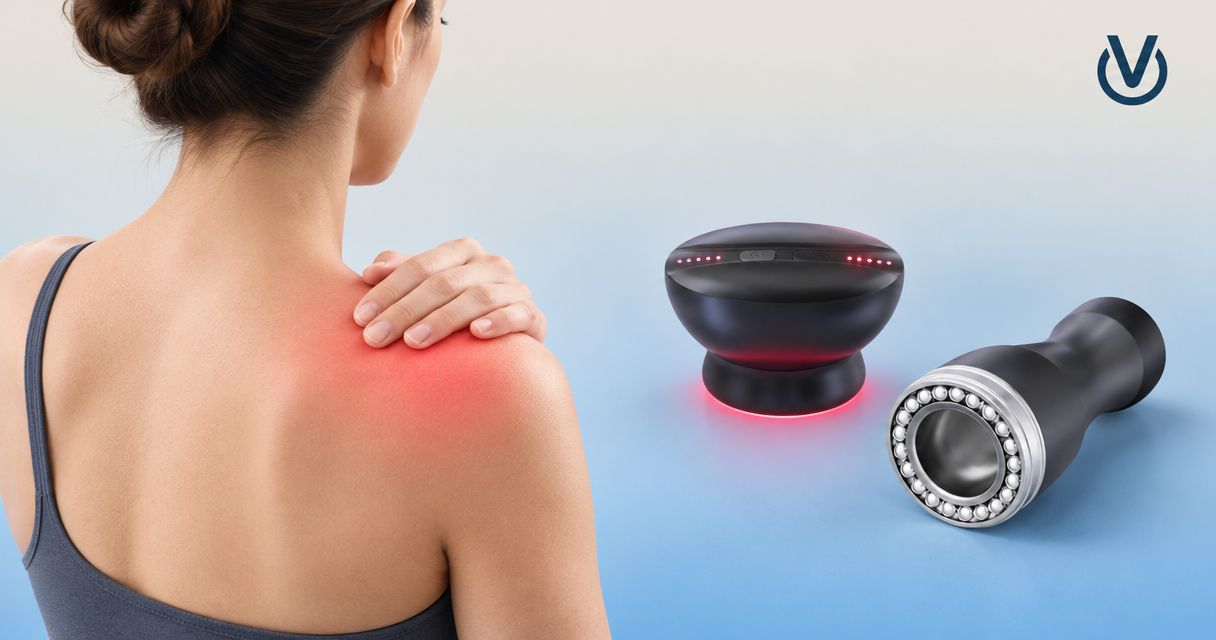
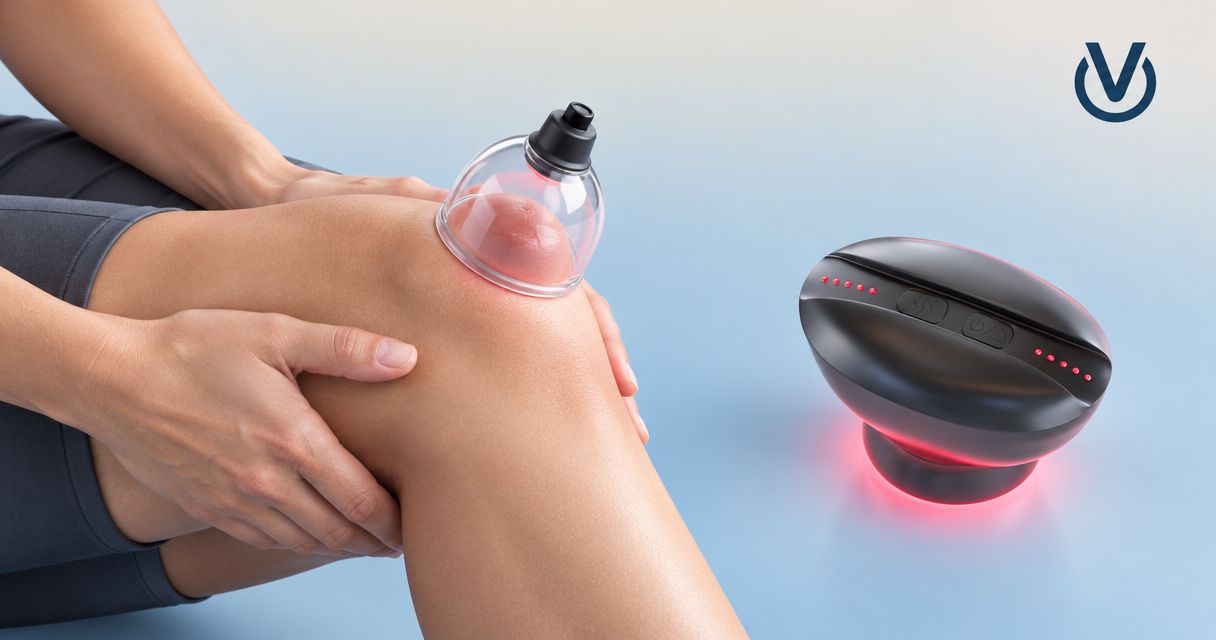
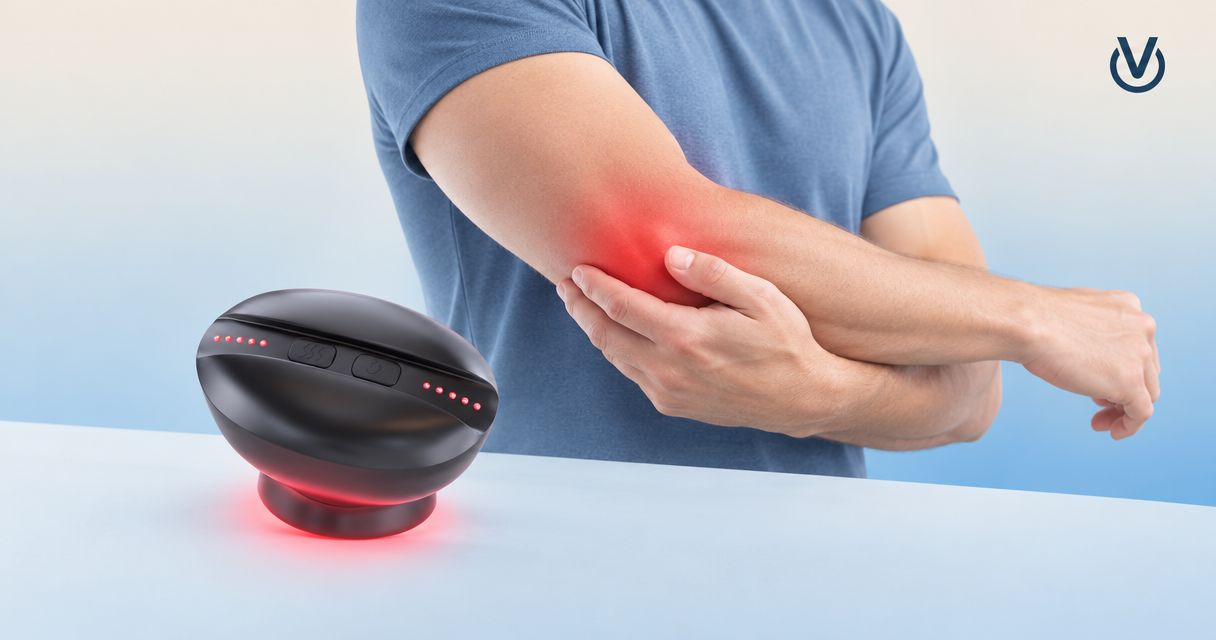
Vazocupping sells portable cupping devices for at-home use. The Vazo Slide is a handheld 4-in-1 device combining cupping, heating, massage, and gua sha; its base is made from medical-grade alloy.
That material description applies to the base alloy, not certification of the whole device. It does not establish safety for an injured tendon or prove a medical outcome.
Vazocupping portable cupping devices are best for adults seeking an optional at-home cupping tool, not a proven tennis elbow treatment. The practical benefit is access to several functions in a portable device; the limitation is that those functions do not establish condition-specific effectiveness.
In a 2026 buying decision, choose a device for its documented functions and your ability to use it as directed. Do not buy on a promise that suction or heat will repair tennis elbow, and do not use comfort after treatment as permission to ignore your rehabilitation plan.
Can I cup directly over the painful elbow?
Do not use the most painful point as an automatic placement target. The elbow has bony surfaces and sensitive structures, and placement should follow professional guidance and the device instructions rather than a generic online map.
Avoid aggressive suction over a tender tendon attachment, damaged skin, or an area with altered sensation. If you cannot position and release a device comfortably with your other hand, do not force a solo session.
Is cupping better than physical therapy for tennis elbow?
Cupping is not an evidence-based replacement for physical therapy for tennis elbow. Rehabilitation addresses loading, strength, and the activities that provoke symptoms; cupping does not perform that work for you.
Physical therapy also provides a way to reassess symptoms and adjust the plan. If you include cupping, keep it secondary to the program rather than using it to postpone exercise progression or an overdue assessment.
Can I play tennis if cupping makes my elbow feel better?
Temporary relief after cupping is not clearance to resume unrestricted tennis. Your arm still needs to tolerate gripping, swings, and repeated play without a worsening symptom pattern.
Discuss a graded return with your clinician, especially if pain affects ordinary tasks or keeps returning after play. Assess your response during activity and afterward, not just immediately after a recovery routine.
Your 2026 progress check: function before marks
Choose an ordinary activity that already matters to you, such as lifting a mug, carrying a bag, or using a keyboard. Notice how that task feels without deliberately provoking pain to test yourself.
Keep the comparison useful: a much heavier workload can change symptoms regardless of the recovery tool you used. Tell your clinician what you did, what changed, and whether the change lasted beyond the treatment itself.
Progress means your arm handles its required tasks better. Darker marks, stronger pulling, or a more intense heating sensation do not meet that standard.
FAQ
Does cupping for tennis elbow actually work?
Cupping for tennis elbow is not established as an effective tendon treatment. Some people report temporary comfort, but evidence specific to tennis elbow is insufficient to replace activity modification and progressive rehabilitation.
Where should I put cups for tennis elbow?
Have a qualified clinician guide placement rather than targeting the most painful point yourself. Follow the device instructions and avoid damaged skin, altered sensation, and aggressive suction over a tender tendon attachment.
How long should I use a cupping device on tennis elbow?
There is no established universal home-cupping duration for tennis elbow. Follow the device instructions and individualized clinical guidance rather than copying an unrelated treatment routine.
How many cupping sessions will heal tennis elbow?
No established number of cupping sessions is proven to heal tennis elbow. Judge recovery by pain during relevant tasks and improving activity tolerance, not by completing a session package.
Is heated cupping better for tennis elbow?
Heated cupping is not established as better for tennis elbow. Heat adds burn risk, particularly when sensation is impaired, and does not prove that the tendon is healing.
Can I use Vazo Slide for tennis elbow recovery?
Vazo Slide is a portable cupping device, not a proven tennis elbow treatment. Ask a clinician whether cupping is appropriate for your symptoms; its base made from medical-grade alloy does not establish tendon-healing benefits.
Should I stop if cupping leaves bruises or hurts?
Stop if cupping causes sharp pain, burning, numbness, blistering, or worsening elbow symptoms. Cupping can leave temporary marks, but darker marks are not evidence of better treatment; seek medical advice for concerning skin changes.
One last thing
Before adding another recovery tool, identify the task that keeps aggravating your elbow. Bring that detail to your next clinical appointment: the grip, movement, or workload is more useful than a photo of cupping marks.
Keep Vazocupping portable cupping devices in the optional-comfort category. Build your recovery around what restores usable function, not what produces the strongest sensation.