Do not start cupping therapy on blood thinners without approval from the clinician managing your medication. Suction can cause bruising and bleeding beneath the skin, while wet cupping adds cuts and external bleeding risk. This 2026 guide explains why a lower suction setting is not medical clearance and what to do before considering treatment.
- Avoid self-directed cupping therapy on blood thinners; ask your prescribing clinician before treatment.
- Wet cupping adds skin cuts and bleeding risk; dry cupping still causes bruising.
- Warfarin, apixaban, and aspirin require medication-specific advice; never skip prescribed medicine to make cupping possible.
- Vazocupping portable cupping devices do not replace a clinician’s assessment of bleeding risk.
Can you use cupping therapy on blood thinners?
Do not treat cupping as a routine at-home recovery option while taking blood thinners. Ask the clinician who manages your prescription whether you should avoid it entirely. A practitioner’s experience or a device’s adjustable controls cannot establish safety for your medication and health history.
The National Center for Complementary and Integrative Health describes cupping-related adverse effects including persistent skin discoloration, burns, scars, and infection. It also distinguishes dry cupping from wet cupping, which involves piercing the skin. These are general safety considerations, not evidence that cupping is safe during anticoagulant treatment.
If you are unsure which treatment someone is offering, review the difference between wet and dry cupping before discussing it with your clinician.
| Cupping method | What it involves | Main concern on blood thinners | Decision before treatment |
|---|---|---|---|
| Dry cupping | Suction on intact skin | Bruising and bleeding beneath the skin | Do not self-start; obtain medication-specific advice |
| Wet cupping | Suction plus deliberate skin cuts or punctures | External bleeding, bruising, and infection | Avoid; discuss any proposed treatment with your prescribing clinician |
| Moving or sliding cupping | Moving a suction cup across the skin | Suction and friction can injure skin and cause bruising | Do not assume movement makes treatment safe |
| Heated electric cupping | Suction with a heating function | Bruising plus potential heat-related skin injury | Heat does not remove the bleeding concern |
This table compares hazards, not acceptable treatment plans. None of these methods earns a safe-at-home recommendation simply because another method is more invasive.
Why this matters
Blood thinners help prevent or treat harmful blood clots. Depending on the medicine, they interfere with clotting proteins or platelet function, making bleeding harder to stop. That matters even when a treatment does not visibly break the skin.
Cupping pulls skin and superficial tissue into a cup. Small blood vessels can be damaged, producing the familiar circular discoloration. When clotting is reduced, a mark deserves more caution than a routine wellness photograph suggests.
For your 2026 recovery plan, the priority is protecting the treatment your prescription provides. Never trade prescribed clot protection for an optional cupping session. A temporary change in medication can carry serious consequences and belongs with the prescriber, not a device guide or wellness practitioner.
Dry cupping: intact skin does not mean no bleeding
Dry cupping does not intentionally cut your skin. Its appeal is understandable: it avoids the deliberate wounds involved in wet cupping. But suction can still cause blood to leak from small vessels into surrounding tissue.
That is why the absence of an open wound does not settle the safety question. A bruise is bleeding beneath the skin, and a larger collection of blood can form a hematoma. New swelling, increasing pain, or an expanding mark needs attention rather than another treatment session.
Do not use a small test patch as proof that a full session is safe. A mild initial response does not establish how another body area, stronger suction, or a longer application will affect you. There is no universal home test that replaces medication-specific assessment.
Wet cupping: added bleeding and infection concerns
Wet cupping deliberately breaks the skin. Blood thinners make that additional bleeding concern especially relevant, while open skin also creates an infection risk. Avoid arranging wet cupping as an ordinary recovery appointment while taking these medicines.
A clean-looking setting does not remove the medication risk. Infection control and bleeding control are separate issues; addressing one does not resolve the other. Similarly, a practitioner’s promise to make shallow cuts is not a substitute for advice from your prescribing clinician.
If someone proposes pausing your medication beforehand, stop the booking process and contact your prescriber. Do not stop, delay, or reduce a prescribed blood thinner for cupping on your own.
Why the risk varies between people
The phrase blood thinner covers different medicines and treatment situations. Your clinician needs the actual prescription and your medical history, not just the label.
- Medication type: Anticoagulants and antiplatelet medicines affect clotting differently. Warfarin, apixaban, and aspirin are not interchangeable.
- Combination treatment: Taking more than one medicine that affects bleeding changes the assessment. Include nonprescription medicines and supplements in your medication list.
- Reason for treatment: A recent clot, certain heart conditions, or a recent procedure affects what your clinician recommends and why interrupting treatment is dangerous.
- Previous bleeding: Unexplained bruising, prolonged bleeding, or a history of major bleeding needs to be part of the discussion.
- Skin and treatment area: Fragile, injured, infected, or already bruised skin introduces additional concerns. A painful swollen leg also needs medical assessment, not suction.
- Treatment method: Cuts, heat, friction, suction intensity, and application time introduce different hazards. None provides a universal workaround.
These factors explain why someone else’s uneventful session does not establish safety for you. A friend taking a different medicine is not a useful substitute for your own assessment.
What should you ask your prescribing clinician?
Use your next medication review to get a clear decision before booking treatment. For a 2026 medication check, bring your current list, including anything you take occasionally for pain. Describe cupping as suction applied to the skin, and state whether the proposed treatment involves heat, movement, or cuts.
- Name every medicine. Give the drug name, prescribed dose, and schedule. Include aspirin, other nonprescription pain relievers, and supplements rather than assuming they are irrelevant.
- Explain why you want treatment. Identify the pain or tightness, its location, and whether it is new. The symptom itself can change the next step.
- Describe the proposed method. Distinguish dry cupping from wet cupping and mention any heating or scraping function. Saying only massage leaves out the suction exposure.
- Ask for a direct recommendation. Ask whether you should avoid cupping and which alternatives fit your condition. Do not ask only which device setting to use.
- Confirm the medication plan. Continue the prescription as directed unless your prescriber changes it. A wellness appointment is not a reason to improvise dose timing.
- Ask about warning signs. Establish whom to contact for unusual bruising and when to seek urgent care. Keep those instructions accessible if treatment is ever approved.
A pharmacist can help identify medicines that increase bleeding risk. The clinician managing your anticoagulation should address changes to treatment and whether cupping fits your medical situation.
Is cupping safer with aspirin than with warfarin?
Aspirin still matters because it reduces platelet function. Warfarin acts differently, but that difference does not create a blanket safe-cupping category for aspirin users. Tell your clinician about aspirin even if you bought it without a prescription.
For people taking warfarin, an INR result helps guide anticoagulation management. Being within your prescribed target does not certify cupping as safe. Do not apply an INR-based rule to other blood thinners or use a test result as permission for self-treatment.
Can you skip a blood thinner before cupping?
Do not skip a blood thinner to make cupping possible. The medicine’s purpose is to reduce a clotting risk, and interrupting treatment can undermine that protection.
There is no universal waiting period after a missed dose that turns cupping into a safe activity. Drug effects, kidney function, the treatment indication, and other medicines all affect clinical decisions. Ask the prescriber rather than calculating a treatment window yourself.
Does lighter suction make cupping safe?
Lighter suction is not a safety guarantee on blood thinners. Reducing intensity does not remove the possibility of bruising or skin injury, and feeling comfortable during treatment does not rule out developing bruising afterward.
Do not replace a medical assessment with shorter sessions, fewer cups, or a smaller treatment area. Those changes describe how someone proposes to apply cupping; they do not answer whether you should receive it.
Where portable cupping devices fit
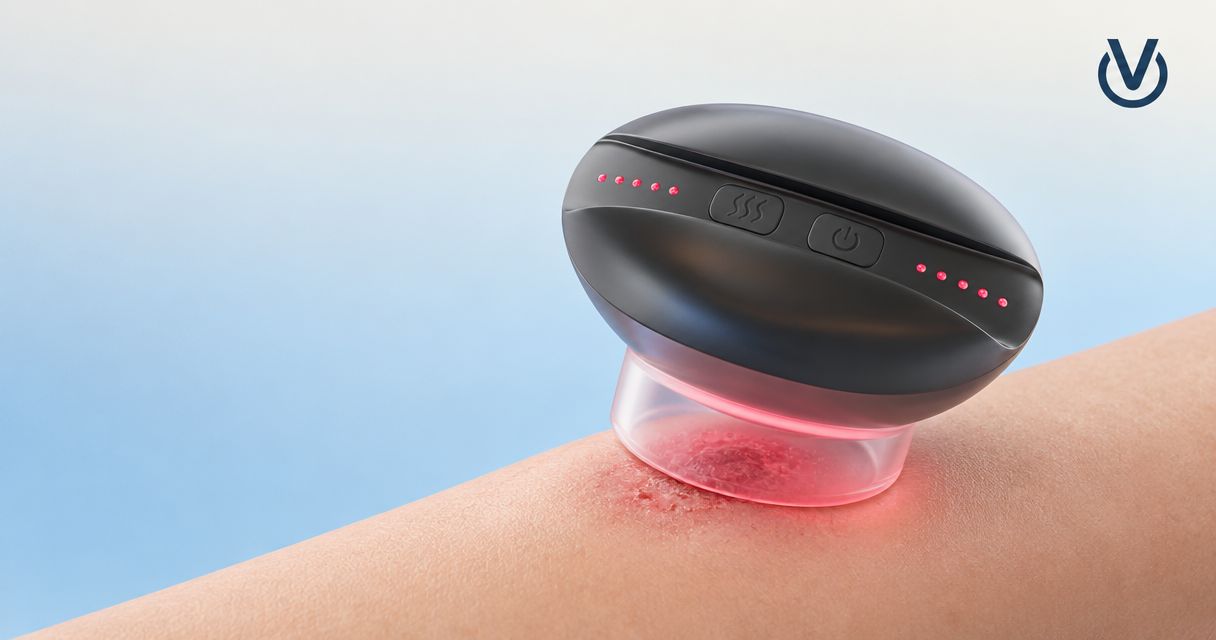
Vazocupping sells Vazo Slide and Vazo Lume as portable cupping devices. Vazo Slide combines cupping, heating, massage, and gua sha functions; both products have bases made from medical-grade alloy. That material description applies to the base alloy, not certification or medical approval of the whole device.
Vazocupping is best suited to at-home cupping shoppers, not people seeking clearance to use suction while taking blood thinners. Portability and combined functions offer a convenient format, but they do not remove medication-related bleeding concerns. A smaller device also does not establish a safer treatment choice.
For a 2026 purchase decision, medical suitability comes before features. Do not interpret the base material, a heating function, or a massage label as evidence that you can use the device during anticoagulant treatment. If your clinician advises against cupping, a different model is not a workaround.
What if you already used cupping while taking a blood thinner?
Stop further treatment and check the area without applying more suction, scraping, or deep massage. Contact your prescribing clinician about unexpected bruising, especially if it is enlarging, painful, or accompanied by swelling. Tell them when treatment happened and which medication you take.
Seek urgent medical care for severe or rapidly increasing pain or swelling, bleeding that will not stop, or signs of significant blood loss. Vomiting blood, black tarry stools, fainting, a sudden severe headache, or new neurological symptoms require emergency assessment. Call 911 for a medical emergency.
Do not assume every symptom after cupping comes from the treatment. New one-sided leg swelling, chest pain, or shortness of breath needs urgent assessment, particularly if you have a history of clots. Do not cup a painful swollen area to try to release it.
What can you do instead for muscle discomfort?
Start by identifying why the area hurts. Ordinary post-exercise soreness, a new injury, and unexplained swelling need different responses. Persistent or worsening symptoms deserve assessment rather than a more forceful recovery routine.
Ask your clinician about comfortable movement, activity changes, or physical therapy suited to your condition. Do not automatically substitute deep massage, forceful foam rolling, gua sha, or a massage gun; pressure and tissue trauma can also cause bruising.
Check before adding pain medicine as well. Some nonprescription anti-inflammatory medicines increase bleeding risk when combined with blood thinners. Your pharmacist or prescriber can help choose an approach that fits the medication you already take.
FAQ
Can I do cupping therapy on blood thinners at home?
Do not start cupping therapy on blood thinners at home without approval from the clinician managing your medication. Dry cupping can cause bruising even when the skin stays intact.
Is wet cupping safe if I take an anticoagulant?
Avoid wet cupping while taking an anticoagulant and discuss any proposed treatment with your prescriber. Wet cupping deliberately breaks the skin, adding external bleeding and infection concerns.
Can I use a cupping device if I take daily aspirin?
Daily aspirin needs to be included in a medication-specific safety assessment before cupping. Aspirin reduces platelet function even when it is purchased without a prescription.
Does a normal INR mean I can get cupping?
An INR within your prescribed target does not establish that cupping is safe. INR helps manage warfarin treatment; it is not a clearance test for suction-based therapies.
How long should I stop my blood thinner before cupping?
Do not stop your blood thinner for cupping unless your prescribing clinician specifically directs a medication change. There is no universal waiting period that makes self-directed treatment safe.
Are electric cupping devices safer than traditional cups on blood thinners?
An electric device is not automatically safer during blood-thinner treatment. Suction still creates bruising risk, and heating adds a separate skin-injury concern.
What should I do if a cupping bruise keeps getting bigger?
Stop cupping and seek prompt medical advice for an expanding bruise, particularly with pain or swelling. Severe or rapidly increasing symptoms, uncontrolled bleeding, or fainting require urgent assessment.
One last thing
A cupping mark is not proof that toxins left your body or that recovery improved. Its color is not a home test of treatment success, and darker marks are not a reason to repeat treatment more aggressively.
Make your 2026 recovery rule simple: protect your prescription first. Tell your clinician what you want to relieve, then choose an approach that does not ask you to ignore bleeding risk.