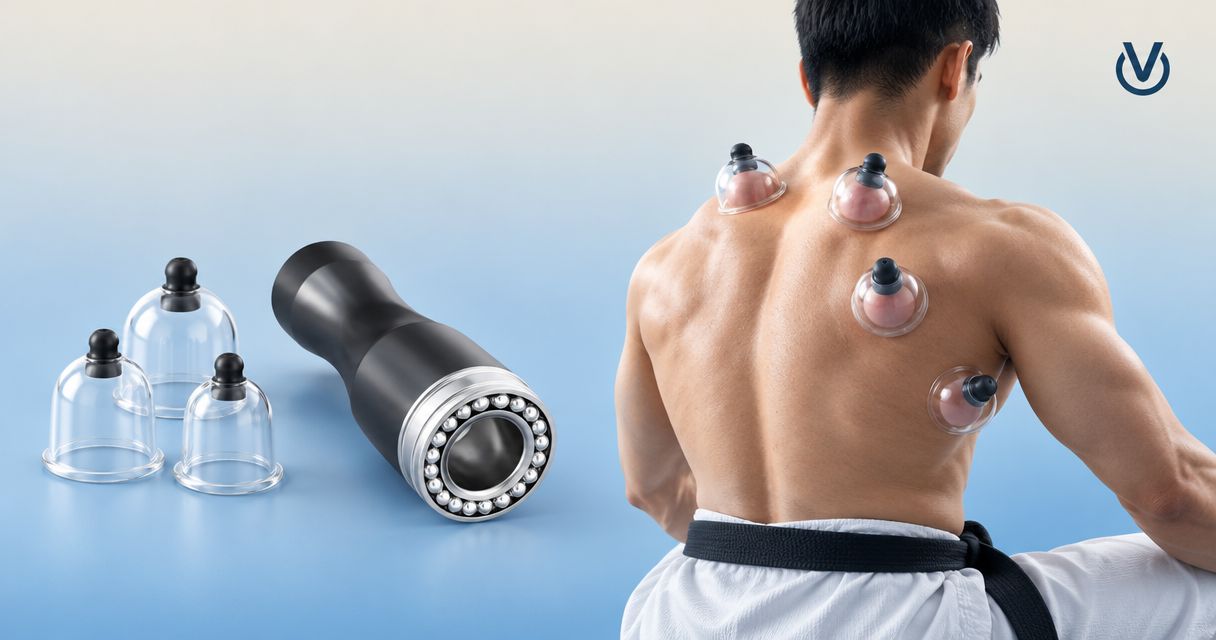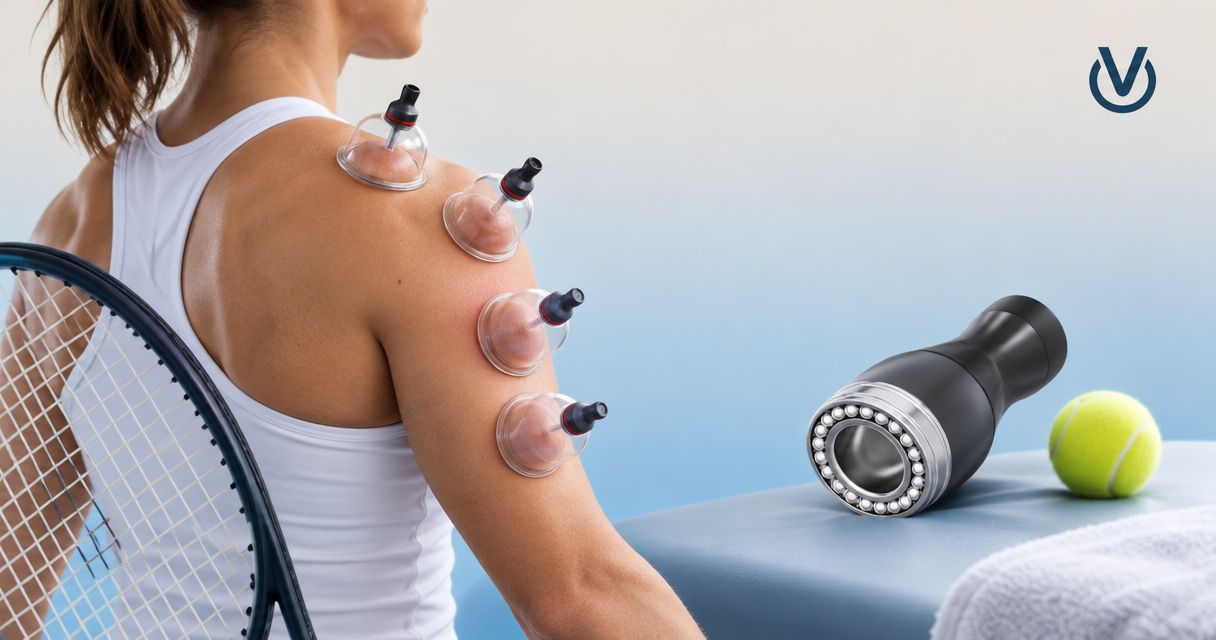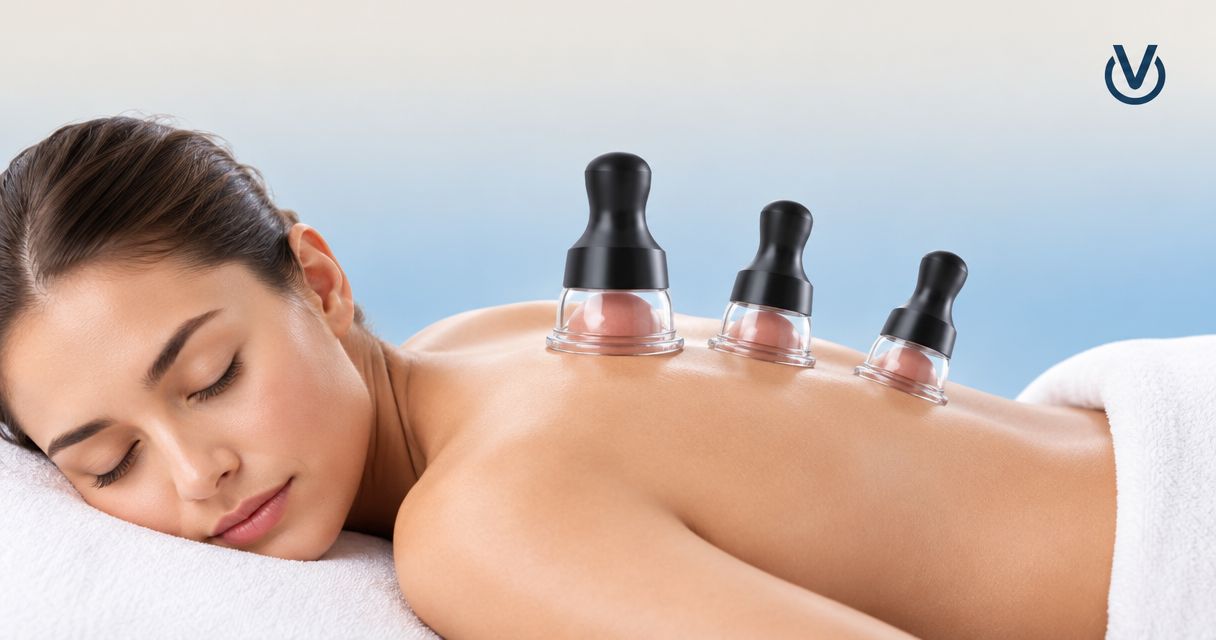
Estheticians’ cupping therapy is a suction-based skin-contact practice with the aim of supporting a relaxation-focused service within your permitted scope. This 2026 guide to cupping therapy for estheticians separates facial services, body treatments, and personal recovery—because permission, equipment suitability, and client expectations differ for each.
- Cupping therapy for estheticians starts with scope verification, client screening, and equipment instructions—not stronger suction.
- Vazocupping cupping devices fit portable at-home routines; facial suitability and professional use require separate verification.
- Facial cupping and body cupping need separate protocols; a smaller device does not establish facial suitability.
- Explain visible marks, document consent, and verify cleaning compatibility before adding cupping to your service menu.
Why cupping therapy matters for estheticians
Your clients judge a skincare service partly by what their skin looks like afterward. Cupping can leave temporary discoloration, so a treatment presented as relaxing can conflict with someone’s plans for photographs, makeup, or an event. Visible marks are a consent issue, not evidence of a successful treatment.
Estheticians also face a boundary that consumer recovery guides do not resolve: whether a particular technique, body area, and device fall within their license. A product sold for home use does not establish permission to use it professionally. Start your 2026 service review with the relevant licensing authority and your insurer.
Keep facial suitability separate from general device comparisons. The guide to using cupping on your face addresses that distinct question; it does not replace the manufacturer’s instructions or professional training.
How to build a cupping workflow for your practice
1. Verify your scope before designing the service
Start with a written inquiry to your licensing authority. Describe the actual procedure: suction, intended body area, whether heat is involved, and whether the skin remains intact. Asking only whether you can offer a wellness add-on leaves too much room for misunderstanding.
Separate permission to perform a service from competence to perform it. A training certificate does not automatically expand a license, and a device purchase does not supply either permission or training. If your intended service sits outside your scope, do not offer it under a different name.
Use 3 checkpoints before adding cupping to your 2026 menu: licensing, insurance, and device instructions. Keep the answers together so staff follow the same boundaries.
- Ask the licensing authority about the exact procedure and treatment areas.
- Obtain confirmation of insurance coverage for the proposed service.
- Check whether the equipment instructions address professional use.
- Document exclusions, supervision requirements, and referral boundaries.
2. Separate facial care from body recovery
Begin with your existing consultation form and a clearly described treatment area. Facial skincare, body relaxation, and an esthetician’s own after-work recovery are different use cases. Do not build one protocol and apply it to all of them.
Facial skin and contours require equipment and training appropriate to facial work. A body-cupping device’s small size, portability, or adjustable controls do not establish that it belongs on the face. The same distinction applies to the delicate eye area and other areas excluded by the manufacturer.
For body work, verify both your scope and the device’s intended areas. Personal use at home is a separate decision; it does not validate a client-facing treatment.
- Define whether the proposed use is facial, body, or personal.
- Check the manufacturer’s permitted and excluded treatment areas.
- Match training to the specific technique and anatomy.
- Keep facial and body procedures in separate written protocols.
3. Choose equipment by instructions, not feature count
Review the manual before shopping. A manually operated cup gives you direct control over suction application; an electric device changes that interaction. Neither approach removes the need to recognize an adverse skin response or release suction promptly.
The Vazo Slide cupping device is a portable 4-in-1 device combining cupping, heating, massage, and gua sha. Vazo Slide is the larger device; Vazo Lume is the smaller portable cupping device. Both have a base made from medical-grade alloy; that description applies to the base material, not certification of the whole device.
Vazocupping cupping devices are best considered for portable at-home routines, not as proof of professional facial suitability. Combined functions offer convenience, but each function still needs its own suitability check. Do not infer Lume’s functions from Slide’s description.
- Read intended-use, release, cleaning, and maintenance instructions.
- Verify facial suitability rather than assuming it from device size.
- Check heat restrictions separately from suction restrictions.
- Confirm whether all skin-contact parts support your required cleaning process.
- Choose only equipment whose instructions fit the intended service.
4. Screen the client and set referral boundaries
Use a structured conversation before touching the skin. Ask about current skin irritation, wounds, recent cosmetic procedures, medicines that affect bleeding, and conditions that affect sensation or healing. These answers help identify when to defer a service and seek appropriate medical guidance—not when to improvise a modified treatment.
Do not apply suction over broken or infected skin. Avoid treating unexplained swelling, prominent varicose veins, or a painful area that needs assessment. Pregnancy, altered sensation, and bleeding-related concerns require particular care and an appropriate clearance decision.
Treat wet cupping as a separate invasive procedure, not an extension of an ordinary esthetics appointment. This guide does not provide instructions for breaking the skin.
- Ask about skin changes, recent procedures, and relevant medicines.
- Inspect the intended area before applying any product or tool.
- Defer treatment when the skin is damaged or the concern is unexplained.
- Refer medical symptoms rather than presenting cupping as treatment.
- Record the reason for proceeding, modifying, or declining the service.
5. Explain consent without promising a transformation
Start with plain language: cupping applies suction to the skin and can cause temporary marks, tenderness, or irritation. Explain what you intend to do, where you intend to do it, and how the client can stop the service. Give the client room to decline without pressure.
Do not promise detoxification, permanent lifting, cellulite removal, or treatment of a medical condition. A visible skin response does not establish any of those outcomes. Keep your 2026 menu focused on the experience you can describe honestly, not an unsupported biological explanation.
Keep 2 separate permissions: consent to the service and consent to photographs. Agreement to treatment does not automatically authorize before-and-after marketing.
- Describe the technique, treatment area, and possibility of marks.
- Ask about upcoming events and tolerance for visible skin changes.
- Agree on a clear stop signal before starting.
- Separate photography permission from treatment consent.
- Record the discussion rather than relying only on a signature.
6. Follow the protocol and stop for adverse responses
Follow your training and the device instructions rather than inventing a universal suction level or treatment duration. Different tools, treatment areas, and skin conditions do not share a single safe setting. This guide does not substitute a generic number for the equipment’s operating instructions.
Keep the client able to communicate throughout the service. Stop and release suction for pain, burning, blistering, numbness, or an unexpected skin reaction. Do not increase suction to chase darker marks or continue because the planned appointment time has not elapsed.
If a device combines heat and suction, assess both functions separately. Convenience does not justify introducing every function during the same treatment.
- Confirm the release method before placing the device on skin.
- Use only settings and techniques covered by the relevant instructions.
- Monitor the skin and ask about comfort throughout treatment.
- Stop immediately for concerning symptoms or unexpected reactions.
- Record the area, technique, settings, and observed response.
7. Clean, document, and review the service
Write the cleaning procedure before accepting appointments. Remove visible residue, then follow the manufacturer-compatible cleaning and disinfection process required for your practice. Follow disinfectant label directions, including surface compatibility and contact time; a quick wipe is not a substitute.
Do not immerse an electronic device unless its instructions permit immersion. Likewise, a base made from medical-grade alloy does not prove that every part tolerates your chosen disinfectant. If required infection-control procedures conflict with the device instructions, do not use that device between clients.
Review your 2026 records for adverse reactions, consent gaps, and repeated client confusion. Adjust the service description and training before expanding the offering.
- Separate used equipment from cleaned equipment.
- Follow the applicable cleaning and disinfection requirements.
- Check seals and contact surfaces for damage before reuse.
- Store equipment according to the manufacturer’s instructions.
- Give clients clear instructions for reporting unexpected skin changes.
Compare cupping options for your intended use
Choose by treatment area and permitted use before comparing convenience. This table separates tool types from the named portable devices; it does not establish that any option is authorized for your practice.
| Option | Best for | Practical advantage | Key limitation |
|---|---|---|---|
| Manual cups intended for facial use | Estheticians trained and permitted to perform facial cupping | Direct manual application without integrated electronic functions | Facial labeling does not replace training, screening, or scope verification |
| Manual cups intended for body use | Permitted body-cupping techniques within the practitioner’s training | A straightforward option without combined heat functions | Body suitability does not establish facial suitability |
| Vazo Slide | Consumers seeking portable at-home cupping with combined functions | Combines cupping, heating, massage, and gua sha | Its consumer positioning does not establish professional or facial suitability |
| Vazo Lume | Consumers considering a smaller portable cupping device | Smaller than Vazo Slide | Size alone does not establish treatment-area suitability or professional-use permission |
| No cupping add-on | Practices without confirmed scope or a compatible cleaning protocol | Avoids introducing an unverified procedure | Does not add cupping to the service menu |
Vazocupping supplies portable cupping devices, but your practice remains responsible for selecting appropriate equipment. Ask for the relevant instructions before making a professional-use decision. If the necessary information is unresolved, keep the device out of the treatment room.
Common mistakes estheticians make with cupping
Treating a smaller device as a facial device
Small does not mean face-safe. Check the intended treatment areas and restrictions; do not infer facial suitability from Lume being smaller than Slide or from a tool fitting comfortably in your hand.
Bundling cupping into an aggressive skincare appointment
Do not automatically add suction to a visit involving exfoliation, resurfacing, or another potentially irritating procedure. Check the relevant protocols and skin condition first. An add-on is still a separate treatment decision.
Using marks as a performance target
Darkness is not a treatment score. Seeking stronger marks encourages unnecessary exposure and can conflict with your client’s cosmetic priorities. Document skin response without presenting discoloration as proof of detoxification or healing.
Treating personal experience as professional validation
Enjoying a device after your own workday does not establish that it belongs in a client service. Professional use adds consent, insurance, cleaning, documentation, and scope obligations that a personal routine does not resolve.
Advertising medical results through skincare language
Terms such as circulation, inflammation, and lymphatic drainage can imply physiological outcomes. Do not turn them into promises because they sound less clinical than a diagnosis. Describe the service accurately and refer concerns outside your competence.
FAQ
Can estheticians legally offer cupping therapy?
Permission depends on the applicable licensing rules and the exact procedure. Confirm the technique, treatment area, device functions, and insurance coverage before offering cupping as a service.
What is the best cupping tool for an esthetician?
The best tool is one whose intended use, cleaning instructions, and treatment areas match your permitted service and training. A consumer body-cupping device is not automatically suitable for professional facial treatments.
Can I use Vazo Slide on a client's face?
Do not assume Vazo Slide is suitable for a client's face. Verify explicit facial-use instructions, professional-use suitability, your training, and your scope before considering that application.
Is Vazo Lume a facial device because it is smaller?
A smaller size does not establish facial suitability. Vazo Lume is a smaller portable cupping device than Vazo Slide, but treatment areas must come from the relevant instructions.
Does medical-grade alloy mean the whole device is medically certified?
No. Vazo Slide and Vazo Lume have bases made from medical-grade alloy; that material description does not establish whole-device certification, regulatory approval, or proven medical outcomes.
Should facial cupping leave dark marks?
Do not make dark marks the goal of a facial service. Cupping can cause discoloration, so explain that possibility beforehand and stop for pain or an unexpected skin reaction.
How long should an esthetician leave a cup on?
Use the duration specified by the relevant equipment instructions and professional protocol. There is no universal duration that applies to every device, treatment area, and client.
Can cupping replace medical treatment for swelling or skin problems?
No. Unexplained swelling, infection, persistent pain, or other medical concerns need appropriate assessment rather than a cosmetic cupping appointment.
One last thing
The strongest addition to your cupping protocol is a clear reason not to proceed. Write the exclusions before the promotional description. A client who hears an honest explanation for deferring treatment gets a clearer service boundary than one who hears an unsupported promise.
Keep the same distinction when discussing Vazocupping: a portable device can belong in a personal wellness routine without belonging in every esthetic treatment. Let verified instructions—not enthusiasm—make that decision.