Cupping therapy for Pilates practitioners is the use of suction cups on the skin with the aim of supporting comfort alongside a movement practice. This 2026 guide explains how to assess cupping, choose an approach, and keep optional recovery work separate from the strength, control, and coordination you develop on the mat or reformer.
- Cupping therapy for Pilates practitioners is optional recovery work, not a treatment for faulty movement patterns.
- NCCIH describes cupping research as mostly low quality; stronger suction does not establish better results.
- Keep Pilates warm-ups, progressive exercise, and appropriate clinical care ahead of at-home cupping.
- Choose portable cupping devices for convenience, not promises of deeper releases or faster healing.
Why cupping therapy matters for Pilates practitioners
Pilates asks you to coordinate breathing, position, and movement under changing loads. A tender shoulder during long-stretch work or an uncomfortable hip during side-lying exercises deserves attention, but it does not automatically call for suction. Your first decision is whether to adjust the exercise, seek an assessment, or try an optional comfort measure.
Cupping creates suction rather than applying the downward pressure used in massage. That difference describes the method; it does not prove better recovery. The National Center for Complementary and Integrative Health, or NCCIH, describes most cupping research as low quality and says the evidence for pain reduction is not strong.
For your 2026 routine, treat cupping as an experiment in comfort rather than a requirement for progress. Start with the guide to cupping suction pressure before choosing intensity. Pressure settings are not performance scores, and visible marks are not evidence that an exercise-related problem has been corrected.
How to fit cupping around your Pilates practice
1. Define the problem before choosing a tool
Start without equipment. Describe what you feel, where you feel it, and which movement brings it on. A general sense of post-exercise tightness is different from sharp pain, tingling, weakness, or discomfort that repeatedly interrupts the same exercise.
Keep your goal functional. Instead of trying to release your entire back, ask whether you can perform your usual movement comfortably without changing your breathing or position. Cupping cannot tell you whether discomfort comes from muscle, joint, nerve, or another structure.
Record 3 observations before trying anything new: location, sensation, and effect on movement. These are tracking prompts, not a diagnostic test. If the same complaint returns across sessions, discuss it with an appropriately qualified clinician rather than building a more elaborate recovery routine.
- Identify the exact exercise associated with discomfort.
- Describe the sensation without diagnosing the tissue involved.
- Note whether symptoms occur at rest as well as during movement.
- Seek assessment for persistent, worsening, or unexplained symptoms.
2. Adjust your Pilates session first
Use the simplest change before adding suction. Tell your instructor when discomfort appears and ask for an appropriate modification. Reducing range, changing position, or choosing a different exercise keeps the focus on how you move rather than how much recovery equipment you own.
Do not use cupping to make a painful exercise tolerable enough to push through. Temporary changes in sensation do not establish that a movement is safe, nor do they correct exercise technique. An instructor can help adapt a class; diagnosis belongs with a qualified healthcare professional.
Keep your 2026 warm-up centered on movement preparation. If you are comparing how an optional recovery method feels, avoid changing your exercise difficulty and adding several recovery treatments at the same time. Otherwise, you cannot clearly identify which change accompanied the result.
- Tell your instructor before the challenging exercise begins.
- Choose a comfortable range rather than forcing the end position.
- Keep breathing and control ahead of exercise difficulty.
- Retain ordinary rest and movement preparation.
- Stop an exercise that causes sharp pain or neurological symptoms.
3. Match the cupping method to your situation
If you decide to explore cupping, learn the relevant instructions before applying a cup. A practitioner-led appointment is an option when you want supervised application. A handheld device is an option when you want a portable tool, but portability does not remove the need for screening, cleaning, and careful use.
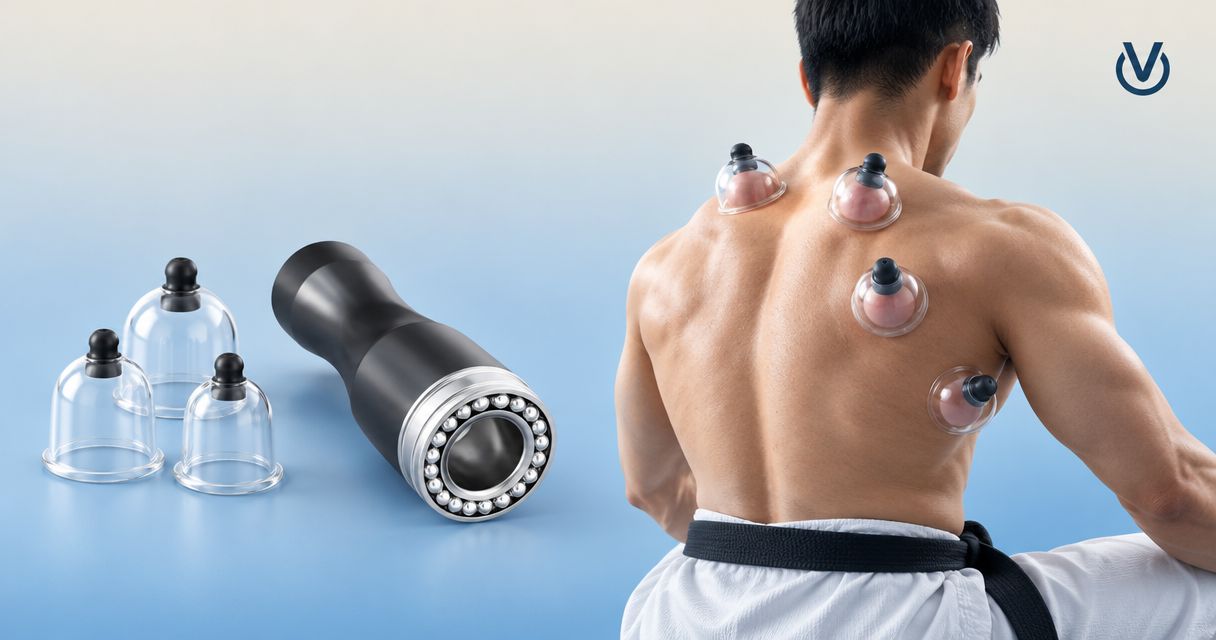
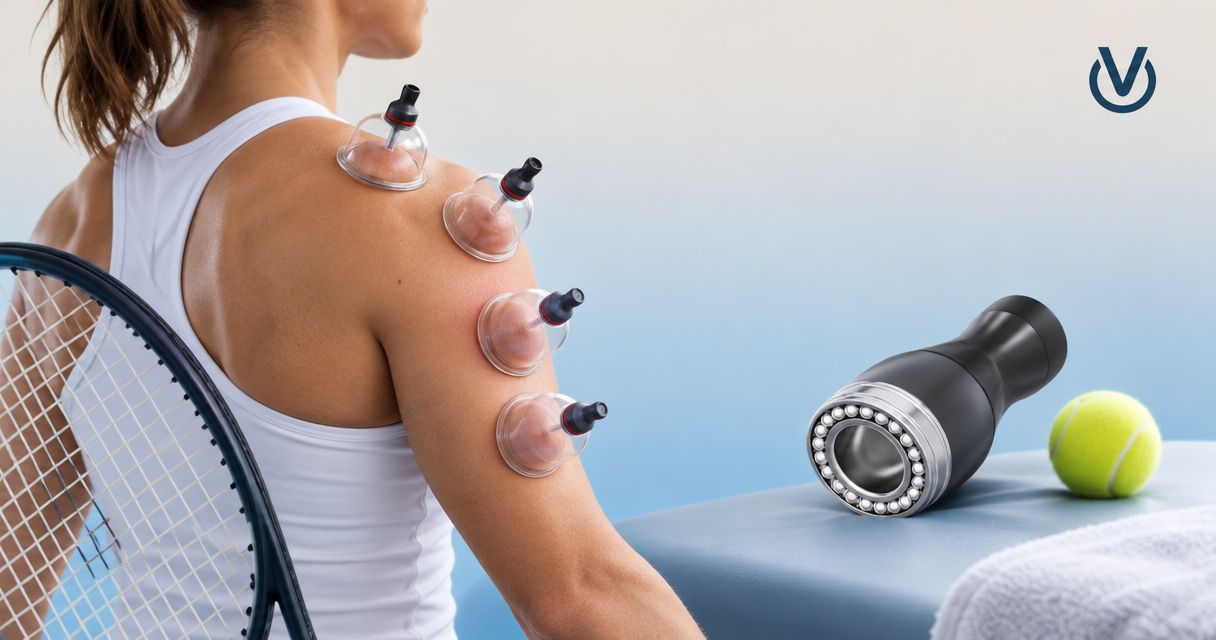
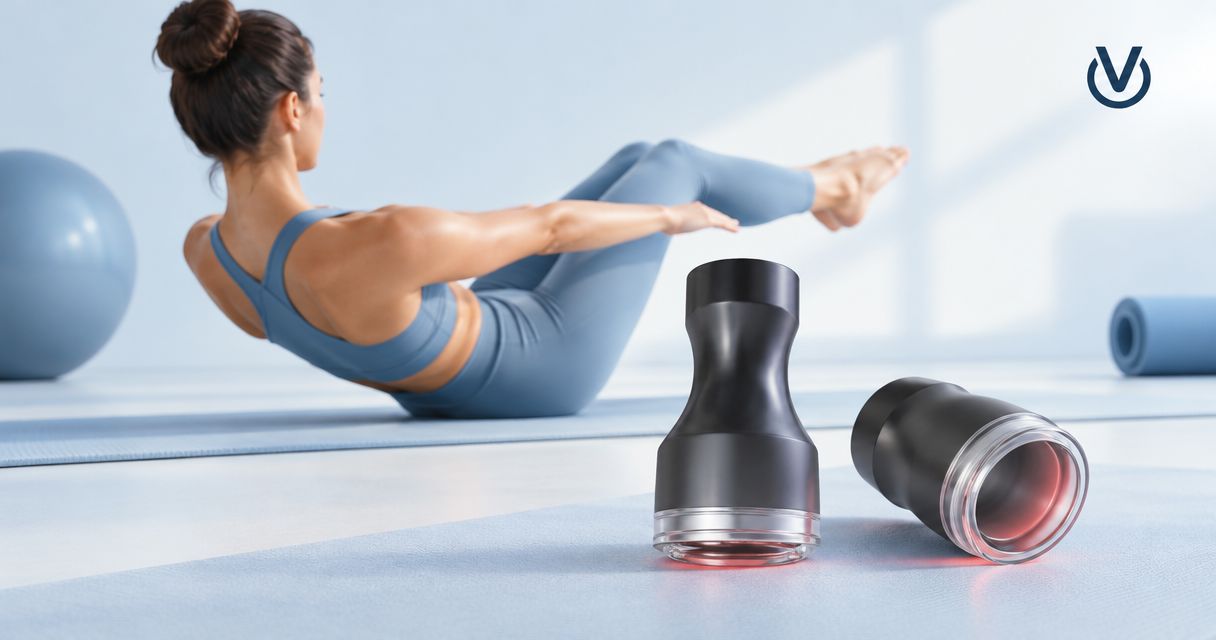
The Vazo Slide combines 4 functions: cupping, heating, massage, and gua sha. Vazo Slide and Vazo Lume are portable cupping devices with bases made from medical-grade alloy; Vazo Slide is the larger device and Vazo Lume is the smaller device. This material description applies to the base, not certification of either whole device.
Vazocupping cupping devices are best suited to Pilates practitioners who want portable tools for optional at-home cupping. Their limitation is equally clear: the devices do not assess an injury, prescribe exercise, or establish that cupping will improve your Pilates performance.
- Choose supervised care when you need help assessing suitability.
- Read the instructions for the exact device you select.
- Check that you can reach the intended area without twisting awkwardly.
- Choose functions you understand rather than the longest feature list.
- Keep heat and suction decisions separate from product size.
4. Screen your skin and health before every use
Inspect the intended area without a device first. Broken skin, an active rash, infection, or a fresh injury is a reason to stop and seek appropriate advice rather than experiment. Avoid applying suction directly over varicose veins or an area with unexplained swelling.
Ask a clinician before cupping if you take blood-thinning medication, have a bleeding disorder, reduced sensation, impaired healing, or a condition affecting circulation. Pregnancy and recent surgery also require individual guidance. A product's base material does not cancel these considerations.
Heat needs its own judgment. Do not assume that a setting is appropriate because suction alone feels tolerable. If you cannot reliably feel temperature or inspect the area, do not use an unsupervised heated device there. For any method, you need a clear way to release suction immediately.
- Check the skin for irritation, wounds, or unusual changes.
- Review relevant conditions and medications with your clinician.
- Avoid treating unexplained swelling as ordinary workout soreness.
- Confirm that you understand the suction-release procedure.
- Keep cupping away from areas the manufacturer excludes.
5. Keep the first trial simple and observable
Start by reading the manufacturer's directions, not copying a social-media routine. Use the device only on a permitted area and follow its instructions for intensity, duration, skin preparation, and whether movement is allowed. There is no universal setting that applies to every cup, body area, and practitioner.
For your first trial, choose 1 accessible area rather than treating every place that feels tight. This is a practical way to observe your response, not a prescribed treatment dose. Do not combine unfamiliar suction, heat, scraping, and forceful stretching in the same experiment.
Choose a time when you can check your skin afterward without rushing into class. Stop for burning, sharp pain, numbness, blistering, dizziness, or feeling unwell. Do not try to produce darker marks: NCCIH lists persistent discoloration, scars, burns, and infections among possible cupping side effects.
- Follow the exact device instructions rather than a generic timer.
- Keep the area visible or easy to inspect.
- Stop immediately for concerning sensations or skin changes.
- Avoid stacking several unfamiliar treatments.
- Clean the device using the manufacturer's specified method.
6. Measure useful change, not marks
Before adding cupping to your regular schedule, decide what would make the effort worthwhile. Use ordinary tasks: comfortable sitting, reaching overhead, or completing your usual modified Pilates movement. Do not turn the follow-up check into a deeper stretch or a harder exercise test.
A 0–10 comfort scale can help you describe your experience consistently, but it is a personal tracking tool, not proof of tissue healing. Record what you felt before use, afterward, and at your next Pilates session. Include irritation or tenderness as well as any perceived benefit.
Review your 2026 routine honestly. If cupping adds discomfort, complicates your schedule, or does not provide a useful change, leave it out. A recovery tool earns its place through a tolerable, useful experience—not through bruising, intensity, or how many functions you use.
- Compare the same comfortable movement before and after.
- Record skin changes as well as changes in sensation.
- Note whether your next class feels easier, unchanged, or worse.
- Avoid increasing exercise load because an area feels temporarily different.
- Stop repeating an approach that does not help you.
Compare your options for 2026
The best option depends on whether you need exercise modification, clinical assessment, supervised application, or a portable tool. These choices solve different problems; they are not interchangeable treatments.
| Option | Best for | Practical advantage | Key limitation |
|---|---|---|---|
| Exercise modification without cupping | Practitioners whose discomfort appears during a particular Pilates exercise | Keeps attention on movement and load | Does not diagnose persistent symptoms |
| Practitioner-led cupping | People seeking supervised application after suitability screening | Allows discussion and observation during use | Requires an appointment; cupping evidence remains limited |
| Vazo Slide from Vazocupping | People wanting a portable cupping device with heating, massage, and gua sha functions | Combines the stated functions in a handheld device | Multiple functions do not establish better clinical outcomes |
| Vazo Lume from Vazocupping | People who prefer the smaller of the brand's portable cupping devices | Offers a smaller device format than Vazo Slide | Size alone does not establish suitability for a particular body area |
For both portable devices, the medical-grade alloy description applies to the base material only. Do not interpret that wording as regulatory approval, proof of superior safety, or evidence of a medical benefit.
Common mistakes Pilates practitioners make
Chasing flexibility immediately after cupping
Feeling different is not permission to force a deeper roll-up, split, or spinal extension. Return to your usual controlled range and assess comfort without testing your limit. A temporary sensation change does not demonstrate a lasting flexibility gain.
Treating every uncomfortable hip as a tight hip flexor
A sensation near the front of the hip does not identify its cause. Repeatedly cupping the area instead of discussing a recurring movement problem delays a more useful decision. Ask for assessment when the symptom persists or limits ordinary activity.
Placing cups where equipment will press
Consider where your body contacts the reformer carriage, shoulder rests, straps, or mat. Do not create a recovery routine that leaves an area tender before class. If skin is irritated or painful, modify the session rather than pressing equipment against it.
Using darker circles as a recovery score
Cupping marks reflect a skin response, not a measurement of toxins removed, fascial release, or exercise readiness. More visible discoloration does not prove a more effective session. Judge the experience by comfort and function instead.
Turning personal use into a studio service
Owning a handheld device does not establish competence to treat clients. If you teach Pilates, keep personal recovery advice separate from hands-on services, and check the qualifications, consent, hygiene, insurance, and local requirements relevant to your work.
FAQ
Is cupping therapy good for Pilates practitioners?
Cupping is an optional comfort measure, not a proven way to improve Pilates performance. NCCIH describes most cupping research as low quality, so keep expectations modest and prioritize appropriate exercise modification and clinical care.
Should I use cupping before or after Pilates?
Choose timing that lets you observe your response without interfering with comfortable movement. Avoid a first trial immediately before class, and do not use cupping to push through exercise-related pain.
Can cupping release tight hip flexors?
Cupping cannot establish why the front of your hip feels tight or prove that a hip flexor has been released. Persistent discomfort during Pilates deserves an exercise review and, when appropriate, a clinical assessment.
Which Vazocupping cupping device is best for Pilates recovery?
Vazo Slide suits people who want portable cupping, heating, massage, and gua sha functions in one device. Vazo Lume is the smaller portable cupping device; neither product is established here as a treatment for Pilates-related injuries.
Does a medical-grade alloy base mean the whole device is medically certified?
No. Medical-grade alloy describes the base material of Vazo Slide and Vazo Lume, not certification or regulatory approval of the whole device. It does not establish proven medical outcomes.
Can I do Pilates if I have cupping marks?
Marks alone do not establish whether you are ready to exercise. Check for pain, skin damage, and discomfort where the mat or reformer contacts your body, and seek medical advice for concerning changes.
How long should a Pilates practitioner leave a cup on?
Follow the instructions for the exact device and intended body area rather than a universal duration. Stop immediately for burning, sharp pain, numbness, blistering, dizziness, or feeling unwell.
One last thing
Your most useful recovery check needs no device: identify the movement you want to perform comfortably before choosing a treatment. In 2026, keep that movement—not a suction setting or a circle on your skin—as the reference point. If cupping distracts you from a recurring problem, remove the distraction and get the problem assessed.